
Indoor Germination: A to Z
Whether you decide on indoor germination of herbs, vegetables, microgreens or ornamental or medicinal species of plants, your success will depend on the environmental conditions you provide to the seeds. The indisputable advantage of indoor growing is that you have absolute control. How to use that and achieve germination with one hundred percent success we will teach you in the following lines.
Unlike sowing seeds outdoors directly into soil, where success is decided by nature, with indoor growing you are the master of the weather. Thanks to grow tents (or propagators) you can keep germinating seeds in optimal conditions. We consider indoor germination to include:
- germination in a plastic greenhouse on a windowsill (suitable for less demanding species)
- germination in a plastic greenhouse in a grow tent under artificial lighting (suitable for most species)
- germination directly in a grow tent or propagator under artificial lighting without using a plastic greenhouse (suitable for most species, requiring a humidifier to maintain moisture)
OUR TIP: Want to start indoor germination, pre-cultivation or microgreens and are unsure about equipment choices? Check out our komplete sets for indoor pre-cultivation and propagation of plants.
Factors affecting germination
- Temperature is one of the most important environmental factors affecting seed germination. Most seeds of plants intended for indoor cultivation have a specific temperature range at which they will germinate, and these values differ from species to species, but the vast majority germinate best at temperatures in the range of 15-30 °C (more precise information can be found on the seed packaging).
- Water is another indispensable resource for seeds, without which they cannot germinate. Once seeds are placed in a moist environment they swell, the outer coat softens and splits to make room for the radicle. Water is also important for activating enzymes inside the seed and releasing stored nutrients that seedlings use in the first days before they can photosynthesize.
- Light is an important environmental factor whose significance varies by species. Some seeds require light to germinate, others require complete darkness. However, all seedlings need light as soon as they have germinated.
How to do indoor germination: A detailed guide
1) Choose the growing medium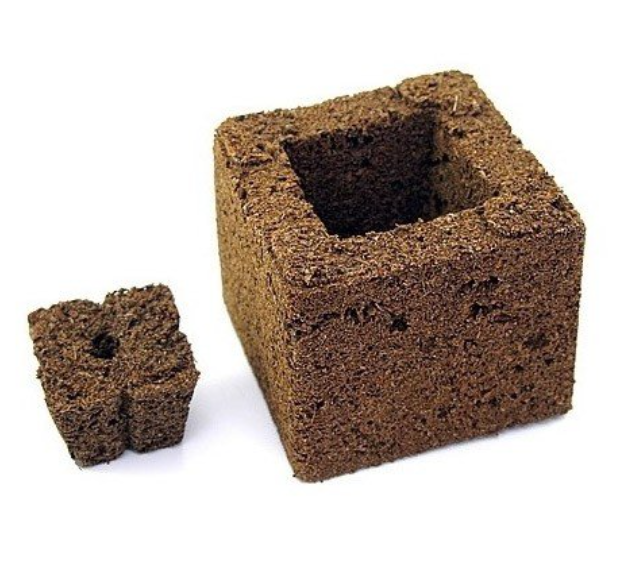
Choosing the right medium for seed germination depends mainly on your cultivation technique. Generally, growing media made of organic materials (soil, peat, coconut) are more suitable for traditional cultivation, i.e., in soil or coconut substrate. For hydroponics or cultivation in inert substrates (rockwool, perlite, vermiculite) it is better to germinate in sterile media or in water.
- Soil sowing substrates are suitable when growing in soil mixes or coconut substrates.
- Coconut substrates combine the advantages of organic soil mixes and hydroponic substrates. They are suitable for germinating seeds of plants grown in soil, coconut and hydroponics.
- Seedling plugs and Jiffy made from peat, coconut and other organic materials are designed to fit neatly into seed trays and save both work and space. Use them when growing in soil, coconut and hydroponics.
- Rockwool seedling cubes of various sizes and shapes are most suitable for cultivation in hydroponics and inert substrates, but they can also be used for germinating seeds intended for growing in soil mixes.
- Perlite and vermiculite are sterile media made from expanded rock, used as soil additives but also suitable for seed germination, especially in hydroponic cultivation.
2) Moisten the growing substrate
When germinating in soil mixes and coconut you must first moisten the substrate sufficiently. You can easily test the moisture of soil or coconut substrate by squeezing a small amount in your hand. If only a few drops of water come out between your fingers, the moisture is just right.
Coconut seedling plugs (Jiffy), perlite, vermiculite and rockwool cubes only need to be soaked in water before use. If you care about conducting germination in a maximally sterile environment, you can use a weak (0.5%) solution of hydrogen peroxide instead of water. This helps prevent damping-off and stem rot caused by parasitic fungi.
You can also use compost teas containing beneficial microorganisms that protect plants from harmful molds while speeding up nutrient uptake and supporting plant vitality. To inoculate, simply soak seeds in the prepared compost tea before planting them in the substrate. Note, treating the medium with a hydrogen peroxide solution and soaking seeds in compost tea cannot be combined, because the chemical will reliably kill the beneficial microorganisms.
OUR TIP: As an alternative to hydrogen peroxide you can use the product Purolyt.
3) Fill the growing container with substrate
When germinating seeds in soil or coconut substrate use small pots. If you want to make transplanting easier, you can choose pots made from biodegradable materials. First fill the container to about one third and tap the bottom lightly on the table so the substrate settles. Finally mound the substrate up to the rim of the container and press it down lightly by hand.
Coconut seedling plugs and rockwool cubes are best arranged in a seedling tray. You can also choose practical seedling trays made of biodegradable materials. If you place them on a saucer or in a propagator “loosely”, the seedlings may tip over after germination and stems can break.
4) Sow the seeds into the growing medium
Now you can start sowing. Different species have different germination requirements. Some seeds may require a period of cold before germination (stratification) or prolonged soaking. Unless otherwise stated, sow seeds to a depth equal to two to three times their length.
If you are growing several species or cultivars at once, it is a good idea to label the seeds clearly when sowing. Practical for this purpose are hard plastic labeling tags.
5) Maintain correct humidity and temperature
Once you sow seeds into moist substrate, the germination process begins. It is now important to maintain the correct temperature, humidity and light intensity in the growing space. These factors vary by species, but generally most species grown indoors need germination temperatures in the range of 15-30 °C and high air humidity.
OUR TIP: Heating mats are a great help when growing species that require high temperatures to germinate.
The easiest way to maintain the proper microclimate is in a small plastic propagator, where you can hide the germinating seeds. You can then place it in a grow box or on a windowsill or another suitable place. Alternatively, you can increase humidity in the entire growing space with a humidifier, which is especially useful when germinating a large number of seeds at once (for example when growing microgreens)
6) Provide light to the plants
Plants need light to live, which applies to germinating and freshly sprouted seeds as well. Many growers germinate seeds in a plastic propagator on a windowsill, which is a good solution for less demanding species or plants intended for outdoor planting. However, for indoor growing purposes it is better to start directly under artificial lighting. This ensures plants get enough light from the first days, speeds up their growth and prevents legginess.
Grow lights for germination and seedling lighting have lower power and emit a light spectrum suitable for the vegetative growth phase. Choosing the right shape and size depends mainly on the number of plants you plan to grow.
Hanging height of grow lights for germination and young seedlings depends on the intensity of the emitted light. Approximate hanging distances for grow lights for germination and seedlings by power are:
- for lights intended for germination and seedlings up to 120 W - 10-40 centimeters above the plant tops
- for LED grow lights with power from 120 W to 1000 W – 60-90 centimeters above the plant tops
Photoperiod (the number of hours of uninterrupted light during 24 hours) depends on the species being grown, but for most plants it ranges between 12-16 hours per day. Turning lights on and off is easiest to control using adjustable timers.
7) Prepare seedlings for the vegetative phase
The germination phase ends once the first two small cotyledons appear above the substrate surface. If you germinated in pots, your newly sprouted plants should have enough root space for the first several days to weeks (depending on the species) and do not need immediate transplanting. If you germinated in Jiffies or seedling plugs, it is necessary to transplant the seedlings within a few days of germination.
Indoor germination can sometimes be a challenge, but we believe that with our tips you are prepared for this task. Remember that no one is born knowing everything, and if you encounter a problem choosing equipment or need other advice, do not hesitate to contact us. For more useful tips visit our Higarden blog.