
Hydroponic growing media or pure nutrient solution: which is better for hydroponics?
Hydroponics comes in many forms: while some techniques require the use of special substrates, others allow plants to be grown solely in a nutrient solution. Wondering which of these methods is more advantageous for your plants? In the following article we compare the advantages and disadvantages of both methods so you can better decide which is best for your hydroponic growing.
Hydroponics is an innovative method of soilless cultivation in which plants are fed with a nutrient-rich solution. In hydroponic systems, plants can either grow in an inert (chemically inactive) substrate or have their roots suspended directly in a nutrient solution in specialized systems. Compared to soil growing, hydroponics can be a bit more demanding for beginners to learn, but it enables faster and more efficient plant cultivation.
 Hydroponic growing media
Like soil, hydroponic growing substrates provide plants with support for root anchorage and retain water (the nutrient solution) that plants absorb. Unlike soil, most hydroponic media are made from inorganic materials and do not contain plant nutrients. The most common substrates for hydroponics include:
- Rockwool
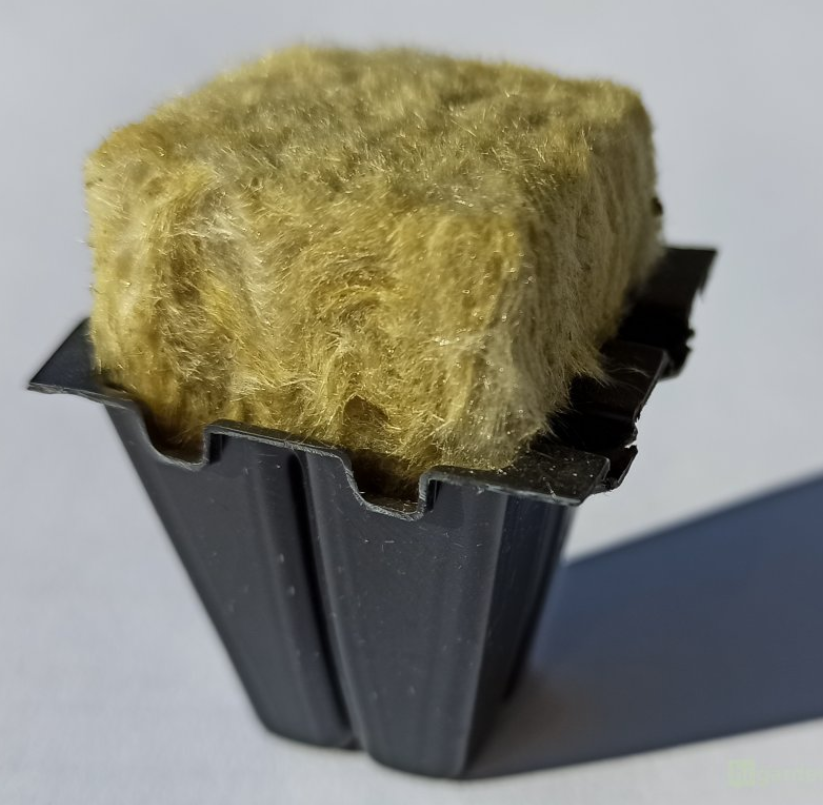
Mineral wool made from basalt rock is one of the most used hydroponic media. Rockwool can be easily shaped into cubes or slabs, making it a versatile growing medium for a wide range of hydroponic systems; it is useful not only for growing but also for germination and cloning. Mineral wool has excellent water retention properties and dries evenly, which makes Rockwool easy to use with automatic irrigation systems (drip, run-to-waste, spinners, ebb-and-flow trays). Rockwool is not suitable for pot cultivation or hand watering.
- Coconut fibers
Hydroponic media made from coconut fibers and husks combine the benefits of inert substrates (Rockwool, expanded clay, perlite) and soil mixes that contain organic matter. They have better water retention than soil while not being completely inorganic, allowing beneficial microorganisms to thrive. Coconut substrates are suitable for beginners and growers who want to use organic fertilizers in hydroponics. Coconut can be used in pots (plastic, fabric, and Auto-Pot) with hand watering as well as in self-watering systems.
- Expanded clay
Expanded clay (Keramzit), also known as LECA, is a porous material made from clay heated to high temperatures. It takes the form of small pebbles and is most commonly used in hydroponic systems (run-to-waste, DWC, NFT, ebb-and-flow) and in aeroponics as a medium for plant support. Expanded clay dries quickly and is therefore not suitable for pot cultivation with hand watering.
- Perlite
Perlite is a growing substrate made by heating volcanic glass to high temperatures, appearing as a light white aggregate. Like expanded clay, perlite retains a small amount of water and allows good air access to the roots. Due to its fine structure, perlite can clog irrigation systems and as a standalone hydroponic medium it is typically used only in flood-and-drain trays (Dutch bucket).
Want to learn more about growing substrates? Read our Guide to growing substrates.
Advantages of growing in hydroponic substrates
- Root support: Hydroponic media provide plants with sufficient support and are more suitable for large plants than NFT, DWC and other hydroponic systems.
- Water retention: Growing substrates maintain a steady level of moisture even with occasional watering and do not require a constant supply of nutrient solution.
- Aeration: Compared to soil, hydroponic media ensure better oxygen access to the roots and reduce the risk of fungal infections.
- Ease of use: Compared to fully hydroponic systems, substrate-based methods are less prone to failures and grower errors.
Substrate-free hydroponic systems
Some hydroponic systems do not require plants to be placed in a substrate but allow roots to be submerged directly in the nutrient solution. The main advantages of this method are that roots have a constant supply of water, nutrients and oxygen. Plants therefore grow faster and the risk of soil-borne pests is eliminated. On the other hand, "clean" hydroponics requires constant monitoring of nutrient levels and pH of the solution and tolerates no mistakes from the grower. Common substrate-free hydroponic systems include:
- NFT (Nutrient Film Technique)
In NFT hydroponic systems plant roots are placed in a slightly inclined channel or trough through which a thin film of water flows. Plants are usually set in perforated hydroponic baskets in holes along the length of the channel. The nutrient solution flows back into a reservoir from which it is pumped to the top of the channel, creating a recirculating system. NFT systems are very efficient: they do not waste water or nutrients and provide sufficient oxygenation of the nutrient solution, which prevents root rot. NFT is suitable for smaller plants with shorter growth cycles, but perennials can also be grown in them.
- DWC (Deep Water Culture)
The older hydroponic technique known as DWC involves suspending plants in a tank or bucket with an oxygenated solution. Like NFT, plants are placed in perforated pots set into holes in the lid of the growing reservoir. Aeration of the nutrient solution in DWC is provided by a pump and an air stone. Compared to other fully hydroponic systems, DWC is a relatively simple and inexpensive option. On the other hand, this method carries a greater risk of poor oxygenation and root rot. DWC can be used for both short-cycle plants and perennials and shrubs.
- Kratky method
At first glance a simple hydroponic technique developed by Bernard Kratky, this method involves growing plants in individual closed containers where they are suspended in the nutrient solution while part of the roots remains exposed to air. As plants grow and gradually consume the nutrient solution, the level in the container drops, which stimulates the development of new roots. Although it is a very cheap hydroponic solution, the Kratky method can be relatively challenging to master and is not particularly efficient.
- Aeroponics
Aeroponic systems deserve their own category but broadly speaking they fall under hydroponic techniques. In aeroponics, plant roots are suspended in air and regularly misted with a fine spray of nutrient solution. The advantage of aeroponics is the huge amount of oxygen available to the roots, which promotes rapid root development. On the other hand, aeroponics requires specialized equipment, and if that equipment fails the plants have very little chance of survival. Aeroponics is excellent for cloning stations, where this method can accelerate new root formation by up to a week.
Advantages of growing in a nutrient solution
- Fast nutrient uptake: Plants with roots submerged in a nutrient solution have constant access to nutrients, resulting in faster growth and higher yields.
- Lower risk of pathogens: In purely hydroponic systems there are no soil pests, and in a well-oxygenated nutrient solution the risk of root rot is minimal.
- Efficiency: Hydroponics is extremely economical in terms of water, fertilizers and other resources, especially when using recirculating systems.
- Easy monitoring of pH and EC: Measuring acidity (pH) and nutrient content (EC) in the nutrient solution is simpler in purely hydroponic systems than in substrate-based techniques.
Which method is right for you?
If you are choosing between hydroponic growing with substrates and substrate-free systems, the main factor is your experience. For beginners, working with hydroponic media can be easier because they are more forgiving of mistakes in nutrition, irrigation and plant care. Experienced growers who want to get the most out of their efforts may prefer fully hydroponic systems.
Want to learn more about indoor and outdoor growing and discover the latest trends from the world of growing? Feel free to visit our blog.