
How to use UV radiation in indoor growing?
Ultraviolet radiation, whose natural source is the Sun, can also be provided to the plants you grow at home to support them during both the vegetative and flowering stages. Broaden your horizons in indoor gardening and read everything important about UV radiation and its influence on plant development in this article.
- What is UV, or ultraviolet radiation? You might remember the answer from physics class. Electromagnetic radiation with a wavelength shorter than visible light but longer than X-rays. As a result, UV radiation is invisible to the human eye. For growers, however, the important fact is that a short wavelength means high light energy. And if, as a grower, you decide to use a UV lamp during cultivation, wavelength plays a crucial role in choosing the lamp.
- Did you know there are different kinds of UV radiation? Yes, and each type affects plants in a completely different way. It probably won’t surprise you that we distinguish types of ultraviolet radiation by wavelength into:
- UVA: 315–400 nm
- A harmless light spectrum present in normal daylight to which our skin is accustomed from the sun.
- For plants grown in an indoor environment it is useful blue light that simulates natural sunlight, especially in parts of the grow area where the primary light source (discharge lamp, LED) fixture does not sufficiently reach.
- UVB: 280–315 nm
- This type of UV radiation is absorbed by the ozone layer.
- In larger amounts it is harmful to humans.
- It negatively affects the photosynthetic activity of plants, which however can be desirable during the flowering stage; therefore growers use it in reasonable amounts to increase yields and to utilize the genetic potential of herbs to the maximum, for example with regard to beneficial active compounds.
- It also influences the intensity of the taste and aroma of flowers or fruits.
- UVC: less than 280 nm
- The strongest form of UV radiation.
- Radiation penetrates cellular structures.
- Kills viruses, bacteria, mold spores and microorganisms.
- Used for disinfecting water and sterilizing spaces, including grow spaces.
- Reliable sterilization of your growbox is ensured by quality germicidal lamps.
- UVA: 315–400 nm
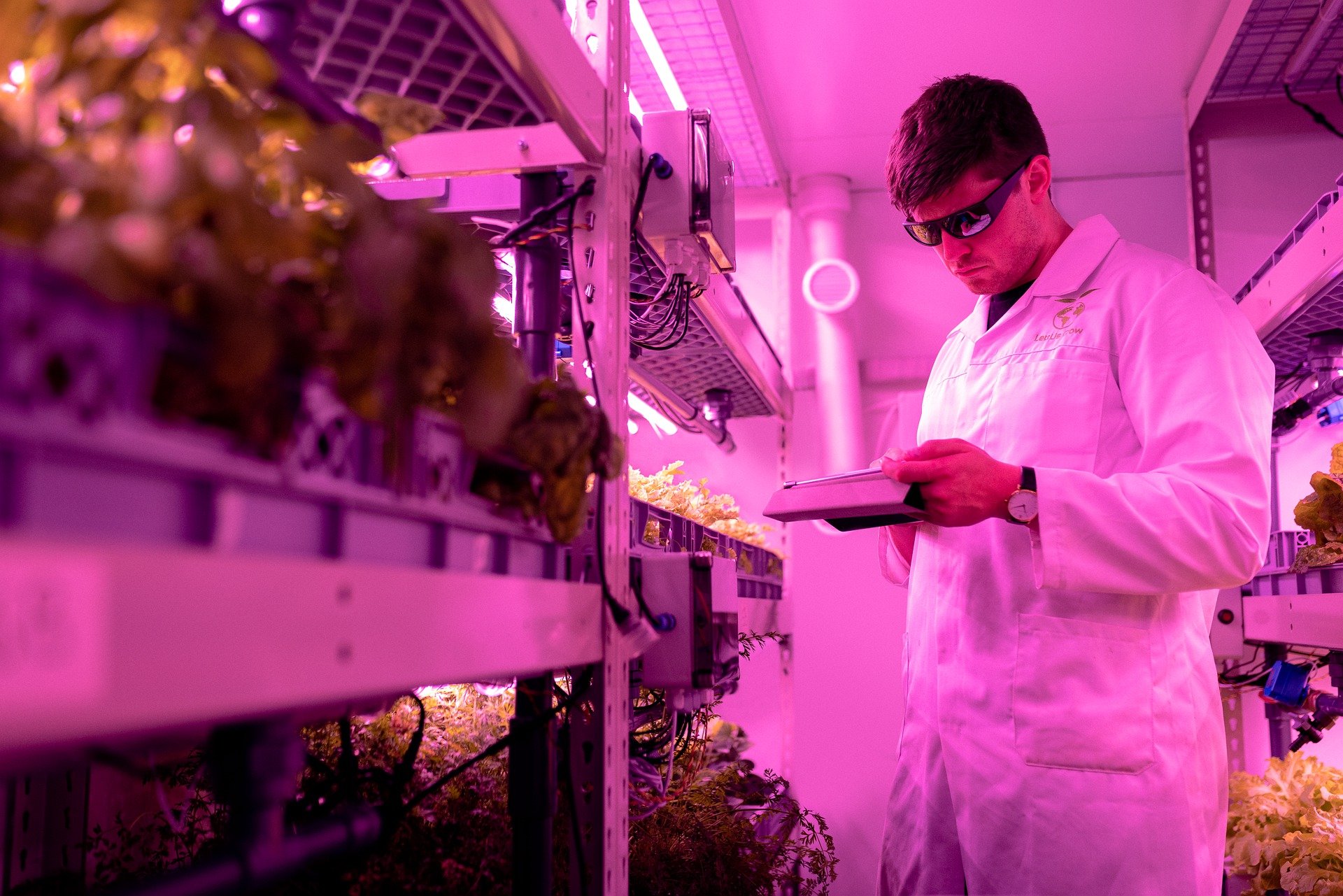
- Using all the types of UV radiation listed above in indoor cultivation requires some discipline, otherwise you could easily burn your precious plants.
- Therefore we recommend starting with shorter exposure times and, if you deem it appropriate, gradually increasing them. However, an ideal exposure time for UV lamps practically does not exist and depends greatly on the individual characteristics and needs of each plant.
- Another prevention against burning is placing the lamp that emits ultraviolet radiation at a sufficient distance from the plants. These are the recommended minimum distances:
- Discharge lamps: 40–60 cm
- LED lights: 30–40 cm
- Fluorescent tubes, energy-saving lamps, or less powerful LED fixtures etc.: 10–15 cm
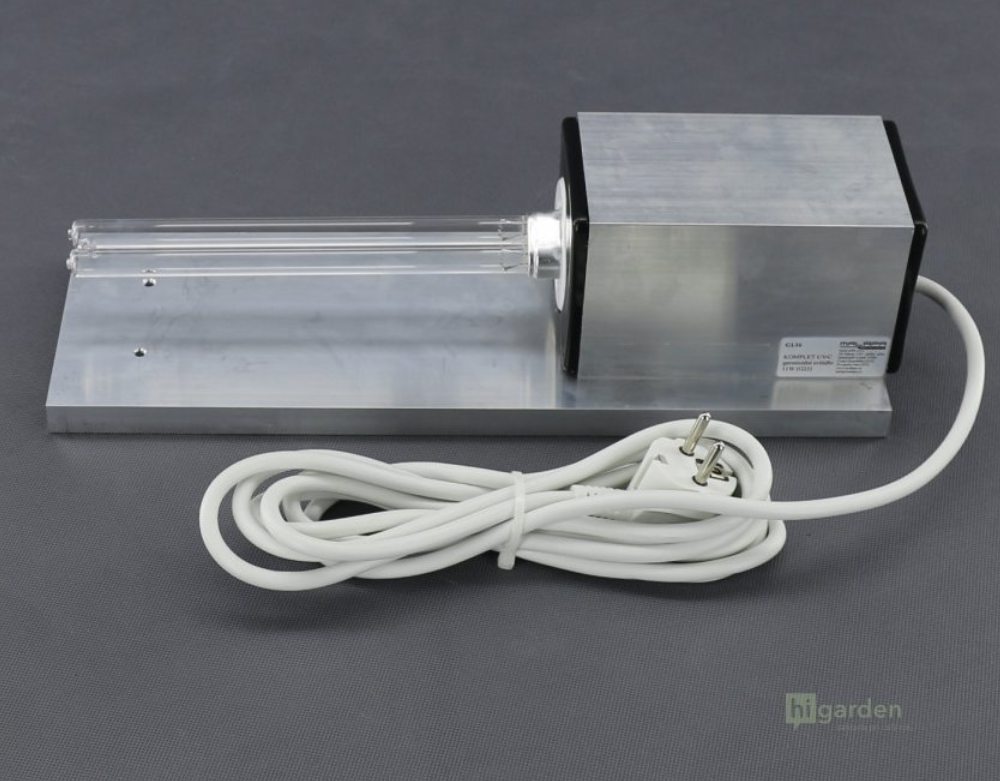
Looking for suitable lighting with UV radiation? Our specialists are available at the usual address info@higarden.cz. We look forward to your inquiries!
We also recommend these products:
- GL16 – KOMPLET UV-C germicidní svítidlo 11 W (G23) (1 790 Kč)
- LUMii Black Digitální komplet 600 W KIT (2 990 Kč)
- Provzdušněné květináče HERCULES (from 49 Kč)
What to read next?
- SHOGUN: The best British fertilizers with an emphasis on research
- How to choose the right strength discharge lamp?
- How to grow cacti and succulents?