
How to Grow Microgreens
Sprouted shoots that we harvest and consume before they reach the young seedling stage have been a long-term trend in healthy eating. Their cultivation is also very easy. Read how to do it!
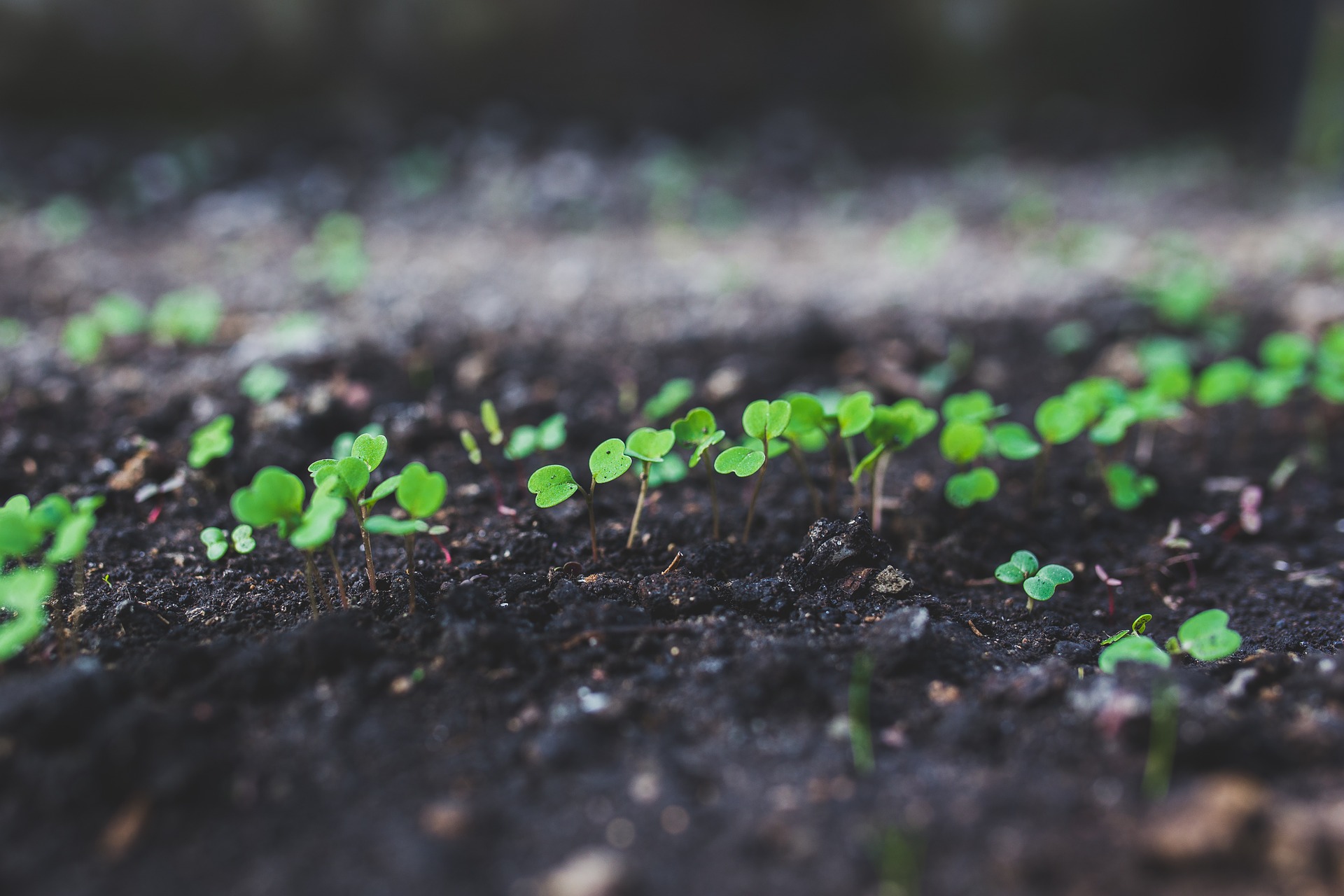
First of all, it's good to remember that microgreens also require a quality base to support your health. However, the very fact that growing MICROGREENS is „easy“ often leads in practice to reduced care for the sprouts and consequently poorer growth or final quality. And that's a shame — after all, they are a vitamin bomb.
The quality of the substrate matters
The most common mistake when it comes to growing microgreens is poor soil. That can cause unnecessary problems with cultivating microgreens. We mean mould, uneven growth, or even its complete cessation.
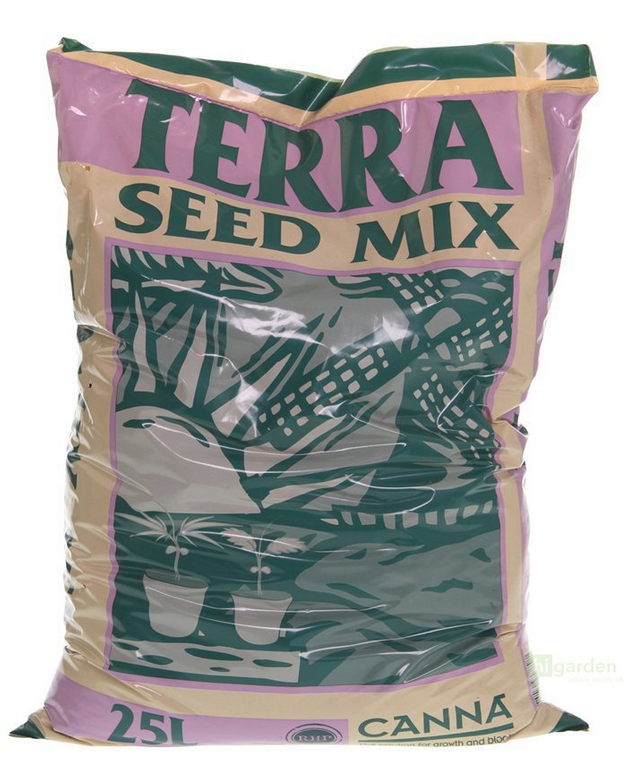
Also remember that with microgreens you practically consume everything the soil contains. A 100% organic substrate composition without added artificial fertilizers is a matter of course here. And which substrate is suitable for cultivating microgreens? For this purpose we can recommend, for example Canna Terra Seed Mix.
How much substrate?
When sowing microgreens, growers most often ask how much substrate to use in a pot or planter. Although the seeds are packed with the nutrients needed for successful germination and rooting, from the moment the sprout touches the soil and its roots branch out, the young plant begins to absorb nutrients from the soil substrate. The actual answer therefore depends mainly on the variety of herbs you choose:
- Some varieties have large seeds and grow very vigorously. These include pea, corn, or sunflower. In such cases the rule is: the more substrate, the better. Even a 6 cm layer is not too much.
- Varieties with smaller seeds get by with approximately a 3–4 cm thick layer of substrate; there's no need to overdo it. Typical examples are mustard or broccoli.
How to sow microgreens?
Most of us will gradually find our own way to sow microgreens. But you can't go wrong by being inspired by the following points:
- Consider which variety of microgreens will suit you. Do you already know what you'll plant? Some seeds need to be soaked for half a day, for example pea, mustard, or beet seeds. Depending on whether the chosen variety prefers a lit space, you may or may not cover it with a thin layer of soil.
- Use only seeds that are free of any chemical treatment for sowing.
- Prepare everything you need for the operation: quality substrate (sowing medium), growing containers, seeds, water, etc.
- Pour the appropriate amount of substrate (see above) into the pot. Moisten the soil and tamp it down. A tried-and-true tool for this is pressure sprayers (sprayers).
- This will give you a clearly defined and precisely prepared area for sowing seeds. It should be as smooth and level as possible. Likewise, the sowing should be as even as possible. Excessive seed density in the substrate will mean that microgreens, despite being MICRO, will lack space for healthy growth. As a result, the risk of mould will also increase. If you spread the seed too sparsely into the growing container, you cannot expect microgreens.
- Next it's time to water the seeds, again as evenly as possible. Moisture is more than enough for successful germination; avoid a waterlogged substrate.
- The seed is initially covered and it is advisable to weigh it down with something. Besides sufficient moisture, germination primarily requires darkness.
- Most microgreens appreciate being covered for just under a week. In the meantime they will stretch and after uncovering they quickly turn green.
- Also don't forget to regularly check the sown seeds! Remember they must not dry out. Substrate should therefore be kept appropriately moist throughout the germination process.
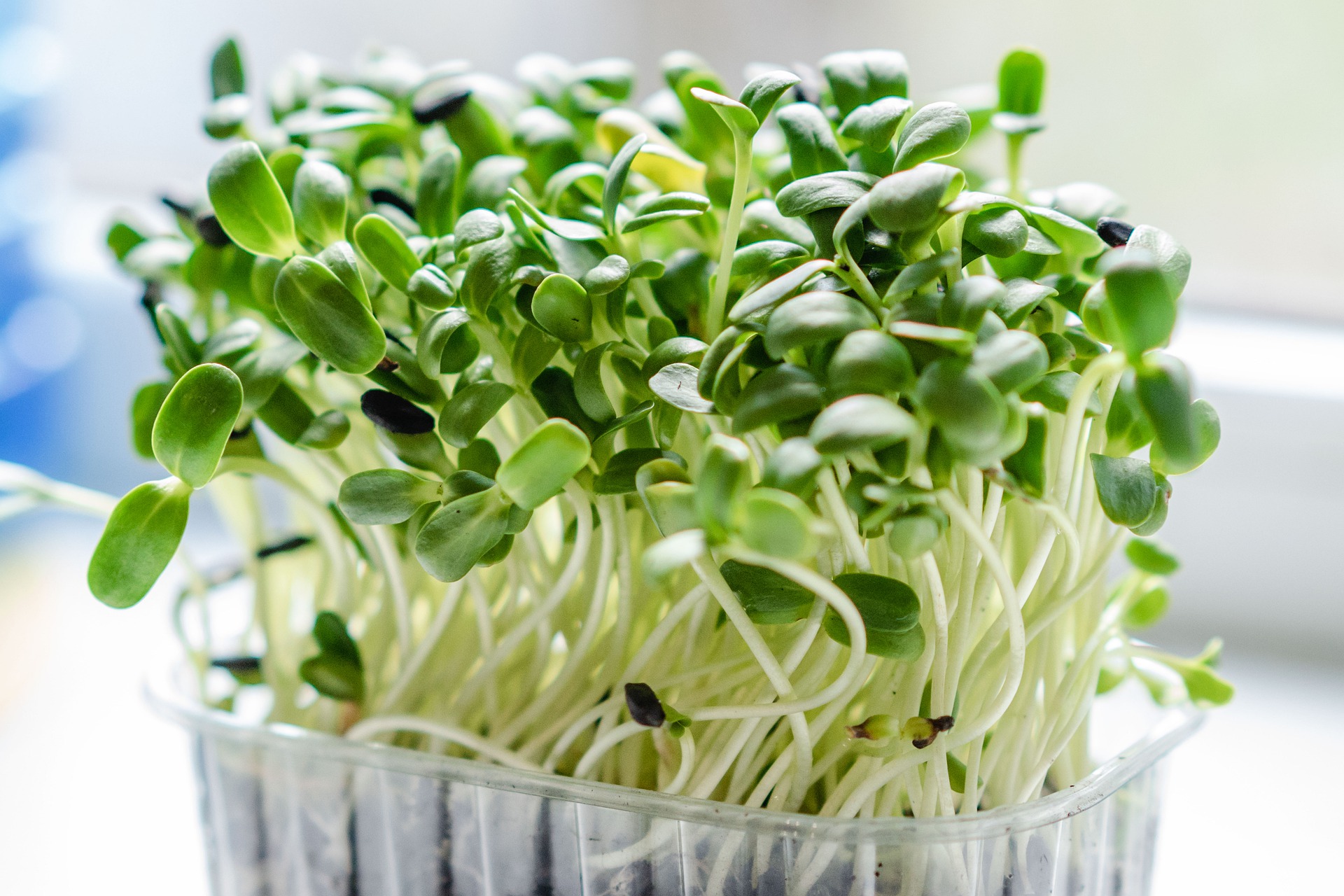
- Once you expose the young plants to light, they will turn fully green or take on healthy colors (red, yellow, purple, or their combinations depending on the specific variety) as proof of maturity.
How to water microgreens?
As long as the plants are only sprouts whose first roots are just breaking through to the surface, water them in the usual way from above. Once they reach the bottom of the pot and the overall vegetation in the growing container becomes increasingly dense, start watering from below.
Our TIP: Keep in mind that from above the substrate may appear dry, while the roots have sufficient moisture and another watering could cause unwanted overwatering.
If you have any questions about MICROGREENS, we will be happy to answer them at the usual address info@higarden.cz.
We also recommend these products:
- Canna Terra Seed Mix 25l (299 Kč)
- BioNova Bio Soilmix 50L (279 Kč)
- Tlakový postřikovač PROPUMP, 2l (249 Kč)
- Everything for growing microgreens
What to read next?
- Expanded clay as a growing medium
- Indoor plant cultivation and the savings associated with it
- How to grow mother plants and how to care for them?