
How to grow in a greenhouse?
Greenhouses are often associated with harvesting fresh home-grown tomatoes, peppers or cucumbers. Successful cultivation of various types of vegetables, fruits and herbs in a greenhouse, however, follows time-tested principles that experienced growers stick to so they can enjoy a plentiful harvest once or even twice a year. Read about the advantages and pitfalls of growing in a greenhouse.
Advantages of greenhouse growing
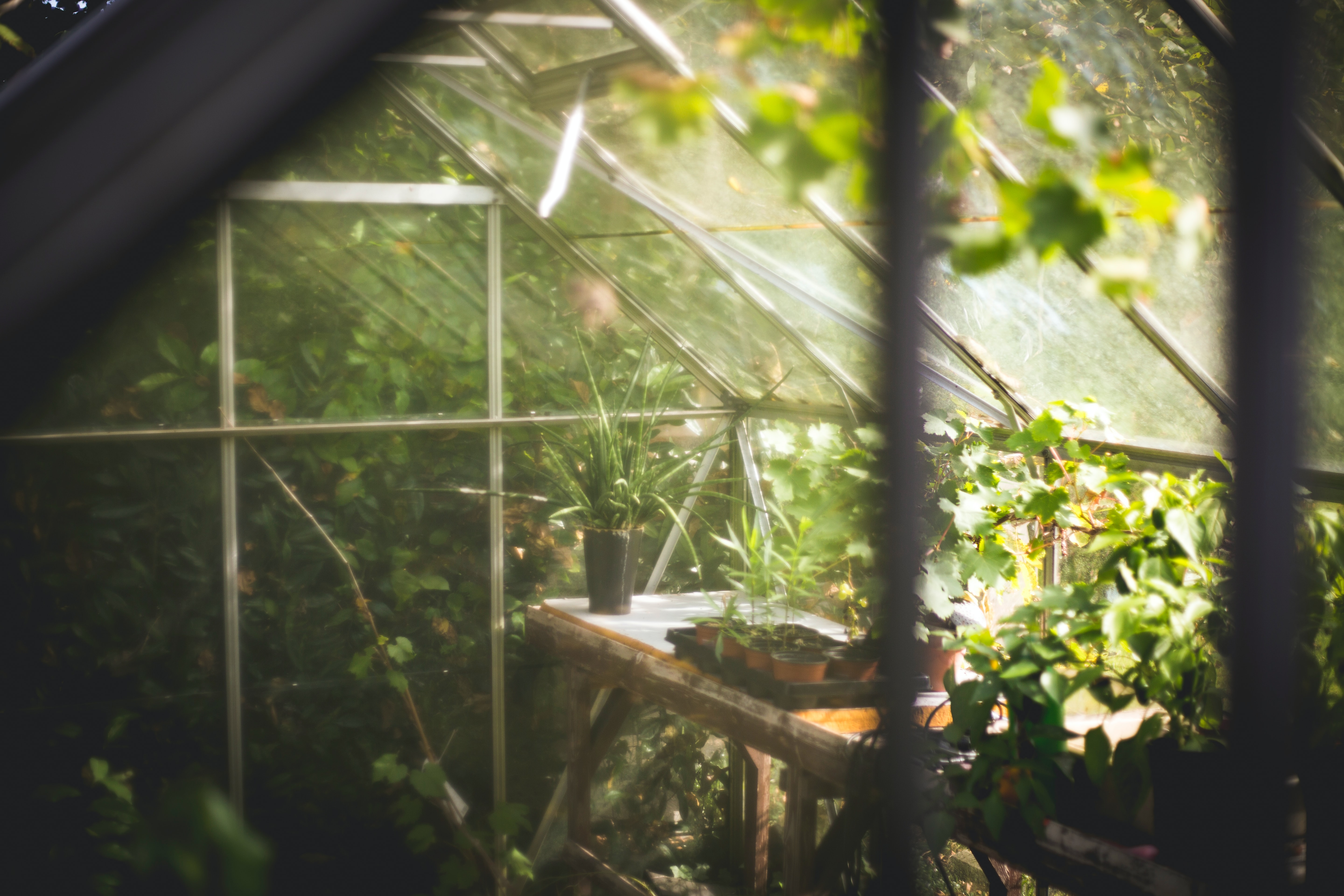
What is the main advantage of greenhouses compared to growing on uncovered beds in the garden or on a small plot? The number one answer is: optimal growing conditions, which some popular plant species are very sensitive to. In a greenhouse, unlike purely outdoor cultivation, you can maintain a steady temperature and humidity. Greenhouses also protect plants from adverse weather such as strong winds or heavy rains. (Below the article you will find a link to a separate article dedicated to various stress factors that harm plants.) Greenhouses allow plants to grow faster and crops to ripen sooner. Growers make the most of this especially when growing seasonal vegetables. Some vegetable varieties cannot be properly grown without a greenhouse. If you have a greenhouse in your garden, you have much greater flexibility in terms of which varieties to grow.
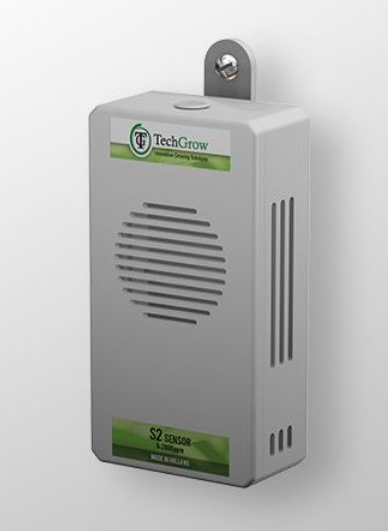
OUR TIP: Achieving optimal conditions in greenhouses is also helped by a Dutch high-tech innovation: intelligent TechGrow S-2 CO2 sensor. We also highly recommend other unique devices from this manufacturer! For example modern timers for your irrigation systems.
Another advantage of greenhouse growing is of course saving electricity, because when it comes to plant lighting you don’t need an artificial light source — you use the sun, which shines on your plants for free and whose light is intensified by clean glass (see below).
Another benefit of greenhouse cultivation is the head start. What do we mean by that? As we mentioned at the beginning, it is possible to harvest even twice a year. That is because while in open outdoor beds we usually plant tomatoes or peppers around May when the weather is warm enough, a greenhouse gives growers up to a two-month lead, so hardier vegetable varieties are commonly planted as early as March.
Ventilate, ventilate, ventilate
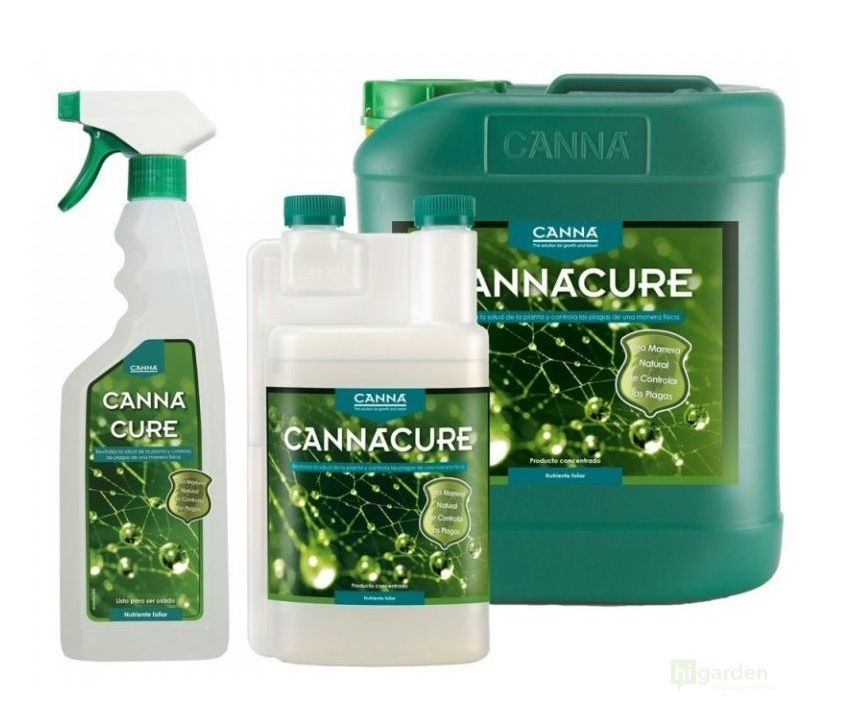
Ventilation, ventilation — plants are protected from the development of molds by... Not only for this reason should regular air exchange be a matter of course when growing in a greenhouse. If that does not happen, an environment automatically forms in which, simply put, plants struggle to “breathe”. Too high humidity builds up inside the growing space, which increases the risk of fungal infections or other mold diseases. A common mistake is relying on just one ventilation opening. Always open at least two windows to ensure sufficient air circulation inside the greenhouse. On warmer days you can open the door, but bear in mind that the larger the ventilation opening, the easier it is for pests to slip in. After all, a greenhouse is not a grow box, so make sure you have effective prevention. Also read How to deal with pests? A particularly useful aid is the popular Canna CURE spray. On the other hand, opening vents and doors gives beneficial flying insects — pollinators — the opportunity to enter the greenhouse and perform their natural role, helping you achieve a great harvest. To summarize:
- Ventilate thoroughly in combination with effective prevention.
- Opening at least two ventilation openings on opposite sides of the greenhouse ensures that air naturally circulates in the growing space.
- In spring ventilate only during the day when outdoor temperatures peak, and remember to close ventilation openings at night so that nocturnal temperature fluctuations do not endanger your plants’ development — greenhouse heating.
Make the most of the space
Efficient use of space in a greenhouse allows you to multiply the amount of tasty fruits or fragrant herbs you can harvest. For this purpose, greenhouse shelves or window sills are put into greenhouses. Handy DIYers can also make them themselves. The material matters less than stability, because wet soil is quite heavy. They are perfect, among other things, for pre-growing seedlings in pots. Some shelves are foldable, others are not. The advantage of foldable shelves is that later they do not obstruct taller plants. Under non-folding shelves you can grow lower vegetables and create an additional layer on the shelves where you place planters with basil and other warmth-loving plant species. Ideally, shelves have various openings through which circulating air can also reach the lower tier.
Tips on pots for a healthy root system and higher yields
Fabric pots are made with sustainability in mind. After harvest you can simply wash them and reuse them for the next growing cycle. Unlike plastic pots, there is no risk of container degradation and you will provide plants with perfect drainage and aeration of the substrate — that is, an excellent supply of oxygen to the roots. Read the article: When to prefer fabric pots instead of plastic ones? From plastic pots we recommend for great root development the aerated HERCULES pots. The picture clearly shows how well plant roots thrive in them.

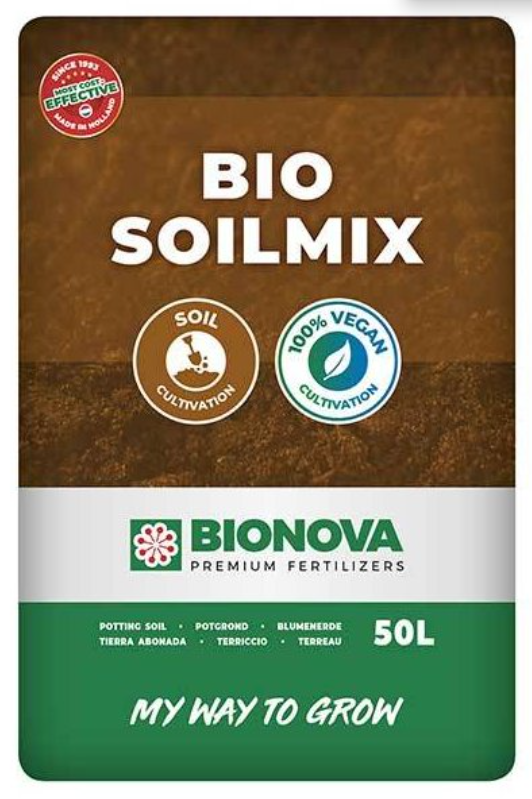
Some growers prefer beds inside the greenhouse, complemented by hanging pots to maximize growing space. If you decide to cultivate plants in beds inside the greenhouse, remember to obtain a quality growing substrate and replace or revitalize it regularly. Revitalizing substrate is the subject of the article: How and why to revitalize the substrate? Regular revitalization and replacement of spent substrate in greenhouse beds is part of important prevention against mold development and pest infestation. If your priority is harvesting tasty crops in organic quality, we recommend for example BioNova Bio Soilmix.
Advantages and pitfalls of the greenhouse effect
This process, which we already learned at school, allows plants to grow faster and form fruits that also ripen more quickly. Fruit vegetables are therefore usually topic number one in greenhouses. Short-wave radiation passes through the glass into the greenhouse creating heat that is well retained inside. Growers and gardeners use this every year early in spring to pre-grow seedlings. The greenhouse effect is beneficial in most situations, but it is said that too much of anything is harmful. That also applies to too much sun, whose rays are intensified by glass. During hot summer months you need to be careful not to let extreme temperatures develop inside the greenhouse. On our e-shop you can choose from a range of devices for temperature and humidity measurement.
Heating the greenhouse
Protect your plants in the greenhouse from sudden drops in temperature or low nighttime temperatures and provide them with a stable environment using special heating
We recommend reliable tubular heating elements LightHouse ECOHEAT, made specifically for greenhouse growing in four variants. Just choose the required power (45 W, 80 W, 135 W or 240 W) according to the size of the greenhouse.
Practical heating elements can be easily attached to the greenhouse wall, but you can also place them directly near the plants, as they are resistant to sprays and water splashes. You can see both options in the picture.
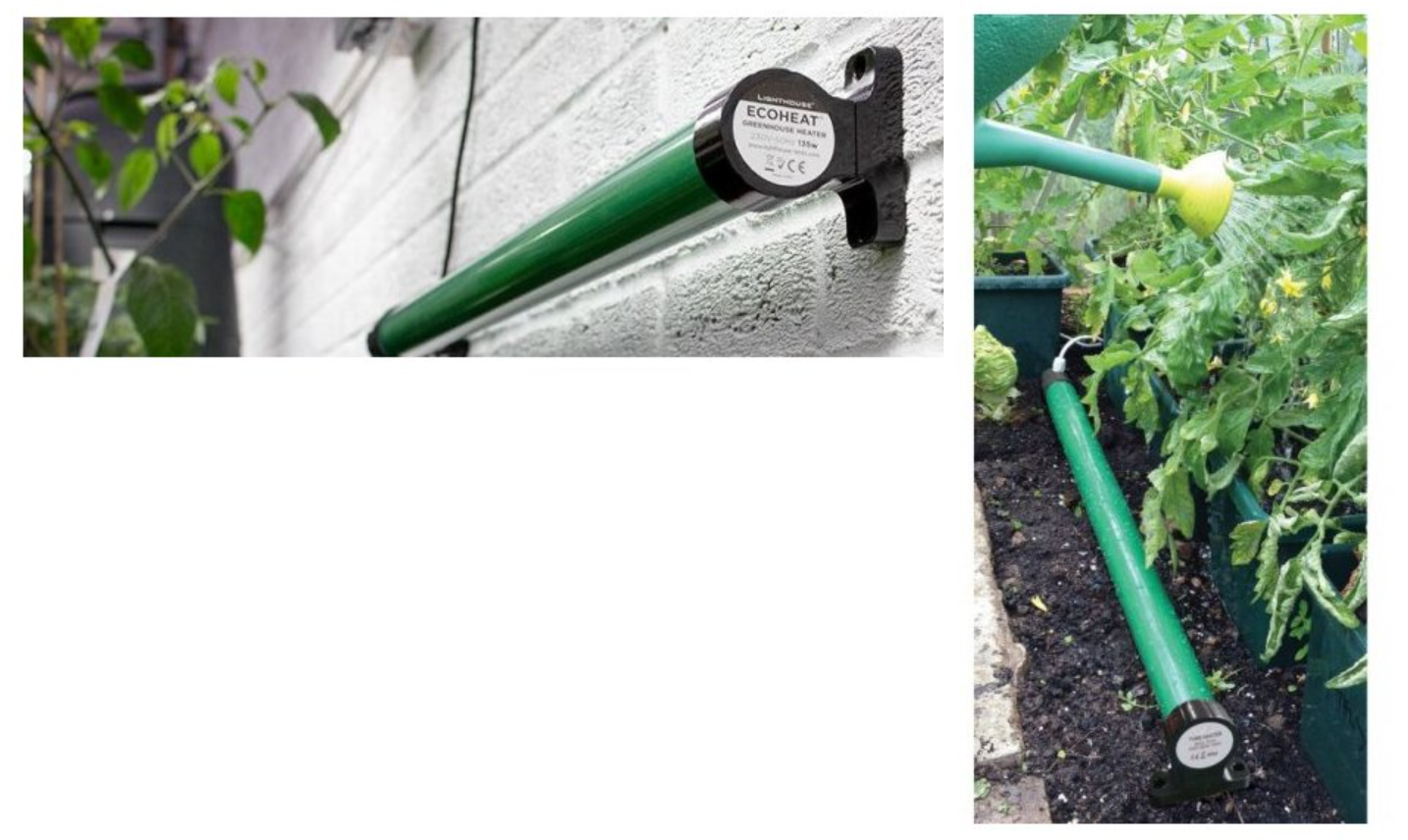
Greenhouse heating will certainly come in handy for safely overwintering potted plants.
Heating the greenhouse is a useful support for plant development during colder months, but remember that to grow plants in a greenhouse during winter you must also provide sufficiently strong artificial lighting in addition to heating. Heating a large space together with artificial lighting is already a financially significant undertaking. Year-round cultivation of any plant species under artificial lighting is also possible in grow tents of various sizes, allowing you to harvest comfortably at home from spring to winter.
Clean glass and birds
If you keep the glass permanently perfectly clean, you will maximize the effectiveness of the sun’s rays that pass through the glass to the photosynthesizing plants. In other words, it would certainly be a shame for your efforts to be hampered by a layer of dust or other dirt from the surroundings. For example, lettuces in particular, which due to a layer of dust on the greenhouse do not absorb light sufficiently, tend to accumulate nitrates.
Again, too much of anything is harmful, so when it comes to pitfalls associated with greenhouse growing, caution is especially needed in summer. We have already mentioned the greenhouse effect. Accumulating heat inside the greenhouse could damage plants, so it is worth using proven measures such as applying a protective lime wash to the greenhouse surface, which can be relatively easily removed after the season with water and vinegar. These coatings are usually inexpensive and you do not need to worry about damaging the glass.
Regarding clear glass, it is also important not to underestimate the speed and perception of birds flying over the land where your greenhouse stands. A bit of translucent paint or UV stickers on the glass will save the lives of birds and at the same time prevent damage.
If you have any questions about greenhouse growing, we will be happy to advise you at the well-known e-mail address info@higarden.cz. This of course also applies to choosing suitable products that will significantly simplify your work in the greenhouse and increase yields. We are here for you!
We also recommend these products:
- BioNova VitaSol
- Shogun fertilizers
- ROOT!T rooting sponge / propagation cube
What to read next:
- Stress harms plants too — Abiotic plant stresses
- Organics Nutrients: naturally towards large yields
- How to grow outdoor?