
How to deal with pests?
This article directly follows the post about plant diseases. Individual pests and diseases in relation to plants are primarily connected by the fact that your plants are protected from them first and foremost by quality prevention.
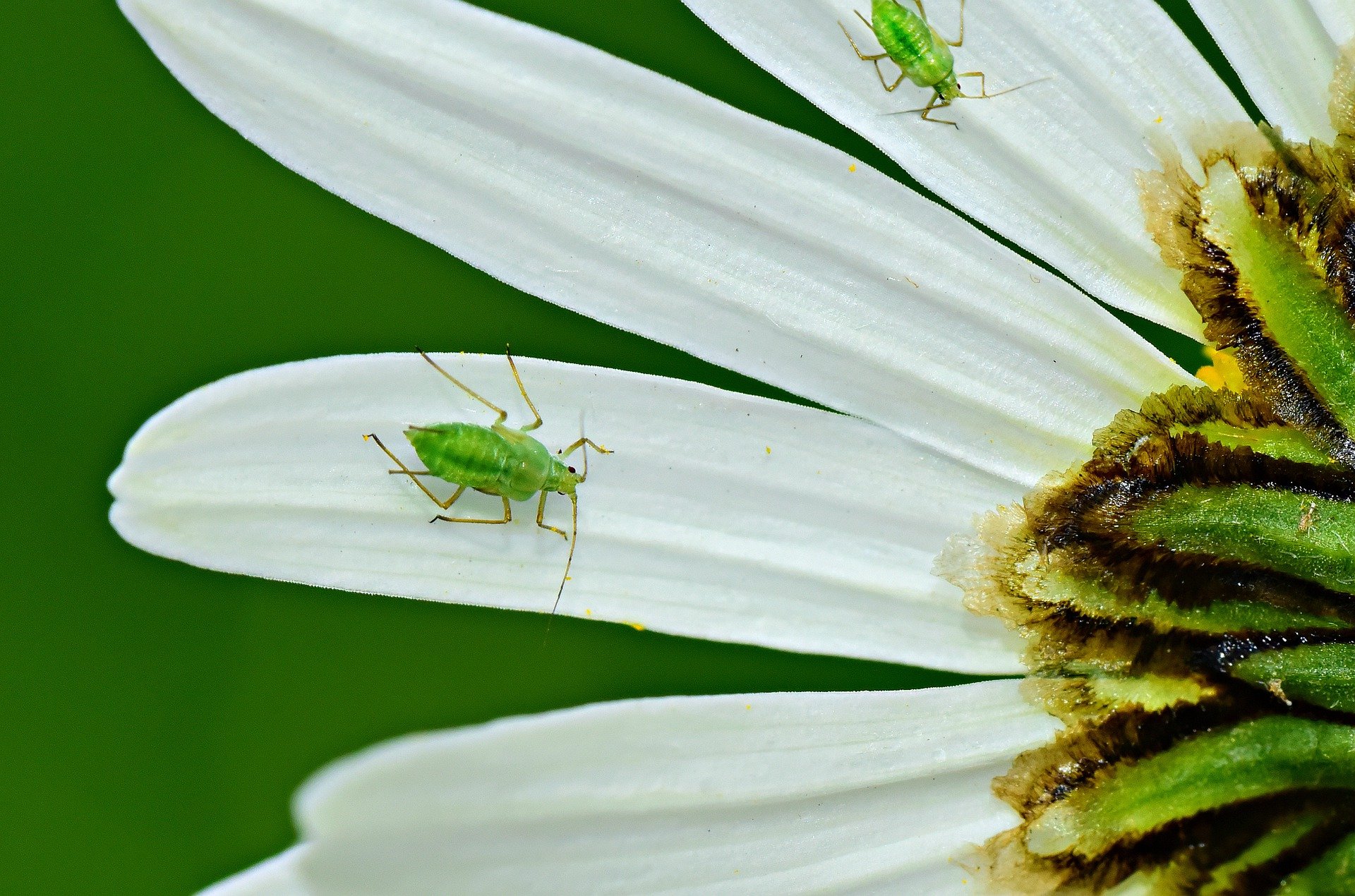
Every grower should have at least a basic awareness of the common pests that regularly attack plants, because as they say, fortune favors the prepared.
Indoor growers who cultivate plants in controlled environments, providing them with grow tents, do not have to struggle with pests as much. However, it is necessary right from the start to dispel the frequent myth that pests will avoid your plants in indoor cultivation without proper prevention. For example, fungus gnats occur paradoxically more often on plants grown indoors. Preventive protection of plants against pests is therefore definitely an area not to be underestimated, whether you grow herbs, fruit or vegetables at home or outdoors.
A common feature of the pests in this article is their tendency to stay on the undersides of leaves. It then largely depends on whether the plant is harmed by adults, which can be seen on the vegetative parts of the plant and are usually flying insects (e.g. aphids), or rather by larvae (e.g. fungus gnats) in the soil, which need to be monitored both for their presence and for optimal substrate moisture.
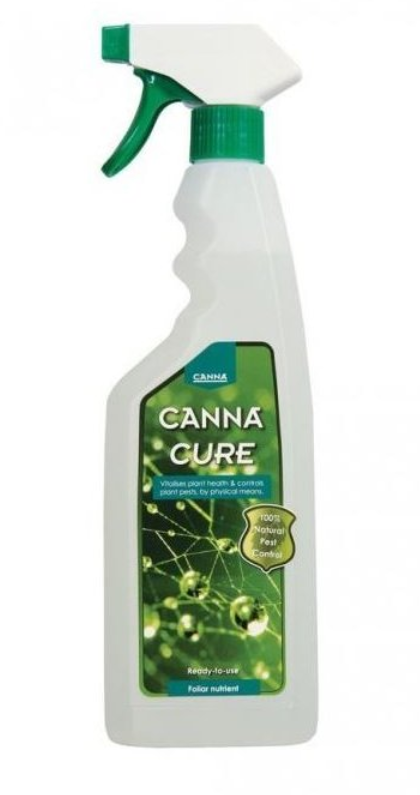
- OUR TIP: Start by getting Canna CURE!
- Right away we warmly recommend the foliar spray against pests Canna CURE, which indoor and outdoor growers immediately liked after its market introduction thanks to its effective yet ecological composition. It is exceptionally versatile and you can use its effectiveness when growing in any growing medium.
- In addition to comprehensive plant protection, Canna Cure also significantly supports photosynthesis.
- It works by creating a protective film on the leaves.
- With regular use of CannaCure you will achieve unprecedented plant vitality, making them resistant to potential attacks by various pests.
- What best distinguishes this liquid preparation with insecticidal and fungicidal properties from similar products is its ability to literally control the occurrence of pests on the plant surface. This very feature makes this unique preparation an exceptional product, one of a kind.
So what are the most common types of pests and how can you deal with them effectively?
APHIDS
Who wouldn't know those little (3-10 mm) critters, right?
- They feed on sap from stems, leaves or flowers and literally suck the life-giving energy from plants, which can lead to their eventual death.
- Aphids attack many plant species and are most attracted to young plants in early developmental stages. If they attack young leaves, those leaves will never reach full size even after the aphids are eliminated.
- Every grower has probably encountered aphids at least in the garden. Aphids are a typical example of a pest capable of devastating your crop even in an indoor environment.
- There are many species of aphids, but the options for eliminating them are the same.
- To avoid straying from grower practice into biology, we add one interesting and rather unpleasant fact: a single adult aphid produces on average between 50 and 250 female offspring with the same reproductive ability during its life cycle. This means only one thing. As soon as you see a few aphids on your plants, immediately proceed to eliminate them, otherwise their population in their flowerpots or beds will soon grow at a rocket pace!
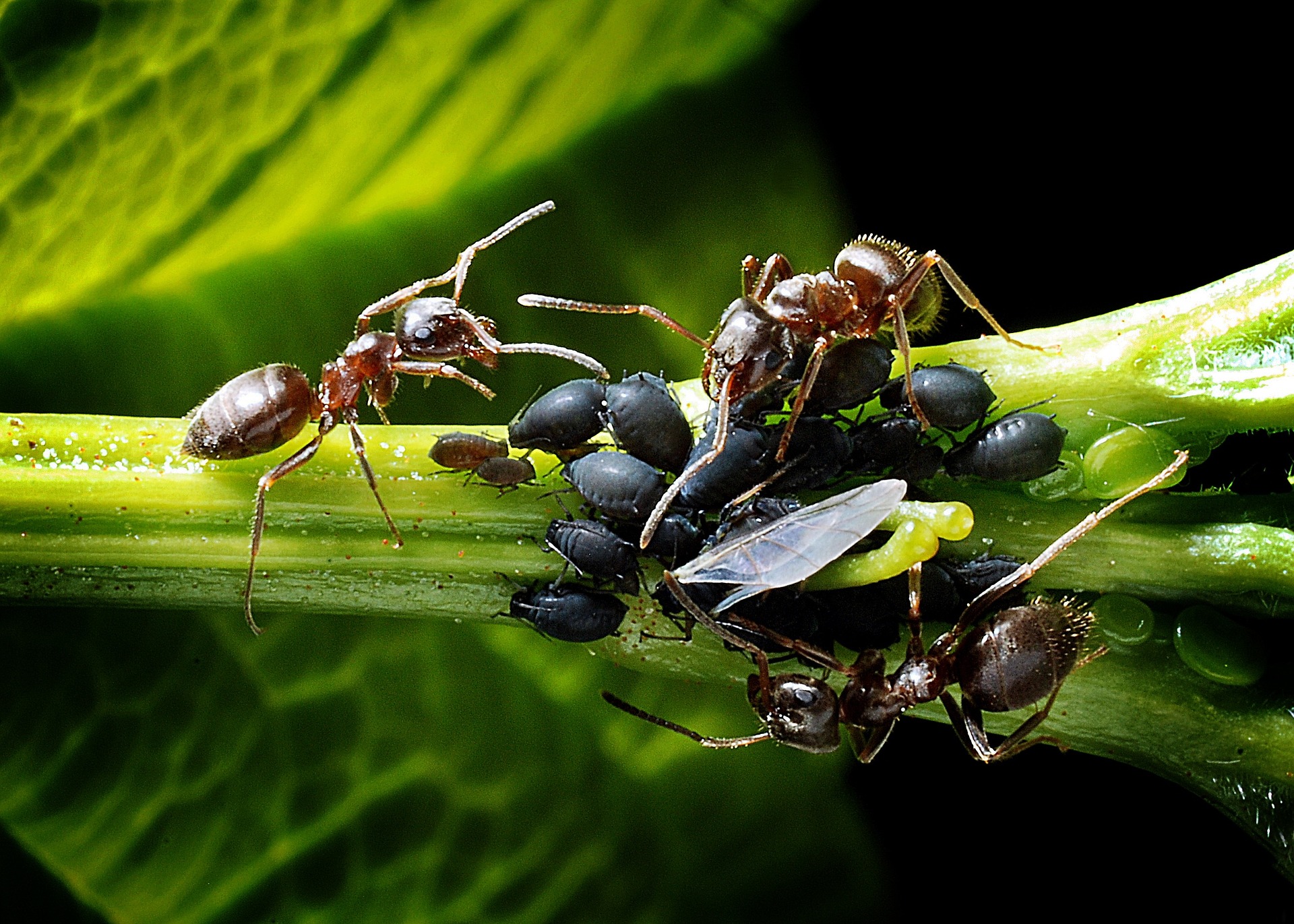
- A fairly reliable indicator of the presence of aphids on a plant is an ant crawling on the plant or, for example, a ladybug.
- Detecting aphids is also made harder by their tendency to stay on the undersides of leaves. They can also vary in color, including green, which is of course difficult to notice on green plants. Aphids are therefore the hardest to spot at first. After that their identification is relatively easy.
Prevention:
- Canna CURE – foliar spray against pests or, for example, the 100% organic pesticide BioNova NovaFoliar
- Effective air filtration for indoor cultivation
Control:
- You can remove a few individuals manually, by hand or with a cotton swab. Also consider simply showering them off, i.e. removing pests with water pressure for plants grown in flowerpots.
- You can best eliminate a larger aphid population with an effective biological or chemical product. Try, for example, the proven product Mospilan or the spray INPORO from the Czech company AgroBio.
- If you decide on chemical treatment, observe the product's withholding period indicating the time that must elapse from application to consumption.
SPIDER MITES
- This eight-legged sucking pest with a uniform body belongs to the mites, extracting sap and life energy from plants.
- Infested plants show significantly slowed growth and reduced ability to form flowers and fruits.
- In our region you most often encounter the two-spotted spider mite (Tetranychus urticae) and the fruit mite (Panonychus ulmi). The two-spotted spider mite reproduces somewhat faster than the fruit mite, but believe us, both species are capable of unbelievably multiplying the number of individuals on your plants before you can say "destroyed crop". Therefore, again we primarily appeal to proven prevention, which is practically the same for eradication as in the case of the aphids mentioned above.
- Spider mites often reveal themselves on leaves by conspicuous pale spots visible from above, although the mites themselves would be found attacking the underside of the leaves.
- Spider mites are quite hard to observe because they rarely grow to 0.7 mm. In practice we primarily see only tiny moving dots. If you use a magnifying glass, spider mites will be revealed to have eight legs — this number is quite unusual among plant pests.
- Spider mites are also related to spiders, which is why they may betray themselves by characteristic fine white webs on plants that are very delicate yet relatively strong.
- If it comes to eradication, we again choose biological products first, and a chemical insecticide should only be used after those fail.
FUNGUS GNATS
- Fungus gnats (Sciaridae) hatch from eggs in the growing medium. Often we "buy" them already along with the substrate, especially if it is a cheap universal version from the supermarket.
- Larvae hatch from the eggs and threaten plants by feeding on their roots. And since a healthy root system that absorbs water and nutrients well is the basis of a vital plant, this results in slowed development or even death.
- Fungus gnats can also appear in other waterlogged growing media. They prefer moisture.
- Growing media such as perlite or expanded clay are, on the contrary, not favorable to fungus gnats.
- You usually notice fungus gnats as confusedly flying little flies (2-4 mm) on the surface of the substrate that hatched from larvae. The problem in the case of fungus gnats is mainly the larvae; you don't need to worry about the adult mosquito-like flies.
- You can sterilize any substrate before planting. For example, you can put it in an oven heated to a high temperature, though this is not very practical at home due to the smell. A better option is to pour boiling water over the substrate. Once it cools to normal temperature, you can plant.
- There is a close connection between watering and the occurrence of fungus gnats. Overwatering plants and a wet substrate again unnecessarily increase the probability of fungus gnats and their larvae. A proven trick to eliminate larvae in the substrate is to let the substrate dry out 2–3 centimeters deep before each watering.
- Practical sticky traps and sticky arrows also work well for adult individuals.
- If you don't notice adult flies or larvae, you will recognize an infestation by fungus gnats by yellowing leaves and the plant generally not thriving. Fungus gnats, besides rotting the roots, also cause various fungal diseases of the root system.
WHITEFLIES
- Whiteflies (Aleyrodoidea) are related to aphids and also damage plants by sucking sap.
- As adults they reach 1–2 mm. They are conspicuous due to their bright white coloration and strong flying ability, which often gives them away. Just shake the plant you want to check; if it has been infested by whiteflies, the whiteflies will fly up into the air and after a while settle back on the infested plant. Identification is therefore easier than with many other pests. Simply put, you won't find a flying pest of bright white color that flies in similar numbers and as well as whiteflies, always feeding in large swarms at the expense of plants.
- Reliable identification and capture of adult individuals is again enabled by sticky traps and sticky arrows.
- Prevention and control of whiteflies is practically the same as for aphids in terms of measures and methods.
THRIPS
- Of the several hundred thrips species (Thripidae), in our climatic conditions you are most likely to encounter the onion thrips (Thrips tabaci), which rounds out our list of the best-known plant pests and attacks countless species.
- Thrips are most easily recognized by their characteristic fringed wings, from which they derive their name. The fringes on the edges of the wings are clearly visible at first glance.
- Thrips also belong to sucking pests, but besides leaves they will not disdain flowers or fruits.