
High Temperatures in Indoor Growing: How to Avoid Them?
Summer is gone for good, but the heating season is in full swing. That makes the topic of high temperatures still very relevant, as they can fairly easily cause reduced growth or flowering of your valuable plants and, in worse cases, even permanently damage them. In this article you will read how and why to address high temperatures inside a grow tent or room. It will not only be about air temperature. Among other things, we will also remind you why substrate temperature is important. You will also learn the difference between temperatures suitable for roots and for the above-ground parts of plants.
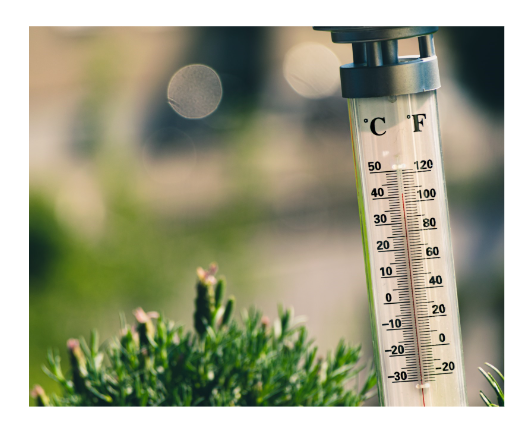
You may wonder why plants cope so poorly with extreme temperatures every year, not only outdoors during summer but also in overheated rooms during winter months. It's because if the environment where they grow becomes too hot, plants cannot cool themselves sufficiently through the process called transpiration. Simply put, they can't evaporate water fast enough and the hot air causes them to dry out and gradually degrade. This is of course a problem that should be prevented or at least addressed in time. It is also worth noting that plants grown outdoors tend to be partially adapted to summer heat because they cannot escape it by nature. As an indoor grower you can, however, take the right steps so that your crop never suffers from high temperatures and hot air again.
What can high temperatures in a tent cause?
Otherwise, sooner or later you will face nutrient deficiencies (see separate article: Signs of important nutrient deficiencies), or symptoms of nutrient excess. Growth of plants usually slows significantly and leaves may die off. If leaves are not yet dying outright, they typically curl and dry out. Once your plants start to wilt, things get serious. That is almost the end, when irreversible degenerative processes and permanent crop loss occur.
Solving high temperatures when cultivating indoors
Now let's focus on the most important factors related to temperatures in the cultivation space during indoor plant growing that you as a grower can influence.
- SOURCE OF ARTIFICIAL LIGHTING
You may already know that particularly powerful discharge lamps emit a considerable amount of heat in addition to light. Although many growers still swear by classic discharge lamps—whether out of habit or for other reasons—the market for cultivation lights is slowly but surely being overtaken by modern LED lamps.
Our TIP: LED Set 720W Lumii Black
LED cultivation lighting can work more efficiently with electrical energy, converting it into light radiation. Because of that, the increasingly popular LEDs do not raise the temperature inside a grow box nearly as much as discharge lamps. You can read about other differences between discharge lamps and LED fixtures—such as light spectrum composition or power consumption—in the separate article: Growing under artificial lighting: HPS vs. LED.
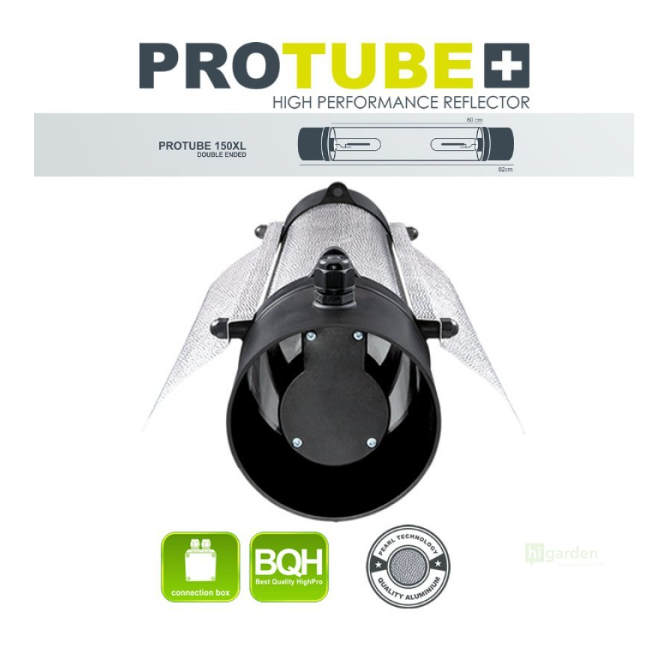
The good news is that you can at least partially control the heat generated inside a grow tent when using powerful discharge lamps. You can temporarily reduce light output, because plants suffering from too-high temperatures will not be able to utilize high PPF values anyway, but especially when using discharge lamps you can use air-cooled reflectors, also known as COOLTUBE reflectors (COOLTUBE).
- VENTILATION AND AMBIENT TEMPERATURE
The temperature inside the cultivation space is primarily determined by the temperature of the surrounding air that is brought in. Indoor growers are not a special breed who enjoy freezing at home in winter, but in some cases it pays off to lower the temperature in a comfortably heated room by a few degrees. In summer there is nothing better than air conditioning, which is not the cheapest equipment, but second-hand units can make acquisition easier and greatly simplify home cultivation of herbs, fruit, or vegetables. Other proven tips include running grow lights only at night when temperatures are usually lower. And if the layout of your apartment or the placement of your grow box allows it, bring fresh air in directly from outside using an intake fan connected to ventilation ducting.
This brings us to the airflow of fresh air around plants, which is often underestimated in indoor gardening, at least at hobby levels and in the beginning. But remember that the more fresh air you "push" through the cultivation area, the more likely the plants grown inside will be able to handle higher temperatures. It is important that the air being extracted from the grow room does not mix with the fresh air that is just being brought in, because it would affect both temperature and humidity. The quality of a well-designed ventilation system is simply crucial. We also recommend the following separate articles on this topic:
- How to choose and set up tent ventilation
- How powerful of a fan do you need?
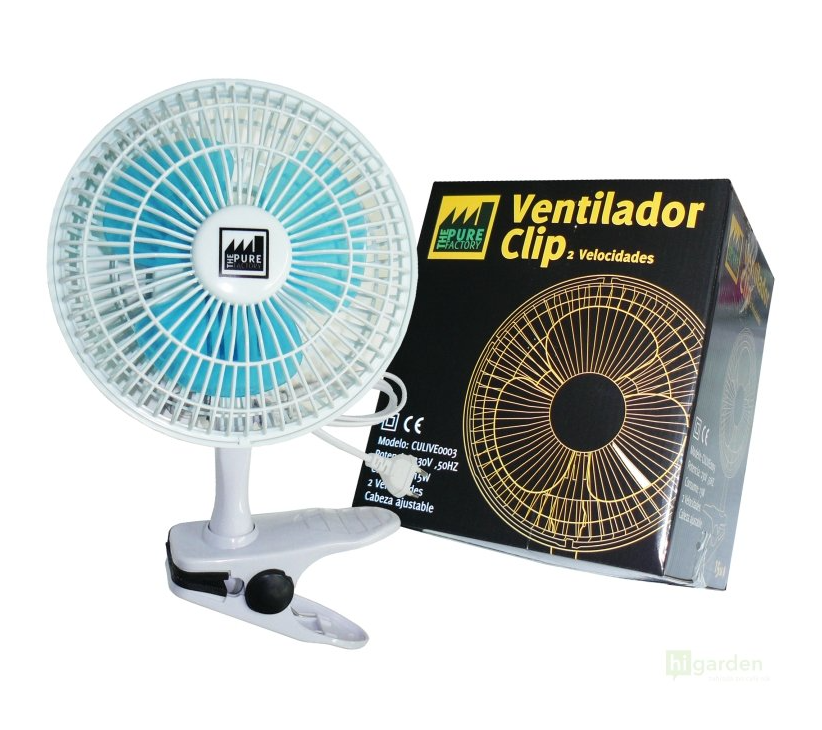
And how do you prevent hot air from just standing still in the grow room and instead keep it constantly moving around the plants? It's simple: that's exactly what circulation fans are for, and they are indispensable helpers for every indoor grower. You can get cheaper variants for very little money. You can read everything essential in the separate article: How to choose a circulation fan?
Our TIP: Ventilátor s klipsem PF 15cm 15w 2 rychlosti
- HUMIDITY
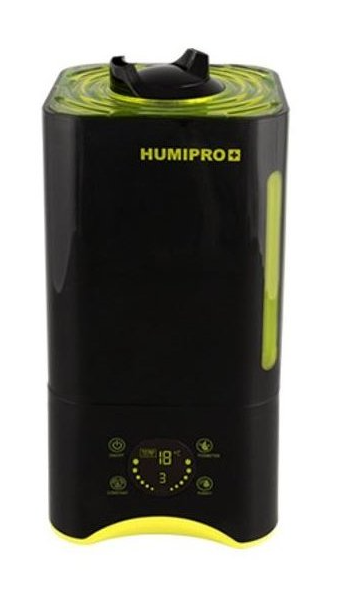
When cultivating plants indoors in a grow box it's not so much that relative humidity directly lowers temperature, but it is true that higher humidity inside the cultivation space helps plants cool more effectively. And that's exactly what we need when temperatures are too high. Temperatures approaching 30 °C require at least 70% relative humidity. A quality and powerful ultrasonic humidifier is a great helper in these cases, except during late flowering. To ensure your plants in the grow box achieve optimal levels of transpiration, it's good to understand the relationship between temperature and humidity, which is explained in the separate article: Do you know what VPD is? Discover the key to perfect conditions for plant development.
- TYPE OF GROWING MEDIUM AND ROOT SYSTEM
Are you used to the classic combination of flower pots and soil substrate, or do you prefer hydroponic systems using inert hydroponic media, or coconut substrates? It is important to realize that the chosen growing medium and irrigation method affect the ability of the plants being grown to take up water. It's easiest in hydroponic or aeroponic systems.
High temperatures pose a particular threat to growers who cultivate in soil that is not as airy as, for example, coconut fiber. And the combination of high soil temperature and waterlogged soil—which is one of the most common beginner mistakes—opens the door wide to root rot. If you are dealing with high temperatures inside an indoor grow room, you will achieve better results by choosing airy growing media and self-watering systems. In that case, however, you must monitor the temperature of the nutrient solution. (We also recommend the separate article: Why and how to maintain a stable nutrient solution temperature?) The above-ground parts of plants can tolerate temperatures around 30 °C, but root zone temperature should be roughly ten degrees lower and not deviate much from the optimal 21 °C. This is because roots need as much dissolved oxygen in the water as possible, and dissolved oxygen decreases as temperature rises.
From the above it follows that in a grow tent and in indoor gardening in general it is not only air temperature that matters but also the temperature in the root zone, which is often unnecessarily overlooked. Most fast-growing plants prefer temperatures in the range of 20 - 30 °C, but remember that for roots the lower limit applies compared to their above-ground parts.

Our TIP: Cannazym - a blend of more than 12 types of enzymes, enriched with vitamins, which strongly supports the breakdown of dead roots and their conversion into nutrients usable by the plant.
High temperatures should no longer slow you down when cultivating plants indoors. And if you want to ask us anything, we are here for you at the usual e-mail address info@higarden.cz.
We also recommend these products:
- PrimaKlima Cooltube
- CO2 Generator MOTHER NATURE
- Ventilátor Red Scorpion METAL 100mm, 320m3/h
Further reading:
- VIPARSPECTRA and growing under LED - definitely a good idea!
- Comparison of TOP LED lights from Lumatek: ZEUS PRO vs. ZEUS PRO 2.9
- TechGrow again: microclimate under control thanks to flawless multifunctional controllers!