
Get started with hydroponics! 4 hydroponic systems suitable for beginners
Hydroponics is a modern way of growing plants without the use of soil that allows for rapid growth and higher yields. Whether you have limited space for growing or want to use water and nutrients efficiently, hydroponic systems are an ideal solution. In this article we look at the best hydroponic systems for beginners.
Hydroponics involves growing plants without soil and is a great solution for those who do not have access to an outdoor garden. Instead of soil, plants grow in a nutrient solution or an inert medium, such as expanded clay, coconut fiber or rockwool. In a home hydroponic garden you can grow plants year‑round and they will grow faster than when grown outdoors. For beginners the 4 types of hydroponic systems are most suitable: passive (AutoPot), capillary (Atami Wilma), DWC (PLANT!T) and flood (ebb and flow). Among systems for more advanced growers are NFT and aeroponic systems.
Main benefits of hydroponics
- Higher yields: Plants always have access to nutrients and water, they grow faster and produce larger fruits.
- Better control of conditions: Hydroponic growing makes it easy to regulate the pH and EC of the nutrient solution to achieve optimal growth conditions.
- Lower water and fertilizer use: Compared to traditional soil cultivation, hydroponics can use up to 90% less water and makes better use of fertilizers.
- Fewer pests and diseases: Growing without a soil substrate significantly reduces the risk of pathogen or insect pest infestations.
- Year‑round growing: In a hydroponic garden your plants will always have what they need without reliance on outdoor weather.
AutoPot
AutoPot is a passive hydroponic irrigation system that operates without electricity or pumps, thanks to the patented AQUAvalve which automatically regulates the supply of nutrient solution to each plant. When a plant consumes the available water, the valve opens again and refills it from the reservoir to the optimal level. Suitable growing media for the AutoPot system are coconut substrates and expanded clay.
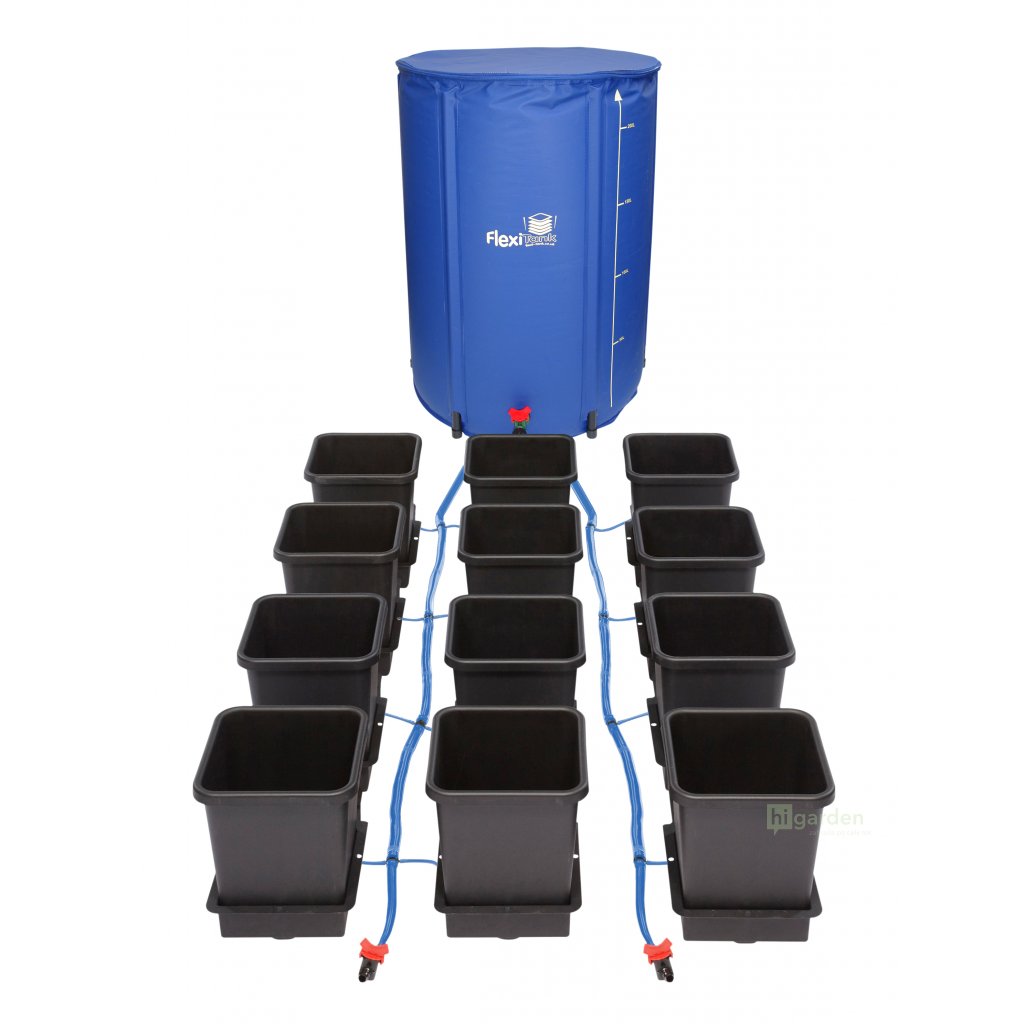
- No electricity or pumps: Ideal for locations without access to mains power.
- Automatic regulation: Plants always receive exactly the amount of irrigation they need.
- Quiet operation: With no pumps, AutoPot runs completely silently.
- Easy cultivation: Once the reservoir is filled, plants require very little attention.
- Modular system: AutoPot can be easily adapted to the number of plants and the size of the growing space.
Atami Wilma
Atami Wilma is an active hydroponic system that works on the principle of drip irrigation. Plants are placed in separate pots filled with an inert medium and the nutrient solution is delivered to them via a pump through capillary tubing. Excess solution drains back to the reservoir and is reused. Suitable growing media for Atami Wilma systems include expanded clay, coconut substrates, perlite or rockwool.
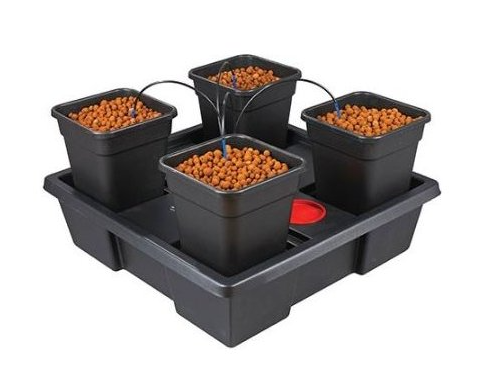
- Optimal plant nutrition: Drip irrigation allows even and precise dosing of the nutrient solution.
- Efficient recirculation: Excess nutrient solution returns to the reservoir, reducing fertilizer waste.
- Flexibility: Atami Wilma is a modular system and allows cultivation of different types of plants in the same space.
- Suitable for larger plants too: The pots are adapted for medium and larger plants, so you are not limited.
PLANT!T
Hydroponic systems PLANT!T use the DWC (Deep Water Culture) method, where plant roots are submerged in a nutrient solution that is oxygenated by an air pump. Thanks to the high availability of oxygen and nutrients, plants in DWC grow very quickly and develop an extensive root system. In PLANT!T hydroponic systems plants are secured in hydroponic baskets instead of a growing medium.
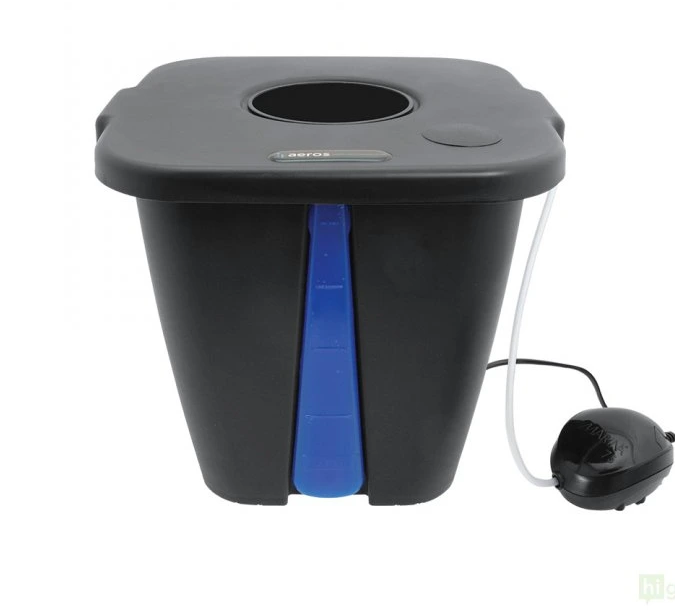
- Maximum root oxygenation: Oxygenation of the water by bubbles provides roots with an ideal environment for rapid growth.
- Efficient nutrient use: Plants take up nutrients directly from the nutrient solution.
- Easy maintenance: With PLANT!T systems you only need to monitor the pH and EC of the nutrient solution and occasionally top up water and nutrients.
- Suitable for larger plants too: PLANT!T systems are designed for growing larger fruiting plant types, such as tomatoes or chili.
Ebb and Flow
The Ebb and Flow system, also known as Flood and Drain, operates on the principle of periodically flooding and draining the grow tray with nutrient solution. Plants are arranged on the bottom of the flood tray, where a pump periodically brings water from the reservoir. After flooding, the solution is gradually drained back into the reservoir, supplying fresh oxygen to the roots. When growing with an ebb and flow system, plants are planted in an inert substrate, for example rockwool cubes, expanded clay or coconut substrate.
- Natural balance: Alternating flooding and drying ensures roots always have sufficient oxygen and moisture.
- Water and nutrient savings: Excess solution is returned to the irrigation reservoir.
- Flexibility: In flood trays you can grow any number of different plant types and handle them easily.
- Easy maintenance and reliability: Due to their simplicity, ebb and flow systems are very reliable.
If you want to learn more about hydroponics and other gardening techniques, visit our blog and discover more tips and tricks for successful growing.