
Expanded clay as a growing medium
In today's article you will learn what expanded clay, also known as hydroton, is and why it has become popular especially with growers engaged in hydroponic cultivation of plants.
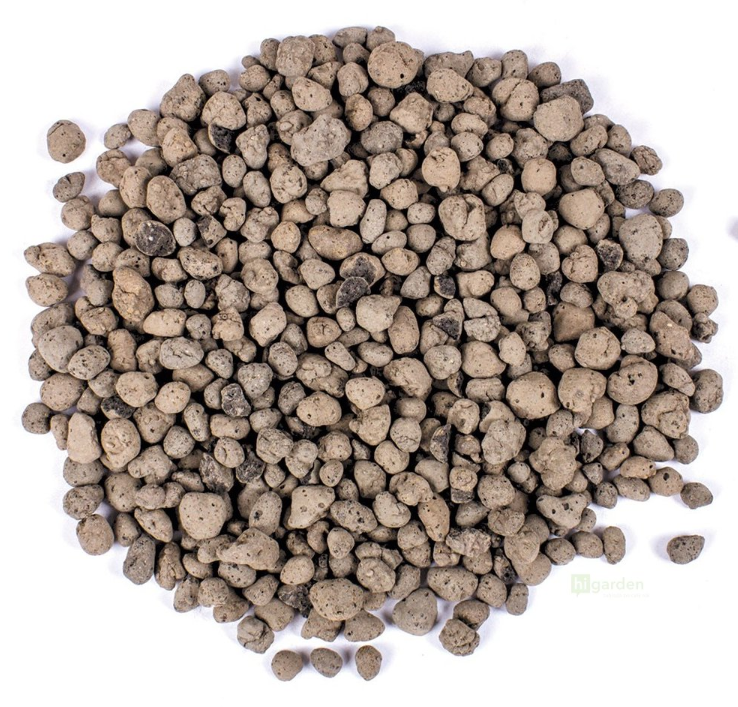
- With expanded clay you will encounter it in cultivation practice in the form of balls or irregularly shaped granules made from expanded clay.
- The main advantage of all these clay balls and granules lies in their inert properties, meaning they are a growing medium that has no effect on pH or EC values.
- A really high-quality expanded clay, such as for example Plagron Euro Pebbles, can moreover be used repeatedly without problems, even for several years! The prerequisite for repeated use is, of course, regular cleaning of the substrate.
- Top manufacturers of premium clay substrates include, besides the brand mentioned, Plagron as well as VitaLink and Canna (see below).
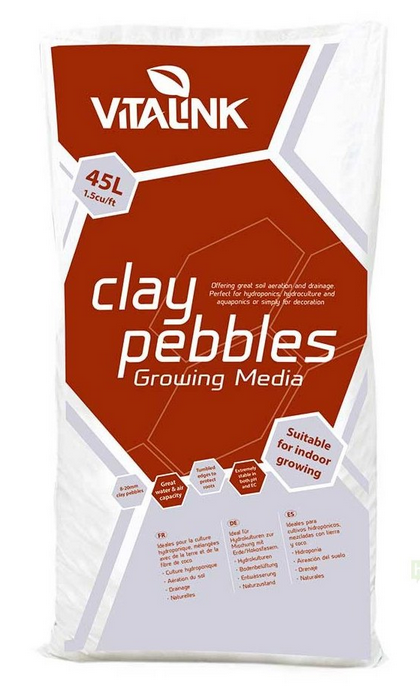
- VitaLink clay pebbles (pictured below) are characterized compared to other products in this category by lower density while covering a larger volume. They are extremely porous and retain water better (water holding capacity: 10%).
- The Czech manufacturer AGRO CS produces hydroton made from fired ceramic, where the clay is first formed into balls and then fired at temperatures of 1200 °C to obtain a strong and porous structure.
- For hydroponics or, for example, as a decorative top layer in plant pots, balls with a diameter from 8 to 16 mm are used.
- Expanded clay (hydroton) is also used as an additive to other substrates, especially soil mixes for self-watering pots Autopot.
- Expanded clay is generally excellent as a growing medium for all types of self-watering planters and troughs and you can also use it as a drainage layer if you grow plants in classic plant pots.
- This inert medium is popular in recirculating hydroponic systems, such as the Atami WILMA hydroponic systems, because the plant takes only as many nutrients as it actually uses, which automatically leads to long-term savings on fertilizers and overall better nutrient management by the plants.
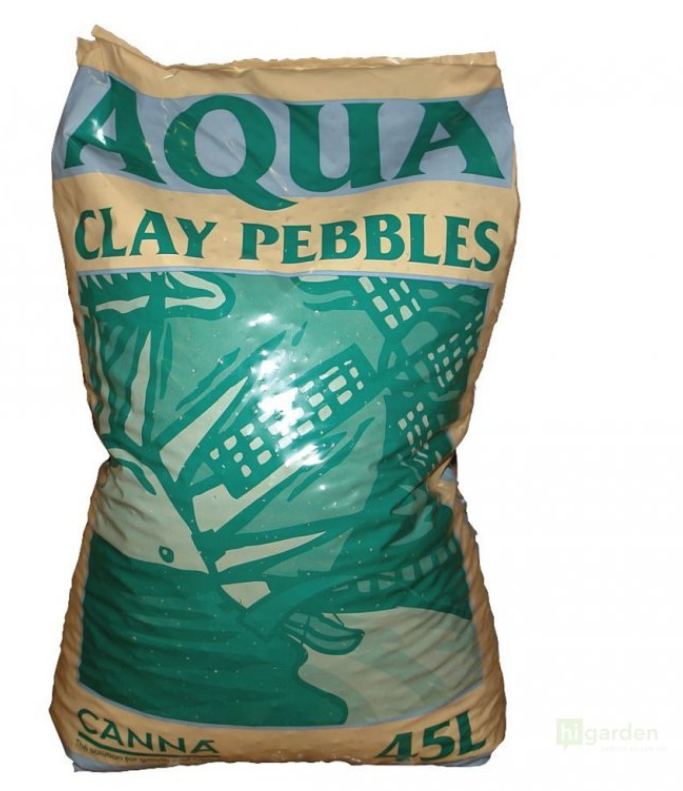
If you are among experienced growers, you will surely appreciate the CANNA Aqua Clay Pebbles packaging shown above - lightweight dried clay balls that allow you to influence nutrient application and plant moisture during the cultivation cycle. We recommend them for professional cultivation of plants in closed hydroponic systems. Here are other benefits that every grower will appreciate:
- low content of soluble salts
- high permeability and aeration of the substrate
- direct support for the development of the plant root system
- an environment free of molds and diseases
- neutral pH and stable values of electrical conductivity of the solution (pH and EC)
- The CANNA Aqua Clay Pebbles should be rinsed before use.
- We recommend using this substrate in combination with the fertilizers Canna Aqua or Canna Hydro.
- Even better results in cultivation can be achieved in combination with powerful supplements from the brand Canna. We especially recommend the unique enzymatic preparation Cannazym, the root stimulator Rhizotonic, the flowering booster Cannaboost, or the supplementary fertilizer PK 13/14.
- Add basic nutrients to the irrigation water from day one, since expanded clay itself contains no nutrients.
Self-watering plant pots, more or less sophisticated hydroponic systems and ordinary plant pots. Expanded clay (hydroton) is useful for gardening both indoors and outdoors, whether as the main growing medium or as a practical drainage layer. If you want advice on choosing products, just write to the familiar address info@higarden.cz.
We recommend these products:
- CANNA Aqua Clay Pebbles 45l (479 Kč)
- VitaLink Clay Pebbles (from 209 Kč)
- Plagron Euro Pebbles 45l (489 Kč)
Read next:
- What are the best fertilizers for hydroponics and how to use them correctly?
- Avoid the most common mistakes when growing plants
- Growing under artificial lighting: HPS vs. LED