
Everything You Ever Wanted to Know About Perlite (Guide to Hydroponics and Growing in Soil)
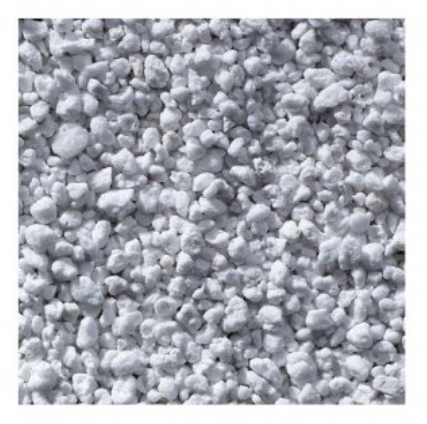 Perlite is a versatile growing medium that can be used both for soil cultivation and hydroponics. This material is notable for its lightness and porosity and is suitable as an additive to garden substrates or as a standalone growing medium in hydroponic systems. In our guide you will learn how to use perlite in the garden as well as for indoor and hydroponic cultivation.
Perlite is a naturally occurring volcanic glass that expands to several times its original volume when heated to approximately 850–900 °C. The result is a lightweight porous material that resembles crushed popcorn. Perlite is widely used in various industries, especially in plant cultivation, but also in construction, industrial filters, and as a carrier for chemicals. Perlite is chemically inert, sterile, non-toxic, and very stable.
Benefits of perlite when growing in soil
Soil aeration: Perlite is porous and creates air pockets in the soil, giving roots better access to oxygen. The root system becomes fuller, more resilient, and healthier, which is reflected in the plants' vigor.
Improved drainage: When mixed into soil, perlite affects its retention properties. The substrate drains better and holds less water, which helps prevent overwatering. This is especially beneficial when growing species prone to root rot.
Prevention of soil compaction: When growing in pots or raised beds, soil can compact over time. Lightweight potting mixes with perlite retain their retention properties longer and the soil stays loose for an extended period.
How to use perlite when growing in soil
For aerating outdoor beds: When creating a new bed or planting, mix perlite with topsoil, peat, or potting substrate in a 1:1 ratio.
For container growing: Mix potting substrate with perlite in a 3:1 ratio. The resulting mix will have better drainage than the original unamended substrate.
Germination: Perlite is an excellent medium for seed germination because it retains moisture without becoming waterlogged. Create a germination and seedling mix by combining perlite and peat in a 1:1 ratio. Remember that neither perlite nor peat contain available nutrients and young seedlings will need to be transplanted or fed soon.
Perlite in hydroponics
Hydroponics is a method of growing plants without soil, based on water rich in nutrients (nutrient solution) and an inert growing medium. This can be rockwool, expanded clay, coconut substrate, or perlite. Perlite does not retain water and is suitable only for certain types of hydroponic systems, such as drip irrigation (drip), DWC, NFT, wick method, Dutch bucket, or the AutoPot system. Perlite as a medium is not suitable for flood tables or for hand-watering or other methods.
Hydroponic systems using perlite as a growing medium
- AutoPot – Unique self-watering systems for indoor and outdoor use that do not require an electrical connection. An ideal substrate for use in an AutoPot pot is a 50% mixture of perlite with soil or coconut.
- Atami Wilma – Popular hydroponic systems of various sizes with drip irrigation for indoor cultivation.
- Terra Aquatica – A top name among hydroponic systems, born from the pioneering work of William Texier. The range includes various types of hydroponic systems suitable for indoor and outdoor use, cloning stations, and fertilizers.
Perlite has a neutral pH and does not react with the nutrient solution in hydroponic systems. Nevertheless, it should be replaced periodically because algae can settle in its pores, which will show as green discoloration on the surface. When using perlite in irrigation systems, watch out for fine particles and dust that can clog filters and drippers.
Want to learn more about hydroponics and indoor cultivation? Visit our Higarden blog, where we introduce news from the world of growing and useful tips for growers.