
Dry or liquid fertilizers: which are better for indoor growing?
Purely theoretically our plants do not care whether we supply nutrients in the form of a liquid, powder or granules. However, this only applies if the amount and concentration of nutrients in the substrate or nutrient solution meet their requirements. Nevertheless, each type of fertilizer has its advantages and disadvantages. Let’s take a look together at what they are.
The choice of the right type of fertilizer will always depend first and foremost on the nutritional method of cultivation and the feeding program you have chosen. In hydroponic and soilless cultivation we use exclusively water-soluble fertilizers. These are suitable for plants placed in inert (soilless) substrates such as rockwool, perlite, expanded clay or vermiculite. The term “fertigation” is commonly used for this type of plant nutrition, a word derived from “fertilization” and “irrigation”. With this cultivation method plants obtain nutrients directly from the nutrient solution and are fed with every watering, while the hydroponic substrate itself contains no nutrients and serves only to anchor the plants and retain the nutrient solution around the roots. In some systems roots float immersed in a nutrient solution that is continuously oxygenated.
Water-soluble fertilizers
Water‑soluble fertilizers can be either liquid or dry (a water-soluble powder) and can be supplied to plants via hydroponic or irrigation systems. Water‑soluble fertilizers may contain only one type of mineral salt (for example calcium nitrate or potassium phosphate), but more often they are blends of various mineral salts that contain multiple nutrient elements at once. The composition, concentration and method of preparing the nutrient solution then vary according to the specific feeding program. 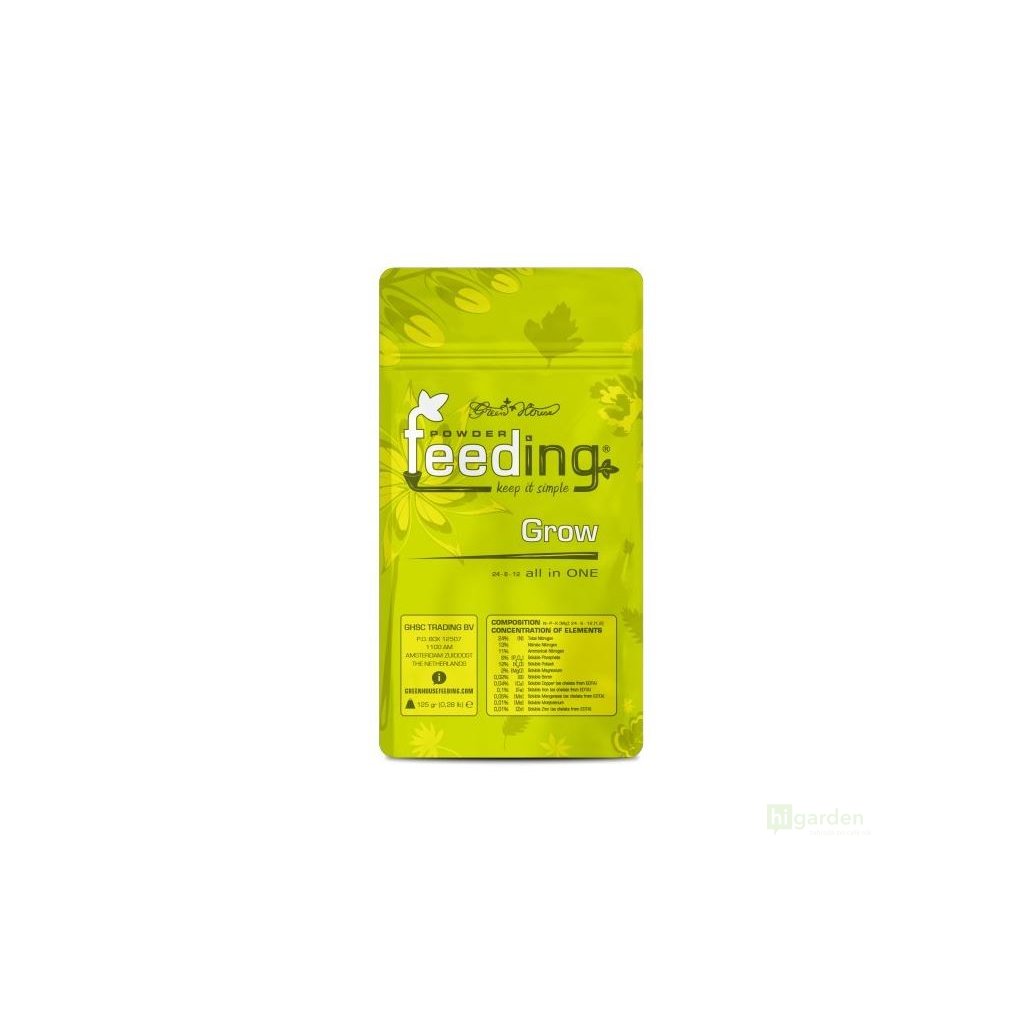
The feeding program Green House Feeding includes a wide range of water-soluble mineral fertilizers and powdered nutritional additives, including specialized blends for growing hybrids, short-flowering varieties and long-flowering cultivars. Nutrient solutions prepared from Green House Feeding fertilizers maintain EC and pH for at least one week, and highly concentrated stock solutions can be stored for several months.
When using water-soluble fertilizers containing mineral salts we must bear in mind that some mineral salts can react with each other and form precipitates that not only reduce the effectiveness of the nutrient solution but also clog nozzles and irrigation pipes. This most often occurs when combining highly concentrated water-soluble fertilizers containing calcium salts (for example calcium nitrate) with those that contain phosphates or sulfates. This is one reason why manufacturers often split their formulas into two or three components. In general, the easiest way to avoid this problem is not to combine fertilizers from different feeding programs and different brands. 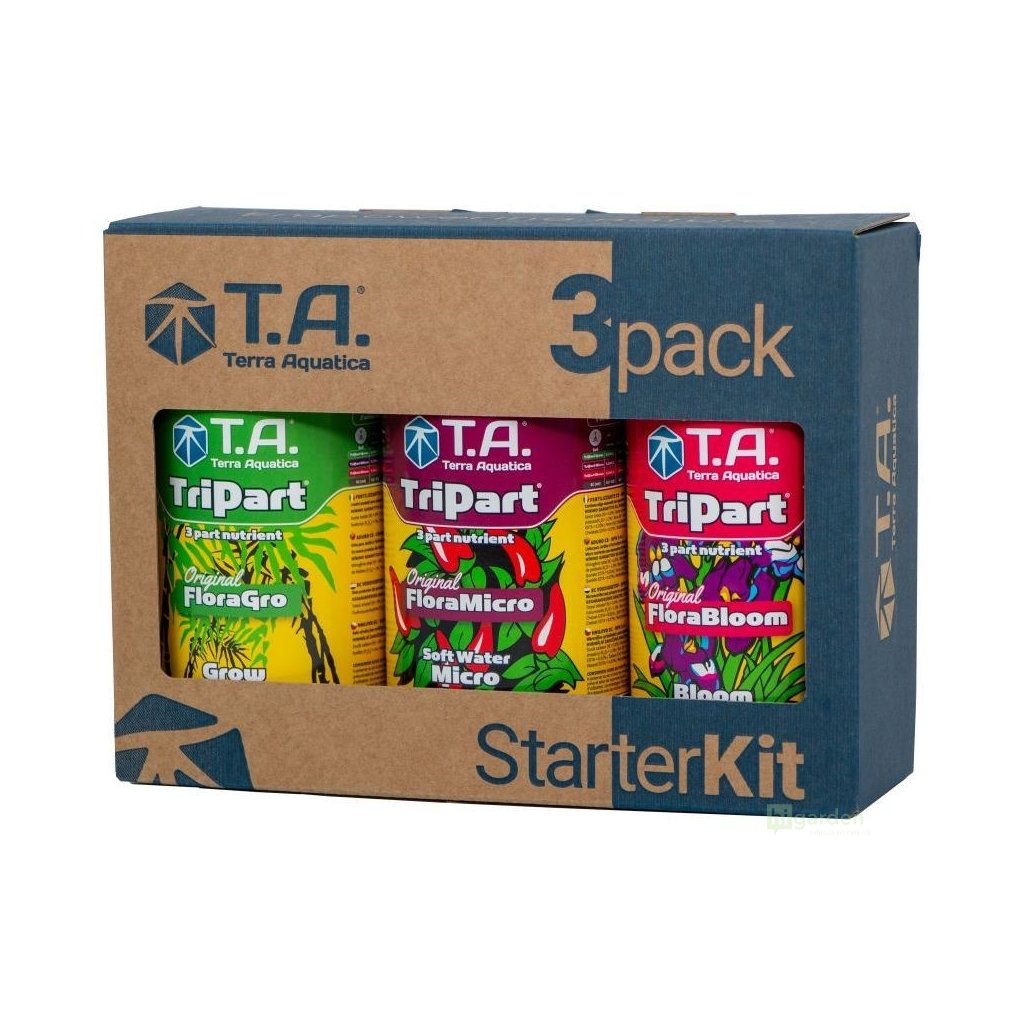
Three-part fertilizers Terra Aquatica TriPart are among the most sought after by professional growers, including prestigious research facilities and even NASA. The enormous advantage of this range is that all the nutrients needed throughout the plant life cycle are contained in just three bottles. The TriPart formula contains all primary and secondary nutrients, trace elements and guarantees reliable results when growing specialized crops where taste, aroma and production of essential oils and active compounds are important. The manufacturer also offers variants for hard and soft water.
A number of indoor growers prefer pre-mixed liquid fertilizers to powder ones because they are easy to measure and preparing the nutrient solution is simple. However, liquid fertilizer blends are often much more expensive than dry variants. Various factors play a role in this, including transport and storage costs. Ultimately this means that you can prepare the same amount of nutrient solution from dry water-soluble fertilizers at a significantly lower price than from liquids.
Advantages of dry water-soluble fertilizers
- reduce the cost of preparing nutrient solution
- easy to store
- longer shelf life
Solid slow-release fertilizers
Solid fertilizers can take the form of pellets, granules, tablets or powder and unlike water-soluble ones they cannot be used in hydroponics or for preparing nutrient solutions, but are used only when growing in soil or horticultural substrates. These fertilizers are either mixed directly into the soil (when potting plants or with pre-fertilized potting mixes) or they can be applied to the surface of the substrate.
Plagron Royalmix is a pre-fertilized potting substrate that contains nutrients for roughly 6 weeks of plant life. Strongly pre-fertilized substrates are suitable only for older plants with a developed root system. For young cuttings or seedlings such a substrate can be too “hot” and may cause fertilizer burn.
The main advantage of solid fertilizers is the possibility of gradual nutrient release into the soil. With a nutrient solution the nutrient elements are available to plants immediately after watering and only for a short time. In contrast, some solid slow-release fertilizers can supply plants with nutrients for weeks or months.
The basis of the feeding program and the BioTabs range of organic fertilizers BioTabs are slow-release tablets that provide plants with nutrients and other beneficial substances. The basic tablets are then supplemented as needed with liquid and dry nutritional additives, including organic PK boosters or compost teas.
Solid slow-release fertilizers allow the grower to cover most of the plants’ nutrient needs already at planting and save time and money. This makes it possible to grow plants in a more ecological and sustainable way. On the other hand, when growing nutrient-hungry plant varieties indoors under powerful artificial lighting it is often better to combine solid and liquid fertilizers. In some growth stages plants may need a rapid supply of nutrients.
Fertilizers from the Dutch manufacturer Guanokalong are based on the use of fertile substrates and organic soil additives in both liquid and solid form. This feeding program is great for advanced growers indoor and outdoor, including cultivation using the “living soil” method. You can learn more about Guanokalong in our article.
Advantages of solid slow-release fertilizers
- gradual and long-term nutrient release
- easy cultivation without the need to prepare nutrient solutions
- possibility of fully organic cultivation
- easy storage and long shelf life