
Don't underestimate air exchange and circulation inside the grow space
Tips for indoor growers are an indispensable part of our blog. This time we will focus on fresh air and its movement inside the growing space, where everything must be done to keep the climate under control. So what air are your plants breathing? Their condition largely depends on that. Maybe it’s time to finally get it moving! Read how to achieve proper air circulation in the grow box.
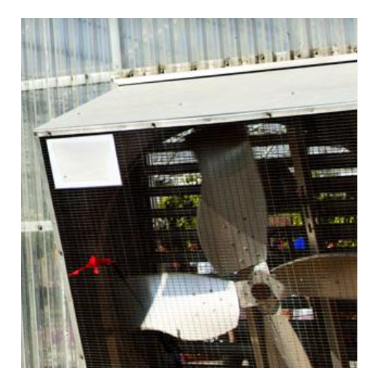
It is surprising that regular air exchange or proper air circulation remains one of the most underestimated aspects of indoor plant cultivation, despite the abundance of information available today. The clear purpose of this article is therefore to explain and remind you of the importance of these aspects. Plants growing freely in nature automatically receive a continuous supply of fresh air with sufficient oxygen and carbon dioxide, which freely moves through vegetation and at the same time allows accumulated moisture to be carried away.
Nature has it down to a science. Why many growers still ignore these processes is something of a mystery in the indoor gardening world. When we use a closed greenhouse or have a grow tent, or even an entire room for indoor cultivation, we must reckon with conditions completely different from those outdoors and try to mimic nature using proven practices.
Experienced growers advise not to be lulled into complacency just because your plants look fairly healthy and even seem to be growing at first glance. That kind of attitude could cost you unnecessarily tens of percent of possible yields! It would be a pity to miss out on higher yields, so we’ll divide the following advice connected with perfect climate inside the growing space into two parts:
- Air exchange
- Air circulation
You probably already know that plants capable of photosynthesis consume carbon dioxide (CO2), while at night they mainly consume oxygen. Humidity inside a closed growing space increases due to their transpiration. Because a closed growing environment, for example a medium grow tent, requires a powerful source of artificial lighting to replace natural sunlight for the plants (partially in the case of HID lamps or completely in the case of full-spectrum fixtures), it also emits a non-negligible amount of heat, which tends to accumulate inside the tent or room. Rising temperature and humidity in a closed environment... you have probably already pictured what would happen inside the grow box without sufficient ventilation. The plants’ transpiration activity would gradually cease. They would not be able to cool themselves naturally, which would lead to their death.
OUR TIP: The new Resin+ LED AX 600W 2.8 µmol/J is also a full-spectrum LED grow light, simulating natural sunlight for plants while emitting less heat into the grow space than a traditional HID lamp.

1. Air exchange
From the perspective of air exchange in the growing space, it is necessary at the outset to distinguish between two types of environments: open and closed.
- What is the total volume of the grow space you will be using?
- What is the (average) temperature and humidity of the air that will be supplied into the grow space?
- What grow lighting will you use inside the tent or room?
- How many plants do you plan to grow inside the space? How filled will it be?
- There is one more very important factor without which this overview would be incomplete, and that is duct resistance.
Returning to the first bullet, it is worth noting that the total volume of air in the grow space should ideally be exchanged at least every 5 minutes and ideally every minute! Examples are useful, so imagine a grow tent whose volume is 2 m2. Although it might seem that a fan with a flow rate of 120 m3/h would be just enough in this case, an experienced indoor grower will choose a fan that allows at least double the airflow, because they also account for duct resistance (see last point) and a carbon odor filter. They will leave an even larger margin if the ducts are long or twisted. Simply put, the longer and more complex the ducting system, the harder the fan has to work to extract air, so it should have adequate power. It is always better to have more power available, which can easily be reduced with controllers, than to have to buy a completely new, more powerful fan because you needed more performance.
OUR TIP: Don’t want to design your grow ventilation yourself? Use a complete tailored indoor solution represented by our cost-effective discounted grow box sets, assembled by our experts (example in the picture). You can leave the technical details to us and simply connect the whole system at home and start growing.
2. Air circulation
One thing is to ensure that plants grown in a closed environment are not breathing anything other than fresh air through their leaves. Many growers, however, forget that air exchange and air circulation go hand in hand.
Therefore you must also think about proper air circulation, which is absolutely crucial in a closed space of a few cubic meters if you want to fully realize the genetic potential of the plants being grown.
But beware! Everything in moderation. If you overdo the airflow provided by circulation fans, you will expose your plants to unwanted stress and can even damage their leaves. A circulation fan should therefore be placed inside the grow tent or room so that the air blows level with the tops of the plants. Installing a larger number of circulation fans will ensure truly even air circulation and a homogeneous climate in the grow space; you can learn everything you need about that in the separate article: How to choose a circulation fan?
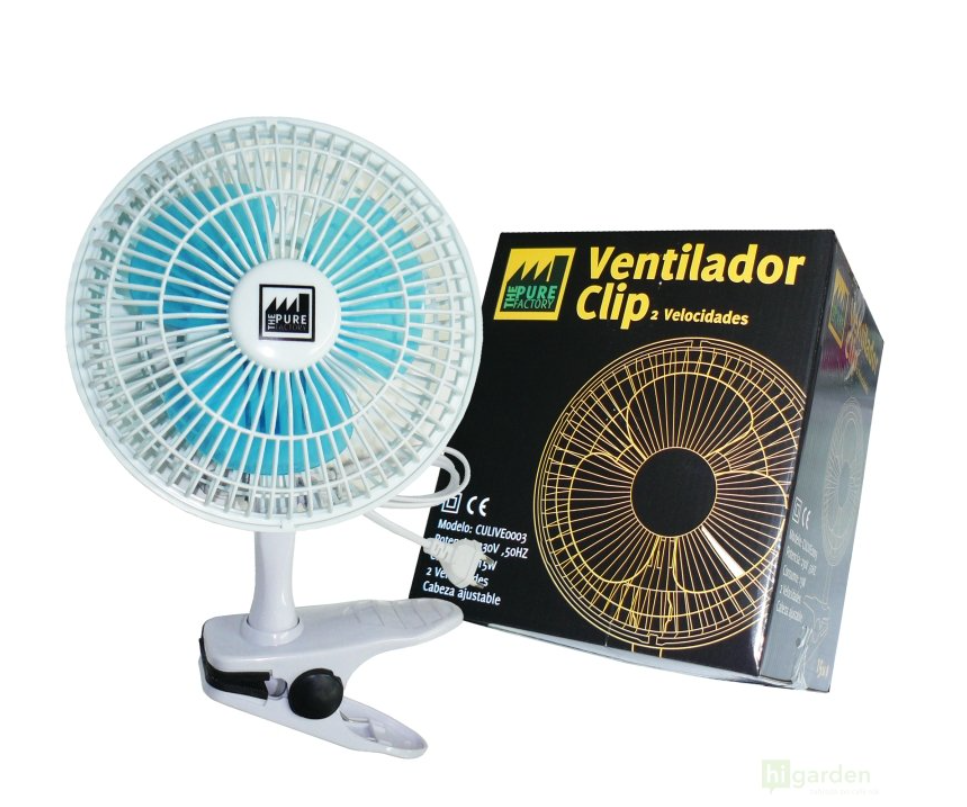
Here are three reasons why we don’t know anyone who doesn’t use circulation fans in a grow tent:
- Photosynthesizing plants consume carbon dioxide. They exhale oxygen and moisture. In the immediate vicinity of the leaves, the air can therefore gradually become so-called “spent” and no longer allow the leaves to function normally.
- Fresh air brought into the grow space is effectively mixed by circulation fans, preventing areas with different temperatures in the tent or room and avoiding leaf overheating.
- What nature provides automatically is recreated in indoor cultivation by a circulation fan, whose airflow gently moves the plant stems, forcing them to strengthen. Plant leaves should always be in slight motion. This also clearly shows whether air is continuously circulating in the growing space. This check is easiest with grow tents that have viewing windows, such as the BudBox PRO XL (see separate article: BudBox - stable grow tents are number one in the UK).
After reading the above, you should have no doubt that a constant and sufficient supply of fresh air to all leaves in a closed growing system is a basic prerequisite for effective photosynthesis, and thus high yields indoors.
Do you want to ask us something? We are here for you at the known email address info@higarden.cz. We will be happy to advise you, for example, on choosing the right ventilation equipment.
We also recommend these products:
- LED Set 720W Lumii Black
- Clip fan PF 15cm 15W 2 speeds
- Fan VDL TT 100, 145/187 m3/h
Further reading
- Prima Klima - fans for maximum performance and minimum noise
- VIPARSPECTRA and growing under LED - definitely a good idea!
- Do you know what VPD is? Discover the key to perfect conditions for plant development