
Buying a growbox from A to Z
Have you decided to start indoor growing but aren’t sure what equipment to buy? Choosing from the countless offers in growshops can be quite a puzzle for beginner growers. Different equipment is needed for growing microgreens, tomatoes or medicinal plants. We will guide you step by step through buying a growbox and everything you will need to get started.
Growing plants in an indoor environment requires careful preparation and the right equipment. The most important parts of any indoor garden are the grow tent (growbox), the cultivation lighting and the ventilation system. All these components need to be properly sized to match the plants and the space you have for cultivation. We’ll explain how in the following lines.
Growbox
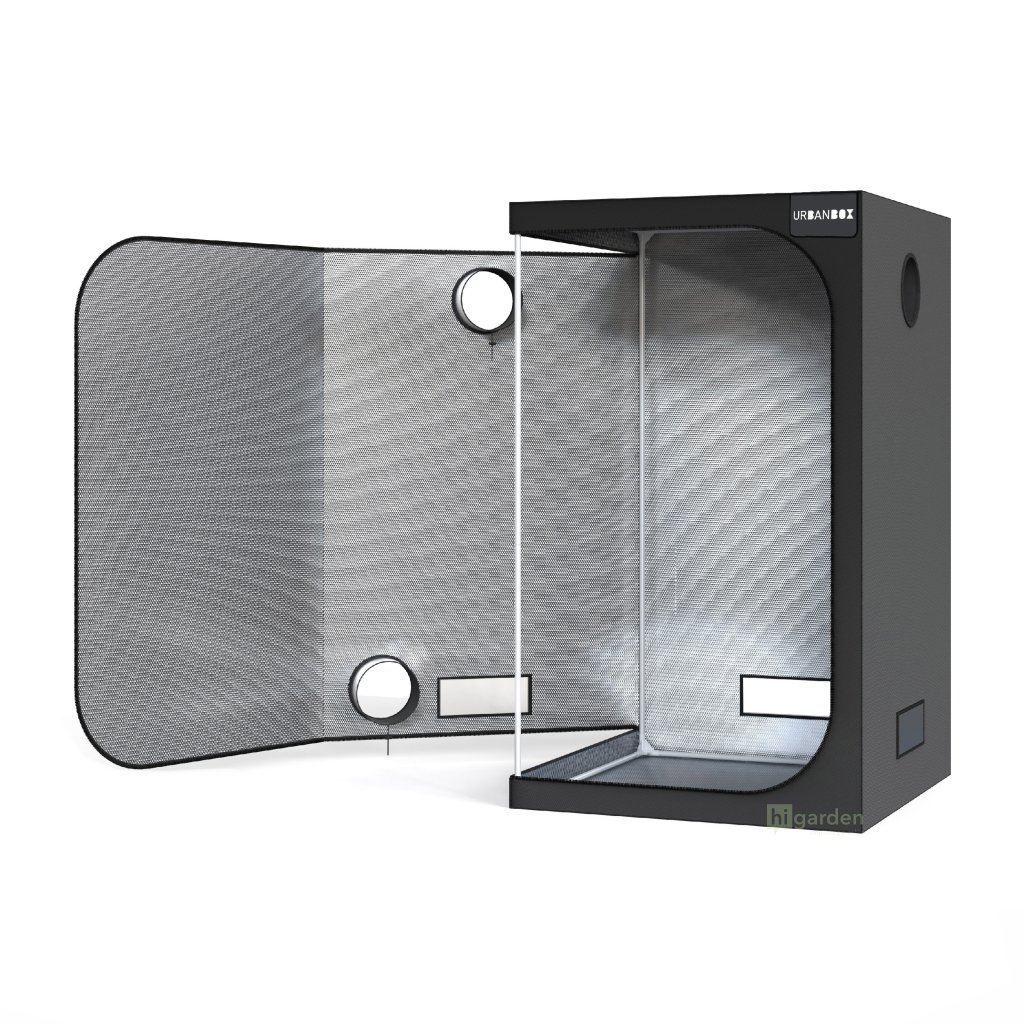 Plants grown under artificial lighting need a stable and optimized environment for their growth. You achieve this best in the enclosed space of a grow tent, which is the basic building block of every indoor garden. The main criteria for choosing a growbox are the type and number of plants you plan to grow. Microgreens or kitchen herb growers can manage with less spacious tents up to 1 m². Sprouts, seedlings and most herbs don’t grow very tall, so we recommend choosing a growbox that allows multi-tier cultivation, for example PROBOX PROPAGATOR L. You will need a larger growbox for fruiting and flowering types such as tomatoes, chili peppers or medicinal plants. Most growers will manage with tents sized from 1x1 to 1.2x1.2 m², but there are also roomier variants with areas of 4 m² and more.
A quality growbox should meet several parameters. The tent should be made of durable, high-quality fabric that does not let light or air through, and it must have strong seams and quality zippers that withstand daily use. The inside of the growbox can be white or lined with silver reflective foil (mylar). Some manufacturers offer grow tents in unusual shapes Secret Jardin, others add practical windows BudBox or provide extensive modification options Secret Jardin. The price of a grow tent will vary depending on size and build quality, but even with cheaper budget variants Trafika, URBANBOX you can grow a beautiful crop.
Grow lighting
Plants need light for the process of photosynthesis, during which they convert light energy into glucose and oxygen. Under normal circumstances sunlight is the energy source, but in indoor growing the Sun is replaced by grow lights. With few exceptions growers use special LED fixtures that mimic natural daylight. Grow lights with a dominance of the blue part of the spectrum (grow) are designed to support vegetative growth and are suitable for growing microgreens, lettuces, herbs or for the early life stages of flowering and fruiting types. Lights shifted toward the red part of the spectrum (flower) support flowering and ripening. We covered the importance of the light spectrum for plant growth in one of our earlier blog articles, which you can find here.
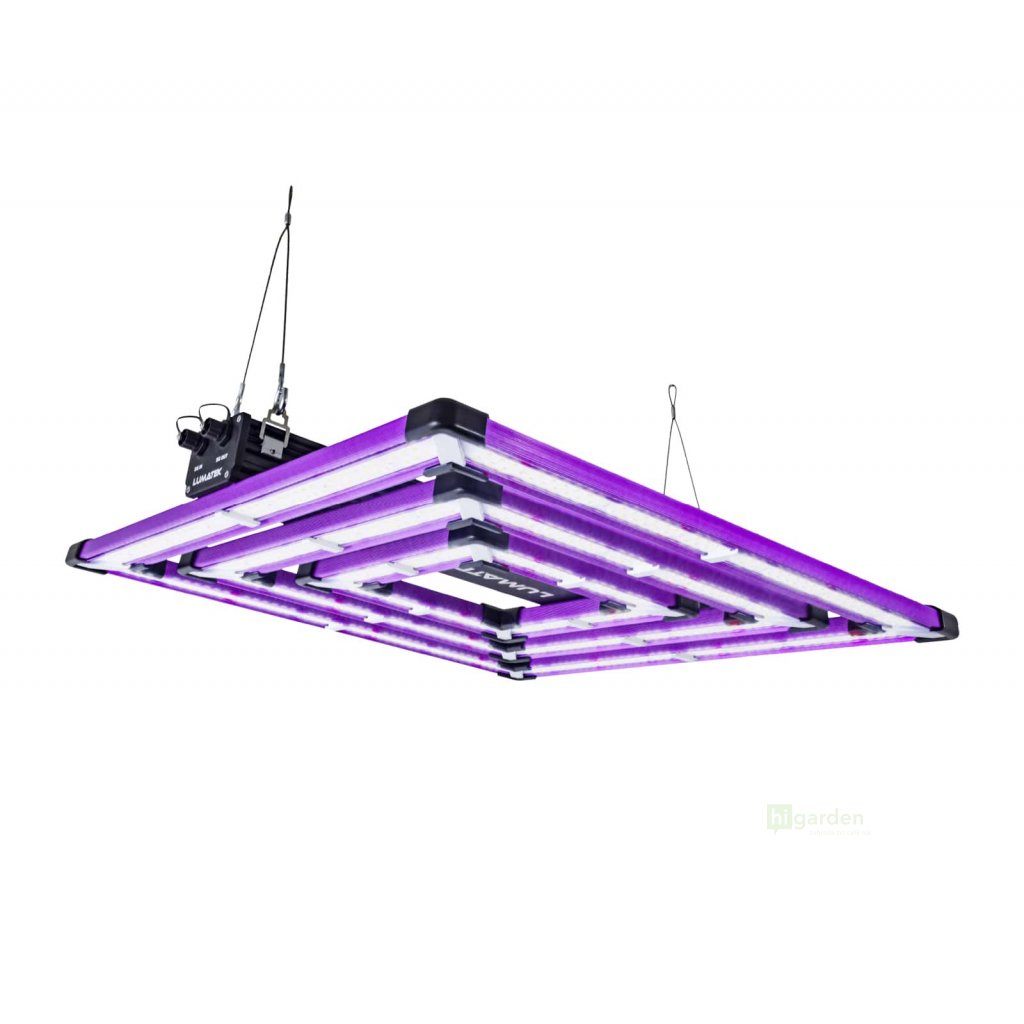 Grow lighting must have not only the correct spectrum but also the appropriate intensity. Just as you can burn seedlings and young plants with midday sun, you can also damage them with an overly powerful grow fixture. TLED technology is an excellent solution for growers of microgreens, herbs or lettuces who typically light plants from a close distance and in multiple tiers. When growing tomatoes, chili or medicinal plants you need to supply plants with more energy on the order of hundreds of watts per m². Parameters such as PPF (photosynthetic photon flux) and PPFD (photosynthetic photon flux density) are key for assessing lighting effectiveness. Less powerful lights have a PPF around 0.8–1.5 μmol/J, while high-quality modules reach up to twice that. Ideal PPFD varies by growth stage, from 200–400 μmol/m²/s for seedlings up to 600–1000 μmol/m²/s in the flowering stage.
You might be interested in: The most important criteria for choosing grow lighting
Ventilation
As mentioned, the cultivation space should be as well sealed from the outside as possible, but plants need a constant supply of fresh air. Extract fans remove warm and humid air from the growbox. Fresh air intake can be passive or you can use a second fan for this purpose, which is useful especially in larger grow tents. You will need one or two circulation fans inside the growbox. Their task is to imitate natural wind that acts on plants outdoors and stimulates them to form strong stems. Constant air movement also makes life harder for pests and helps prevent pockets of hot or cold air, for example under lights or in the corners of the growroom.
When choosing ventilation for a growbox, factors include the tent size, the type of plants being cultivated and the intensity of lighting. The power of an extract fan is usually given in m³/h and should correspond to at least 2–3 times the volume of the tent. An essential accessory when growing strongly aromatic types is a carbon filter that absorbs odors. You will also need several metres of ventilation ducting, preferably soundproofed, metal cable ties and a few carabiners (Rope Ratchet or a similar type) for hanging lights.
You might be interested in: Where and how to correctly place fans in a tent or growroom
We have shown how to assemble and equip your first growbox step by step. Now all that remains is for you to decide which growing medium and cultivation method you will choose. Useful tips on how to do this can be found on our growing blog