
Basic fertilizers - What to buy to get started?
In short, basic fertilizers are those that contain essential nutrients. In today's article we'll look at what is available and answer a common question: How to choose the right one among the countless bottles available?
What are essential nutrients?
Essential nutrients are those that plants need in large quantities. For this reason they are also known as macronutrients. These nutrients are absolutely essential; without them plants grow slowly or die completely.
Where do plants get essential nutrients?
The most basic elements plants need—carbon (C), oxygen (O) and hydrogen (H)—they obtain from the air and water. The rest they take up with their roots from the soil. To help them grow better we add fertilizers, mainly the primary macronutrients known by the abbreviation NPK: nitrogen (N), phosphorus (P) and potassium (K).
Secondary macronutrients also belong among the essential nutrients: calcium (Ca), magnesium (Mg) and sulfur (S), which are present in fertilizers in smaller amounts because they are usually sufficiently available from the substrate — of course unless you are growing hydroponically.
How do basic fertilizers differ?
Fertilizer manufacturers design nutrition to best match the needs of the plant. They take into account different development stages, plant types, and their own experience. Each manufacturer has its own growing approach and test experience (sometimes even their own scientific laboratory!), which is why fertilizer brands differ from each other.
1. By growth stage
Fertilizers are often tailored to the development stage. For beginners the simplest are universal fertilizers for growth and bloom (you use two or three components at once) or single-component ones for growth and bloom (you use one component for growth first and then another component for bloom). Multi-part fertilizers split nutrition into four bottles (two for growth and two for bloom), so you can adjust them precisely according to the genetics you grow and the surrounding environment.
- Fertilizers for growth
Growth fertilizers contain more nitrogen, which plants require in larger amounts during the vegetative phase than at other times. Such fertilizers are usually labeled as the Grow component. Growth fertilizer is also available in two parts, labeled Grow A and Grow B, because some compounds cannot coexist in the same bottle — more in a separate article.
- Fertilizers for bloom
Bloom fertilizers contain more potassium and phosphorus to support flowering and ripening. They are usually labeled as Bloom. Like growth fertilizers, these can also be split into A and B components.
- Universal fertilizers
They contain everything a plant needs during the growing cycle. Dosage is adjusted according to the current phase the crop is in. Such fertilizers often come in two bottles A+B or even three, most commonly labeled Grow, Bloom and Micro.
- Fertilizers for cuttings and seedlings
Fertilizers for the youngest plants are usually less concentrated to avoid overfertilization.
2. By cultivation method
The cultivation method greatly affects plant needs, so there are fertilizers for soil substrates, coco, hydroponics and aeroponics. For example, plants in coco often lack calcium and magnesium, so fertilizers for coco contain more of these elements. Hydroponic fertilizers tend to be more concentrated because plants cannot take nutrients from a substrate.
Some fertilizers are universal or can be used in multiple methods. For example, the world-famous Dutch Formula from Advanced Hydroponics is designed mainly for hydroponics, but at half doses it also works great in coco or soil.
3. By composition
- Mineral fertilizers
These are the most commonly used fertilizers today. They contain artificially created compounds optimized to suit plants best and be well absorbed. Mineral fertilizers are efficient, concentrated, and you usually know exactly what's in them. They don't spoil in a nutrient reservoir.
- Organic fertilizers
Organic fertilizers contain extracts from natural materials. They are closer to what a plant would naturally encounter. We recommend them especially to beginners, because it's almost impossible to overfertilize with organic products. They are often suitable for ecological or at least more eco-friendly growing; however, you cannot use them in hydroponics.
- Bio-mineral fertilizers
They combine the best of organic and mineral fertilizers. Components must be carefully selected because some mineral substances can actually harm the organic ones.
4. By physical form
- Liquid fertilizers
A classic for home gardening. The fertilizer is in a bottle and is diluted with water, which is then used to water the plants. Such fertilizers work immediately and higher doses can lead to overfertilization, so it's necessary to dose carefully and regularly.
- Solid fertilizers
Solid fertilizers are usually powdery or sometimes in tablet form. They are either dissolved in water or added directly to the substrate. They release nutrients gradually; one tablet can last several months.
So which fertilizer is best?
The detailed description above is meant to help you ask and answer four questions that will guide you to the right fertilizer.
- Do you prefer more or fewer components? What vegetative stage is the plant in?
- In what medium and how are you growing the plant?
- Do you prefer organic or mineral fertilizer?
- Do you want to fertilize regularly or just once or twice?
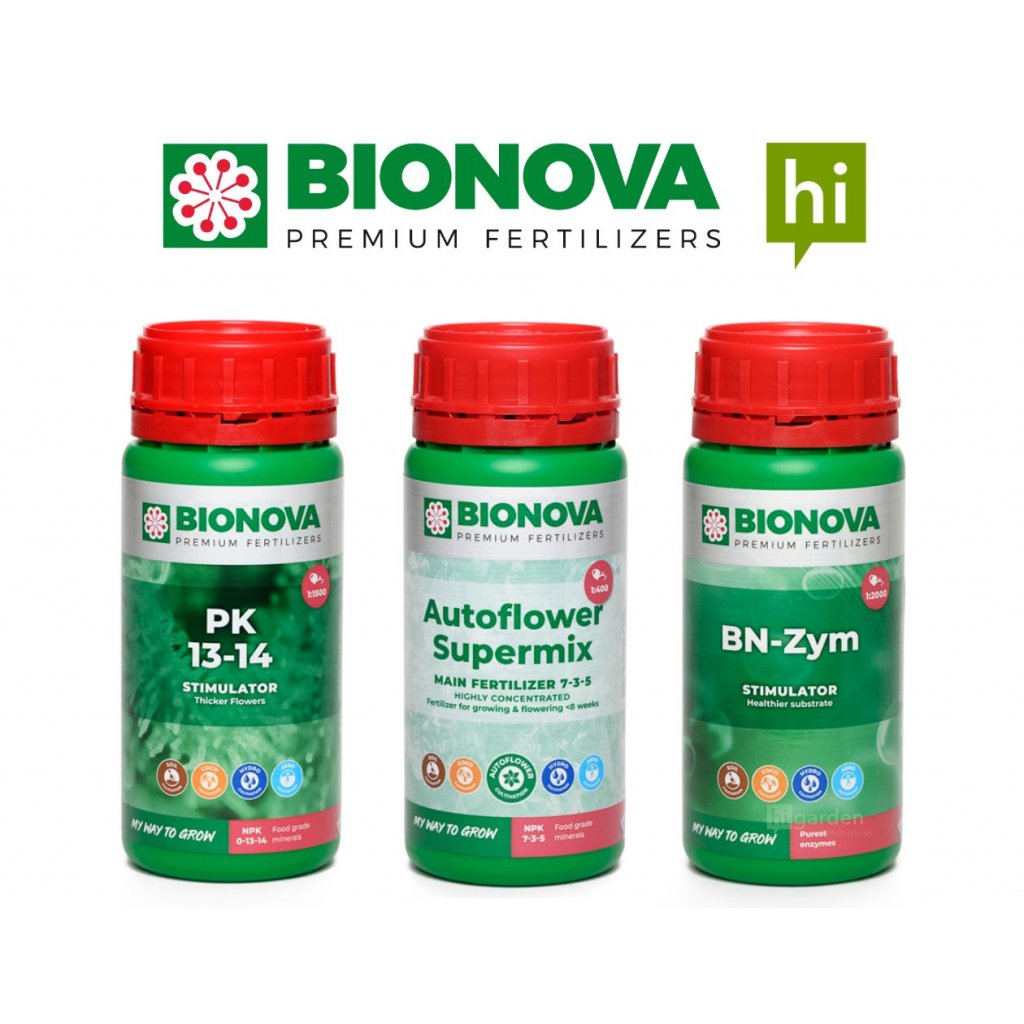
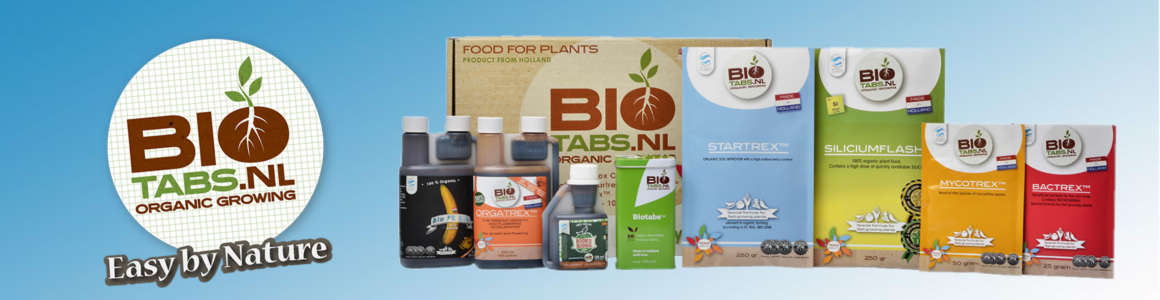
The choice of a specific brand then depends on your personal experience or preferences. On behalf of the Higarden team we recommend the single-component nutrition BioNova, which is available in variants for soil, hydroponics and aeroponics. In their range you'll also find a special fertilizer for autoflowering plants. If, on the other hand, you were attracted by the simplicity of solid fertilizers, you can't go wrong with BioTabs. For coco substrates we recommend the great nutrition from Shogun, and for hydroponics Advanced Nutrients or Terra Aquatica stand out.
The range of fertilizers is really wide. We're happy to help you navigate it and find a fertilizer that fits you exactly. Just get in touch at info@higarden.cz.
We recommend:
- Biotabs Tablety
- BioNova Veganics Grow
- Canna Coco A+B
More articles:
- What stages does a plant go through and what are their specifics?
- How to fertilize properly?
- NPK - what is it?