
7 Most Common Germination Mistakes and How to Avoid Them
Not only beginning growers but also experienced growers have trouble germinating seeds. Often this is because, out of ignorance, they make some of the basic mistakes when germinating seeds. Are you one of them? Read how to avoid this and germinate like a pro.
In the following lines we will also address small mistakes that can drastically affect germination success. If you want to master the basics, read the article Indoor germination from A to Z.
1. Old or poor-quality seeds
Seeds that are too old or stored improperly have a much lower chance of successful germination. Although some seeds can remain viable for many years, storage conditions play a crucial role. If they are exposed to moisture, heat, or light, their germination rate drops quickly. Cheap or poorly bred seeds can also have genetic defects or be contaminated with pathogens.
How to prevent this? Choose seeds only from reputable suppliers and store them in a dry, cool, and dark place. The ideal option is an airtight container kept in the refrigerator with a moisture absorber.
2. Inappropriate temperature and excessive humidity
Seeds need an appropriate temperature to germinate. If the temperature is too low, germination will slow down or stop entirely. Conversely, high temperatures can damage seeds and prevent growth. Excessive humidity can also ruin germination. Seeds need enough water to germinate, but not so much that they start to rot.
How to prevent this? The ideal temperature for germinating most plants is between 22–26 °C. If you grow in a cooler environment, a heating mat or a heated propagator can help. Proper humidity is also important – too dry an environment will dry out seeds, while an overly waterlogged substrate can lead to rot. Regularly ventilate excess moisture from the propagator.
3. Unsuitable substrate
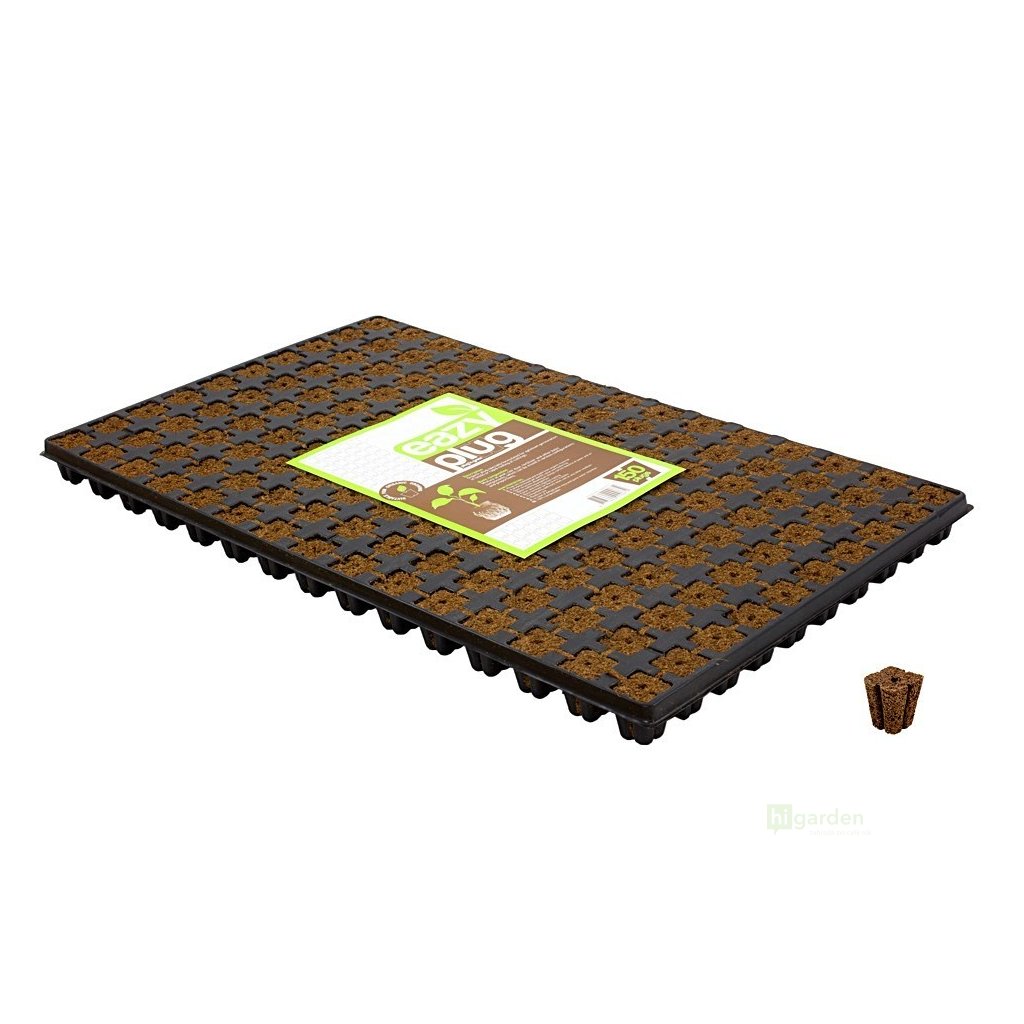 Many growers make the mistake of germinating seeds in ordinary garden substrate, which is often too heavy or contains excessive nutrients. An unsuitable substrate hinders root growth and can retain too much water, leading to seed rot or seedling collapse.
How to prevent this? Use light and airy substrates or seedling plugs specifically designed for germination. Good choices are rockwool cubes or their organic alternatives (Eazy Plug). Avoid substrates containing large amounts of fertilizer – young plants are sensitive to excess nutrients and may die.
4. Lack of oxygen around seeds
Many growers do not realize that seeds need not only moisture but also sufficient oxygen. If they are submerged in water for too long or placed in a too-wet and compact substrate, they can begin to rot before germinating.
How to prevent this? If you germinate seeds in water, never leave them soaked for more than 12–24 hours. Afterwards move them to a moist substrate that allows proper aeration. When choosing a substrate, ensure it is not too compact and maintains an optimal balance between airiness and moisture. You can also treat seeds before germination with a 3 % solution of hydrogen peroxide to remove potential pathogens. You can also use germination stimulators or products with mycorrhizal fungi, but do not combine them with peroxide.
5. Incorrect seed planting depth
Planting seeds at the wrong depth can significantly affect germination. If seeds are planted too deep, they may have trouble reaching the surface. Conversely, if planted too shallowly, they can dry out quickly or be washed away by watering.
How to prevent this? Follow the rule that seeds should be planted at a depth approximately twice their size. Small seeds, such as lettuce, only need to be lightly covered with a thin layer of substrate or vermiculite. Larger seeds can be planted slightly deeper but always so that they have enough energy to push through to the surface.
6. Insufficient or too intense light
 Light plays a crucial role in germination, but not all seeds require it. Some germinate in light, others need darkness. If young seedlings receive too intense light, they can become weakened and prone to growth deformities.
How to prevent this? Find out whether your seeds need light or darkness to germinate. For example, lettuce germinates better in light, while tomatoes and peppers germinate in the dark. Once seeds have germinated, provide them with gentle and even lighting. TLED lights with a growth spectrum are excellent for germination purposes. Position the fixture so that germinating seeds receive at least 18 hours of daily light.
7. Overfertilization
Young seedlings are very sensitive to excess nutrients, and if fertilized too early or at too high a concentration, root damage occurs, which shows as burned leaf tips and wilting.
How to prevent this? Delay the first fertilization until the second week after seed germination. If you use mineral fertilizers, start with a very weak concentration (about 1/4 of the recommended dose). Monitor the plants’ response and gradually increase doses.
Want to learn more about indoor growing and master modern gardening techniques? Don’t hesitate to visit our growers' blog, where you will find advice, tips, and guides for both beginners and experienced growers.