
Nutrition, Growing Media and Water, Page 5
List of articles
Organics Nutrients: the natural way to achieve high yields
When you use organic fertilisers, you avoid over-fertilisation and the soil properties soon improve naturally, in line with the laws of nature. This results in faster plant growth, a higher nutrient content, higher yields of cultivated crops and, ultimately, a significantly better quality of the food consumed. That is why you should not miss a wonderful Slovenian new product in our range!
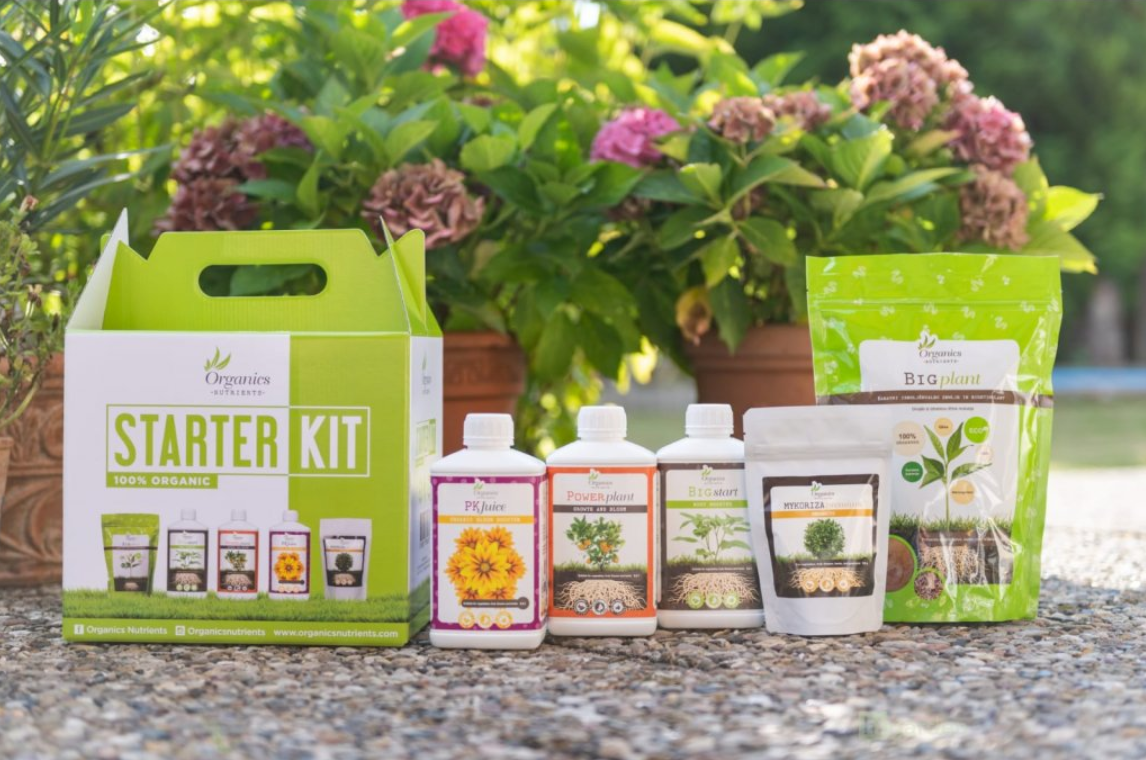
How was this complex organic plant nutrition created? Behind the products of the Organics Nutrients brand stands a young team of persistent individuals with a tendency towards constant innovation and a clear intention to improve the current possibilities of organic cultivation of herbs, ornamental flowers and crops, and to achieve healthier soil. Their intention also gives rise to the added value of Organics Nutrients products, whose popularity in the gardening world is growing at a rapid pace, which we can briefly summarise in two points:
- As healthy and as profitable a harvest as possible
- The smallest possible impact on the environment
Our TIP: Get to know the benefits of this brand’s products in full through their synergistic combination thanks to the promotional pack Organics Nutrients Starter Kit!
We will now introduce in detail the composition, effects and main principles of use of the individual products from this wonderful organic fertiliser range:
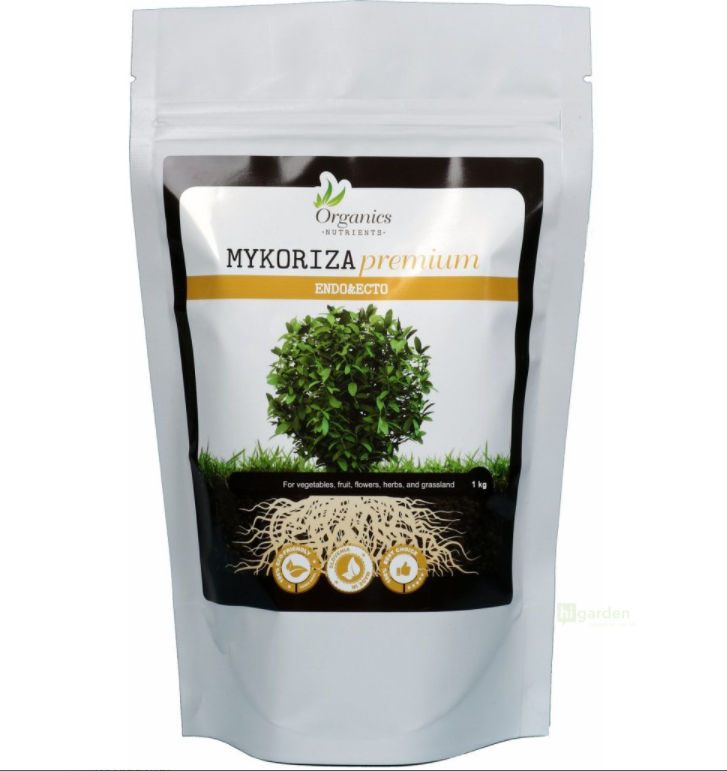
- The literally packed composition of this natural, highly concentrated powder consists of mycorrhizal fungi (ENDO and EKTO see below), beneficial bacteria, microorganisms and, last but not least, Trichoderma, about which you can read more in a separate article HERE.
- And the general list of benefits of using mycorrhizal fungi for the plant must not be missing either. What can mycorrhizal fungi do?
- They enlarge the surface area of the root zone
- They support the absorption of water and nutrients
- They release phosphorus from the soil
- They speed up the rate of plant growth
- They improve plant adaptation after transplanting
- They improve results when taking cuttings
- They enable successful plant growth even in poor soils
- They increase plant resistance to stress (Read a separate article: Stress also harms plants, or the abiotic stresses of plants)
- Are you interested in these beneficial fungi in detail? Here is their detailed list as regards the composition of the product MYKORIZA premium:
- 9 types of endo mycorrhizal fungi (Glomus claraum, G. intraradices, G. mosseae, G. deserticola, G. monosporum, G. aggregatum, Paraglomus brasilianum, Gigaspora margarita and G. etunicatum)
- 9 types of ecto mycorrhizal fungi (Rhizopogon villosullus, R. luteolus, R. amylopogan, R. fulvigeba, Pisolithus tinctorius, Laccaria bicolor, L. laccata, Scleroderma cepa and S. citrinum)
- It is no surprise that when using this product, a 400% faster development of the root system was recorded. The effects are all the more admirable because they were achieved purely naturally. That is what we call the power of nature in powder form!
- If you read our articles, you already know that a healthy and richly branched root system means better supply of nutrients to the plant, and therefore healthier development and better defence. In the final analysis, this equation leads to a fantastic harvest, as we have already mentioned in more detail above.
- When using this “magical” natural powder in cultivation practice, the aim is to achieve an even coating of mycorrhizal spores on the young root system (the outer side of the root ball).
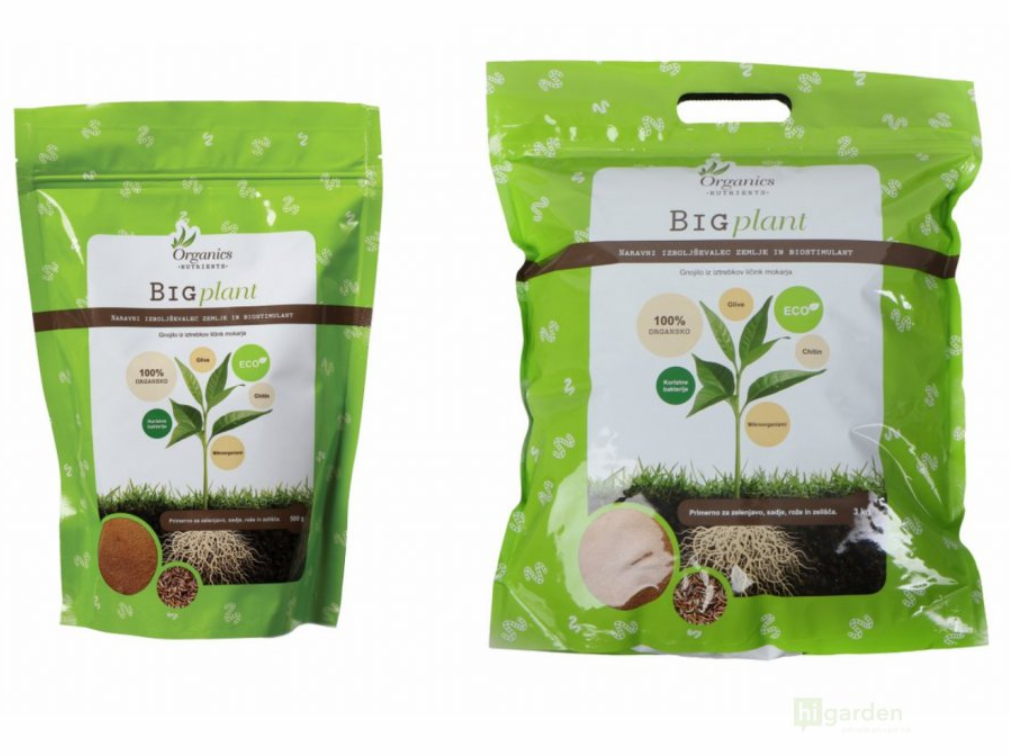
- The composition of the fertiliser BIG PLANT, suitable for both the growth and flowering phases, consists mainly of the droppings of mealworm larvae (insect manure), which in the wild feed exclusively on bran, fruit and vegetables.
- Big plant contains, among other things, chitin, which contributes to a significant improvement in plant immunity. In addition, this plant nutrition product is rich in natural silicon, magnesium, manganese, boron, copper and zinc.
- In the case of this product, it is a 100% natural soil improver for the soil in which you grow your plants, bringing a whole range of biological benefits:
- Robust plant growth
- Healthy root system
- Higher yields and nutritional value
- Unbreakable resistance of plants to pests or diseases
- A universal fertiliser with a high concentration of purely organic nutrients is ideal for all types of vegetables, fruit, house flowers and medicinal herbs. You can also use it on meadows and pastures.
- The balanced ratio of nitrogen and potassium (4.0:6.5) makes this product suitable for trouble-free application throughout the entire cultivation cycle from early growth to harvest.
- The vegan composition is also rich in valuable plant extracts, humic acids, amino acids and, last but not least, seaweed extract.
- This fertiliser contains sugar, which is also perfect food for beneficial soil microbes.
- In terms of use, you can recommend POWER plant not only for conventional watering, but also for application as a spray directly onto the leaves.
- The organic additive BIG start, supplementing the basic nutrition, contains everything needed thanks to seaweed extract and humic acids for:
- improving soil structure
- improving the soil’s water retention properties
- supporting and expanding beneficial soil microorganisms
- increasing the uptake of macronutrients
- strengthening roots and rootlets
- natural regulation of pH in the soil
- supporting the formation of chlorophyll, sugars and amino acids
- Among other things, it also contains the beneficial symbiotic fungus Trichoderma (see above) and Bacillus subtilis for better plant defence.
- A supplementary liquid fertiliser, or an extra-effective supplementation of potassium and phosphorus in plants on a purely natural basis.
- PK juice initiates faster plant growth and the formation of abundant flowers.
- The phosphorus and potassium content is in the ideal ratio (5:8).
- PK juice also contains other important micronutrients, such as copper, magnesium, manganese, sulphur, iron, boron, copper or zinc.
- The unique composition of this additive of the PK type contains a total of more than 70 minerals, vitamins and enzymes!
The products of Organics Nutrients, with their quality and above all their proven effects, directly encourage us as growers to cultivate plants and their crops in a more natural and sustainable way. If you would like to ask us anything, we will be happy to advise you at the well-known e-mail address info@higarden.eu.
We also recommend these products:
- HERCULES aerated pots (from CZK 49)
- Atami WILMA Small - 4x11L, 60x60x20cm (CZK 2,599)
- Vertical NFT systems (from CZK 9,990)
What to read next?
Green House Feeding: Mineral or Biological Plant Nutrition in Powder Form
Very simple and quick to apply, high nutrient concentration and excellent results. That is a brief summary of the reasons why an increasing number of growers prefer to use fertilisers and powdered supplements. Among other things, they praise the high quality of flowers with an intense aroma and higher yields.
Do you grow strictly organic, or do you prefer mineral plant nutrition? The answer to this question will determine which products from this innovative Dutch manufacturer will pleasantly surprise you in practice and what the specifics are for their correct use. Let us begin!
What are the advantages of powdered fertiliser?
Many growers and gardeners have used liquid fertilisers for years, and powdered plant nutrition represents an experiment and a step into the unknown for them. The following summary of their benefits answers the common question our customers therefore ask us:
- Solubility and absorbability
- Lower costs for complete nutrition
- Easier transport and storage
- Simpler use (ideal for beginners!)
- Longer shelf life
It should be added that, in the case of plant nutrition in powder form from Green House Feeding, you can also rely on consistent quality as well as the quality of the raw materials originating from Switzerland and Germany.
We will now focus on the differences between the mineral and 100% natural range of these unique fertilisers and additives. In both cases, dosage tables will also help you with their application.
Green House Bio Feeding (organic plant nutrition in powder form)
We support ecology, so let us begin with the purely organic range.
- BioGrow
- BioGrow needs to be mixed into the substrate.
- You can use the basic biological powdered fertiliser for plant growth in soil, coco and other growing media by mixing it into the substrate.
- It can be used immediately after transplanting a young plant, or you can add it later as a “top dressing”, which you mix into the top layer of the substrate.
- Nutrients are released in the growing medium for 8 weeks, but the more pre-fertilised your soil mix is, the less of this nutritionally rich powder you will need in the first few weeks. The dosage tables will help you again.
- Seedlings and young plants up to a maximum age of 3 weeks always need only half the dose.
- If the growth period is longer, we recommend a second application.
- BioGrow can form mycelium of a beneficial fungus on the surface of the substrate, improving microbial life inside the substrate. It dissolves minerals that are not initially available to plants. This fungus disappears on its own after a few days, and it would be a mistake to remove it from the substrate.
- BioBloom
- As far as use is concerned, the same rules apply to the basic biological powdered fertiliser for flowering as in the case of Bio Grow.
- Thanks to the high concentration and excellent availability of nutrients contained in Bio Bloom powder, only a single application is enough for 8 weeks of flowering.
- Bio Enhancer
- Mix Bio Enhancer with water and apply it regularly to your plants with every watering throughout the entire growing cycle in combination with Green House Feeding bio nutrition for growth or flowering.
- Thanks to humic acids and seaweed extract, you support the root system, the plant’s overall defence, and the quality and volume of the resulting harvest. That is what we call a universal organic powder supplement.

Green House Powder Feeding (mineral base fertilisers and additives in powder form)
- All products from the mineral range of Green House Powder Feeding can be used for any growing medium.
- They are all worth it, whether we are talking about basic nutrition for growth or flowering, or for example the bestseller Green House Powder Feeding Booster, which is much more effective than most liquid boosters.
- The application of mineral nutrition is quite different from the organic range above, and therefore before using mineral powdered fertiliser we again recommend looking at the dosage tables.
- If you use hydroponic or aeroponic systems and use a growing medium other than soil, we also recommend precise pH and EC metres. Reliable measuring equipment allows you full control over the concentration of the nutrient solution, so you can enjoy the results that are so easy to achieve with these fertilisers.
- Because using the mineral range of GHS Powder Feeding is not as intuitive as the Bio feeding range, here is a guide on how to easily mix a nutrient solution based on minerals:
- Check the pH and EC value of the water and make sure its temperature is between 18-22 degrees Celsius.
- You should also check whether your water contains enough calcium.
- If the EC is 0.0 (when using water from reverse osmosis, or rainwater), you must add calcium before adding the powdered fertiliser to the water. Then make sure the EC level has risen to 0.3-0.4 EC.
- Add Powder Feeding. Mix the solution well for 2-3 minutes, then measure the EC value again. Repeat if necessary until you reach the desired value.
- Once you reach the desired EC value, wait 15-30 minutes.
- Then measure the pH and, if necessary, adjust it further using pH up or pH down – mix well for 2-3 minutes and wait another 15-30 minutes before measuring.
- Once you reach the desired values, treat your plants to luxurious nutrition!
- A major advantage of the mineral range of Green House Powder Feeding is the fact that if you mix a larger amount of highly concentrated nutrient solution at once, you can safely store it for several months.
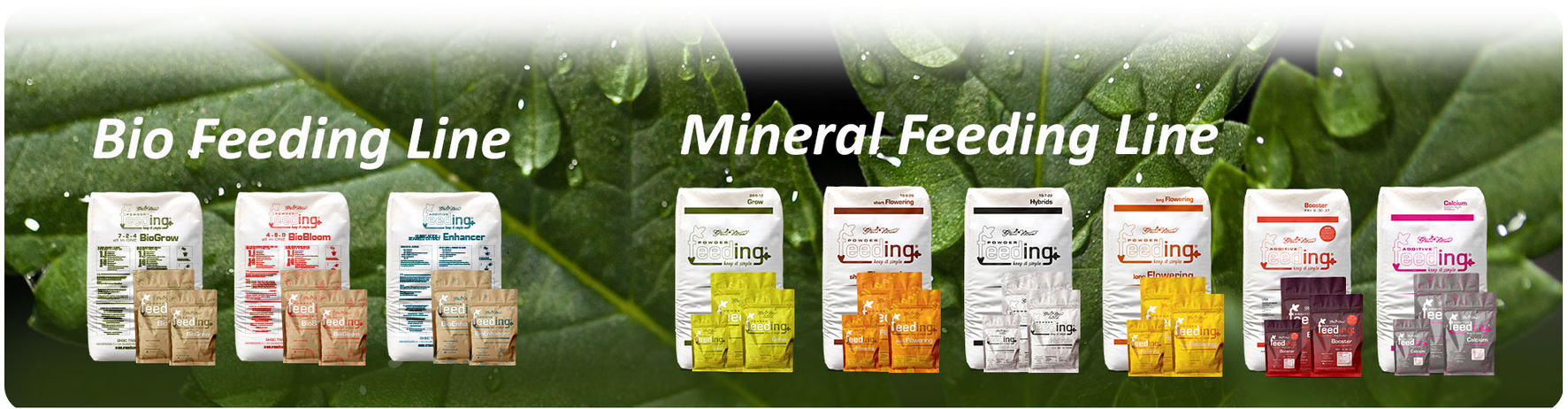
If you are interested in powdered fertilisers from a proven Dutch brand, we are not surprised. Habit, however, is a strong thing, so if you have so far used only liquid fertilisers and additives, do not hesitate to ask us about anything that interests you at the familiar address info@higarden.eu. We look forward to your questions!
To get acquainted with Green House Feeding plant nutrition, we recommend complete discounted sets for the entire growing cycle. Powder fertilisers are very economical, but why not save even more by buying a fine-tuned package, right?
- Green House Powder Feeding StarterKit BIO (1890 Kč)
- Green House Powder Feeding StarterKit MINERAL (1290 Kč)
What to read next?
- Modern trimmers make work with fresh harvest easier
- How to flush?
- How to grow mother plants and how to care for them?
What are Cal-Mag products used for, and how should they be used?
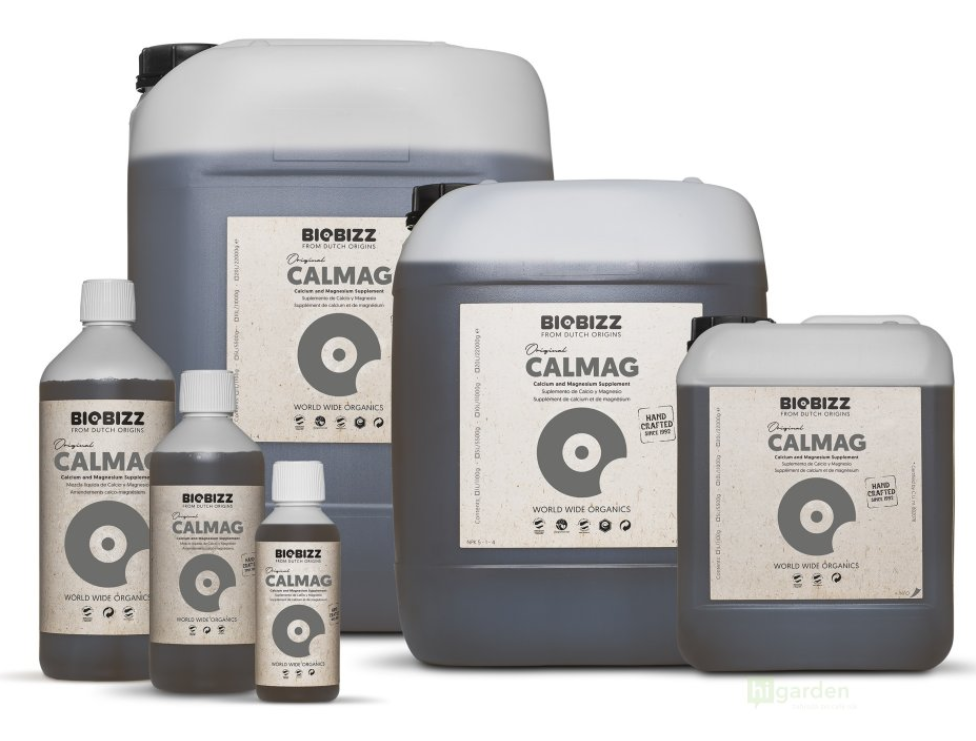
Plants cannot develop healthily without sufficient intake of calcium and magnesium. To supplement these vital minerals, or as an agent for stabilising pH, most growers use supplementary fertilisers, generally known by the familiar abbreviation Cal-Mag. It is hard to find a grower who does not use Cal-Mag. That is why, in this article, we will tell you everything you need to know about them and recommend proven products.
Why is Cal-Mag so widely used?
- The synergistic combination of calcium and magnesium benefits plant structure and helps plants with photosynthesis.
- Calcium also improves the plant’s defence against pathogens and helps with the uptake of other minerals, such as iron and magnesium. Once calcium levels drop, the plant will also be deficient in iron and magnesium.
- Plants need different amounts of calcium and magnesium at different stages of development. Getting the optimal levels of both elements at the current stage is therefore a challenge for every grower.
- You can read about what a possible deficit of these two elements causes in a separate article, which we link to below. Of course, an excess of them is not beneficial to plants either.
How should Cal-Mag be dosed?
- Depending on which specific Cal-Mag product you choose, also select the dosing tables from the relevant manufacturer. We will recommend selected products at the end of this article.
- Dosage will always vary depending on the situation you are dealing with:
- When applying Cal-Mag to address existing deficiencies, use 5 ml per 4 l of water.
- For preventive use of Cal-Mag to avoid deficiency, use 1.5 ml per gallon.
- If the plant is in good condition, stop adding Cal-Mag to the watering solution once the flowering stage reaches its peak. Supplementing calcium and magnesium in the later stages of flowering would unnecessarily risk a harvest of hard buds due to nutrient residues in the buds.
- The frequency and dosage of any Cal-Mag supplement also depend on other factors, such as the growing medium or the water you use for watering (What water do you water your plants with?).
- Diagnose your plants and growing environment. Use measuring tools, but also your eyes. Check whether you can spot any signs of calcium and magnesium deficiency. We describe the signs of nutrient deficiency, such as calcium and magnesium deficiency, in a separate article HERE.
- The degree, or extent, of calcium and magnesium deficiency in the plant will affect how often you use Cal-Mag.

Cal-Mag and pH values pH
- Cal-Mag is not used only to supplement calcium and magnesium deficiencies, as it might seem at first glance.
- Sometimes the problem is an imbalance in pH, which causes nutrient lockout, as a result of which the plant “starves”.
- Remember that:
- Adding Cal-Mag will not solve the problem if you do not stabilise pH.
- Before you conclude that yellowing leaves or other familiar symptoms are the result of calcium deficiency, always first check pH using a pH metre!
- Does Cal Mag increase or decrease pH? Adding Cal-Mag fertiliser affects pH in different ways depending on the concentration of its components. Fertilisers with a higher nitrate nitrogen content, such as Cal-Mag 15:5:15, increase pH, while fertilisers with a higher ammoniacal nitrogen content in a 20:20:20 ratio are more likely to lower the pH of the growing medium.
- Although adding Cal Mag can affect the pH of the substrate, you should not use supplements to lower pH. Adding more calcium can block other nutrients, which stresses your plants even more. We recommend using a pH calibration solution. It will help you keep the growing medium within the correct pH range. And when carrying out a control measurement of the pH of the growing medium, do not focus so much on the values on the soil surface, but above all check the pH of the runoff water to find out what pH values prevail in the root system.
Cal-Mag and reverse osmosis (RO)
- Water from RO is typically more challenging for growers when it comes to maintaining stable pH values. In this respect, Cal-Mag serves as a reliable pH stabilising agent.
- When using hydro systems in combination with water from reverse osmosis (RO), you will use Cal-Mag supplements more often and at a higher dose than when using tap water.
- Unlike tap water, which contains varying levels of minerals, reverse osmosis leaves no calcium or magnesium in the water.
- If you have not yet come across the term reverse osmosis, read the separate article we link to below.
Use Cal-Mag with every watering?
- Growers around the world have found it effective to use Cal-Mag with every watering from rooting until the late stage of plant growth.
- If you use coco fibre, then you should use Cal-Mag throughout the plant’s growth.
- Even in the case of soil substrates, it is advisable to add Cal-Mag, as these products significantly speed up photosynthesis.

Use Cal-Mag during flowering?
- There is a lot of misleading information circulating on the topic of adding Cal-Mag during flowering. The truth, however, is that the plant needs the most nutrients during flowering.
- If you do not manage to supplement calcium and magnesium sufficiently during flowering, you will usually see leaves yellowing and developing brown spots.
- A quality Cal-Mag will ensure that your plants do not stop growing and developing buds.
Cal-Mag and coco substrates
- When growing plants in coco, you will need more Cal-Mag supplements than when cultivating plants in soil.
- Coco fibre is known for locking out calcium, which is why it is essential to supplement Cal-Mag appropriately.
If you have any questions about CAL-MAG, we will be happy to answer them at the well-known address info@higarden.eu.
When it comes to Cal-Mag-type supplementary fertilisers, we recommend these products:
- Canna Calmag Agent (from 369 Kč)
- BioBizz Calmag (from 159 Kč)
- Atami ATA CalMag (from 89 Kč)
- VitaLink CalMag (from 199 Kč)
- Advanced Nutrients Sensi Cal-Mag Xtra (from 199 Kč)
- Mills Cal-Mag (from 519 Kč)
What to read next?
- Signs of deficiency of important nutrients
- Reverse osmosis (RO)
- Avoid the most common mistakes when growing plants
How to Choose Fertiliser: A Complete Guide to Buying Nutrition for Your Plants
There are dozens of brands and hundreds of different types of fertilisers on the market – in liquid, powder and solid form, organic and mineral, for different growth stages and cultivation methods. How can you make sense of it all and avoid mistakes? We have prepared an overview of the basic types of fertilisers and practical advice to help you choose the right nutrition for your plants.
Basic types of fertilisers according to the growing medium
There is a difference between fertilisers for growing in soil, coco, inert substrates or hydroponics. Before you start buying fertiliser, make sure which substrate and which growing method you want to use. Only then can you choose the right type of nutrition.
- Fertilisers for soil: These are suitable for growing in open ground (in beds) or in pots.
- Fertilisers for coco substrates: Growing substrates made from coconut fibres do not contain nutrients on their own and require special feeding. Coco substrates are usually used for indoor growing or in greenhouses.
- Fertilisers for hydroponics: These are intended for preparing a nutrient solution for soilless systems or when growing in inert media such as rockwool.
You may also be interested in: Guide to growing substrates
Choosing fertiliser according to the growth stage
From germination to harvest, plants go through several growth stages, and their nutrient requirements change accordingly. During the first weeks of life, they need little or no feeding; during the vegetative growth stage, it is important to provide enough nitrogen, and during flowering it is advisable to use fertilisers with a higher content of potassium and phosphorus.
- Starter fertilisers-Start: They contain a small amount of nutrients and often also substances that support root growth and beneficial microorganisms, such as mycorrhizal fungi or soil bacteria.
- Fertilisers for the growth stage-Grow: They contain an increased amount of nitrogen, which plants need for the formation of leaves and stems. Nitrogen fertilisers can be purely organic, mineral or combined, and the nitrogen in them may be present in the form of nitrates (NO₃-) or ammonium (NH₄+), which affects the absorption rate and influences fluctuations in substrate pH.
- Fertilisers for flowering-Bloom: They contain a higher amount of phosphorus and potassium to support the formation of flowers and fruits, and like other types of fertilisers they can be organic, mineral or combined.
- Fertilisers for the pre-harvest period-Flush: Especially when growing medicinal plants, some growers stop using fertilisers several weeks before harvest and replace them with clean water or special flushing products or finishers. The aim is better odour and taste of the resulting product.
You may also be interested in: What are NPK fertilisers and what are they used for
Organic vs. mineral fertilisers
Although it does not matter to plants which source the nutrients absorbed by the roots come from, the difference between organic and mineral fertilisers is significant in cultivation. Organic fertilisers are effective only in the presence of soil microorganisms and are therefore suitable only for growing in soil-based (organic) substrates or in beds. Synthetic fertilisers contain mineral salts that plants can absorb directly from water and can be used for growing in coco, inert substrates and in hydroponics.
- Organic fertilisers: These are made from natural raw materials such as compost, manure, bone meal, guano, fish, seaweed or plant extracts. When using organic fertilisers, bear in mind that it takes some time before they start to work.
- Mineral fertilisers: They contain nutrients in the form of mineral salts obtained from phosphates, ammonia and the synthesis of nitrogen from air. They work immediately and carry a risk of overfeeding. Therefore, always follow the dosage tables and measure the pH and EC of the nutrient solution.
You may also be interested in: Organic vs. synthetic fertilisers: Which is better for your plants?
Fertiliser form: liquid, solid or powder?
Fertilisers can come in several forms – from completely liquid to loose to solid with slow release. Each form has its advantages; it depends on where and how you grow. Different forms can include organic, mineral or combined types of fertilisers.
- Liquid fertilisers: Concentrated fertiliser solutions for preparing nutrient solution are the most user-friendly. They work quickly, are easy to handle and have a long shelf life.
- Dry fertilisers: Water-soluble fertilisers in powder or granule form can be used to prepare a nutrient solution or applied directly to the substrate (if they are designed for that).
- Solid fertilisers with slow release: Fertilisers in the form of pellets or slow-release granules are suitable for outdoor growing because they leach from the soil more slowly and supply nutrients to plants gradually. The disadvantage is that they are more difficult to dose.
You may also be interested in: Dry vs. liquid fertilisers: which are better for growing?
Complete nutrition: multi-component vs. single-component fertilisers
Especially with fertilisers for hydroponic growing, it is common to use multi-component fertilisers that are mixed in a ratio to create the ideal nutrient solution for a given occasion (for example, more nitrogen during the growth stage or more phosphorus and potassium during the flowering period). On the other hand, there are single-component fertilisers, which contain a given ratio of nutrients, usually for a specific growth stage (veg/flower).
Nutrition supplements and stimulators
In addition to basic fertilisers, which contain macro- and micronutrients essential for plant growth, you will also find a range of supplementary nutrition and growth stimulators on the shelves of growers’ shops. These additives are not usually essential for cultivation, but many growers use them to bring their plants to perfection.
- Root stimulators: They speed up root formation and are used during germination, cuttings or transplanting of plants.
- Growth and flowering boosters: They stimulate plants to form leaves or flowers.
- Vitalisers and enzymes: Various types of additives for protecting plants from stress and supporting microbial life.
You may also be interested in: When and how to use root stimulators
You should now be ready to buy the appropriate fertilisers for your plants. Before we leave you, however, we would like to add a few final tips.
Avoid mixing brands: Different manufacturers use different recipes, which may not be compatible.
Use a pH and EC metre: Measuring the pH and EC of the nutrient solution or substrate will give you a clearer idea of the nutrient content in the root zone.
Feed regularly: Plants benefit from a constant and stable supply of nutrients. Do not delay feeding until signs of nutrient deficiency appear.
Not sure which fertilisers to choose, or just starting out with growing? Useful information for beginner growers and experienced growers can be found on our Higarden blog or you can get in touch with our sales staff.
Trichoderma, or the Natural Way to a Rich and Healthy Harvest
Protect your crop from moulds and the effects of pests or harmful pathogens! Trichoderma is an exceptionally beneficial fungus for plants of all kinds, as it significantly helps keep them in good condition and improves their growth and subsequent yield. In this article, you will learn more about the beneficial effects of this fungus and also find out which products contain it.
Fungi of the Trichoderma genus, such as the perhaps best-known Trichoderma harzanium, are among the most widespread fungi found in soil. Here we mean outdoor, natural soil. Every more experienced grower has already heard about how beneficial fungi can be used for higher yields, beautiful flowers and healthy crops, and therefore they are often added to the growing medium through various products, which is used for cultivating plants in indoor environments, for example in a grow tent. However, there are also substrates that already contain Trichoderma. Here are several examples:
- T.A. Organic Soil Light-mix (soil)
- Canna Coco Professional Plus and Canna Coco Natural and Canna Cocos growing mat (coco)
- Plagron Cocos Premium (coco)
- Compressed UGro Rhiza cubes or AH Coco Advanced
- Plagron Mega Worm (100% natural substrate based on composted plant residues from earthworms)
Why is this fungus so sought after among growers, and why does applying products whose composition contains Trichoderma almost always bring excellent results?
- Fungi of the Trichoderma genus (hereinafter referred to as Trichoderma) form symbiotic relationships with plant roots.
- Trichoderma creates its own colonies in the plant’s root system, which protect the root ball against pathogen attacks, whether these are various moulds or bacteria.
- Unlike animals, plants do not have the ability to create classic antibodies against harmful pathogens, but when attacked they produce specific molecules (proteins, phytoalexins, etc.) with fungicidal and antibacterial properties.
- Trichoderma acts as a stimulant of the natural defence mechanism described above, even when the plant is not directly under threat, because it releases substances that cause the plant to continuously secrete defensive substances.
- It is therefore a biological prevention of mould and bacterial plant diseases.
- In addition, Trichoderma also parasitises other fungi whose colonies are undesirable for the plant’s root system and reliably suppresses them. A typical example of its considerable benefit for every grower is the prevention of root rot.
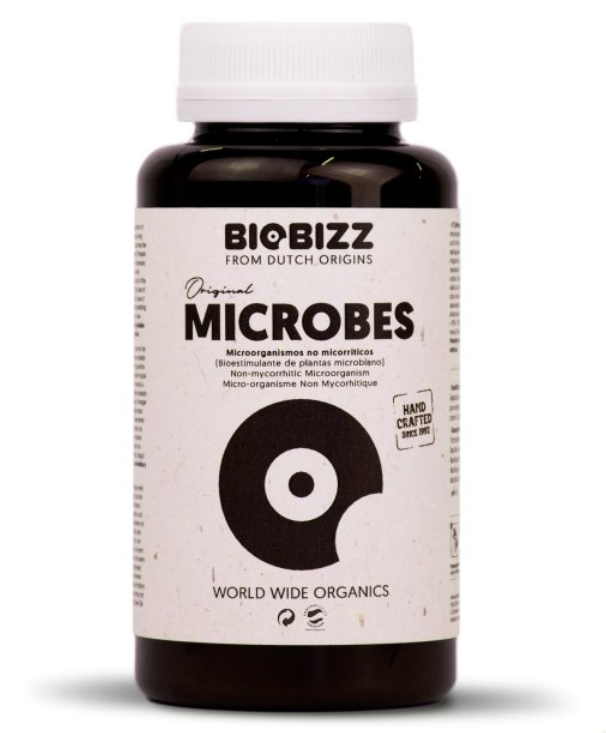
Now you know how Trichoderma works, and so it is time to show which products will help you achieve the best results:
- First, we must mention the BioBizz Microbes supplement, which is not among the cheapest, but its “packed” composition more than makes up for the purchase price, and indoor growers simply cannot praise it enough in practice. It is a unique complex of microorganisms, enzymes and beneficial fungi.
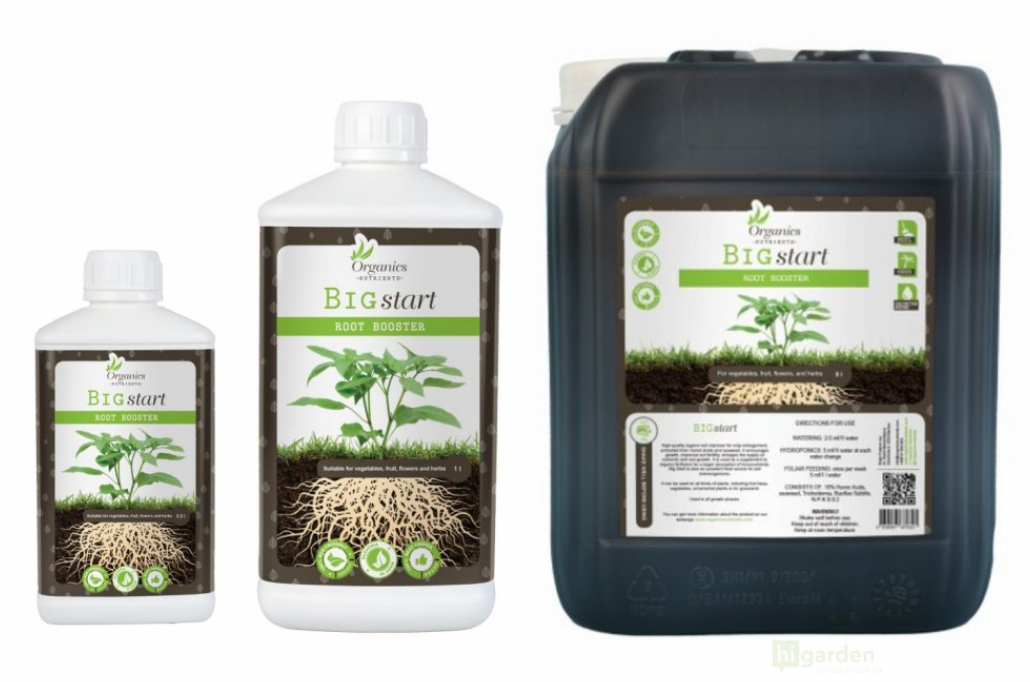
- The root booster Organics Nutrients BIG start and Organics Nutrients MYKORIZA premium are among the long-awaited new products that have enriched our range with Trichoderma content. We recommend them!
- If you want to protect cuttings during rooting or germinating seeds from mould and other risks, you can use Biotabs Bactrex - a handy powder supplement which, in addition to Trichoderma, also contains a large number of useful soil and root microorganisms, including six strains of Bacillus spp.
Once Trichoderma becomes an inseparable part of caring for your plants, nutrient uptake will increase, especially phosphorus, whether you are growing herbs, fruit or vegetables. Plants will tolerate stress better and withstand possible complications in the form of pests or diseases regardless of whether you grow them in soil, in coco, or you are engaged in hydroponics.
Although Trichoderma is primarily added to the growing medium, and if it is not already contained directly in the substrate, in some cases it can also be applied directly to the plant roots. In any case, it would be a pity not to make use of its renowned properties for greater joy from every further harvest. And if you would like to ask us anything, we are here for you at the well-known address info@higarden.eu.
We also recommend these products:
- BioNova MicroLife (2kg soil booster) (769 Kč)
- T.A. Trikologic (G.H. Bioponic Mix - trichoderma) (from 139 Kč)
- UGro XL - compressed cube 5kg (70l) (349 Kč)
What to read next?
Signs of a Deficiency in Essential Nutrients
Are you observing a plant and wondering whether it is missing something? If your herbs do not look healthy, they may be suffering from a nutritional deficiency, and it is therefore high time to give them an extra dose of one of the key elements through a suitable product.
Today’s article will teach you how to recognise deficiencies of individual elements in plant nutrition, and we will also recommend top products for their effective supplementation. In section “A” we will focus on basic nutrients (N-P-K), and in section “B” we will go through minerals and other most important elements that play an irreplaceable role in a wide range of plant biochemical processes.
One piece of advice to begin with. First of all measure pH. Before you start finding out which element your plants are lacking, if they clearly are not doing well, first of all measure the exact pH value of the substrate:
- When growing in soil, values from 6.5 to 7.0 are desirable.
- In hydroponics you need to measure lower pH values between 5.5 and 6.5.
If the measured pH values fall outside the ranges above, try adjusting the pH first and wait a while to see whether the plants begin to do better. The pH value can affect the presence of some basic nutrients or trace elements. Now let us explain how to recognise their deficiency and how to address it effectively.
Deficiency of basic nutrients N-P-K
NITROGEN deficiency (N)
- Without a sufficient supply of this biogenic element, plants simply do not grow; at best, they will be small and weak. Nitrogen is, after all, the most important component of nutrition during the vegetative phase (i.e. growth) of every plant.
- Another typical symptom that can be observed with the naked eye is overall yellowing, sometimes even reddening of the leaves, followed by their subsequent drop.
- Among the strongest fertilisers for replenishing nitrogen levels is Canna N 17%. With this product you can reliably eliminate a possible nitrogen deficiency in your plants, but do not forget to dose it carefully in view of its high concentration.

PHOSPHORUS deficiency (P)
- Phosphorus is essential for the development of a healthy, strong root system, and if you read our articles regularly, you certainly know that the condition of the root system determines the plant’s ability to absorb nutrients contained in fertilisers effectively.
- In the case of phosphorus, it is a key component of nutrition during the flowering phase. In the period when plants concentrate their energy on producing abundant flowers and fruits, it is hardly ever the case that they have an excess of phosphorus.
- You will most often recognise phosphorus deficiency in plants by the premature dropping of older leaves. Also pay attention if you notice growth stalling, chlorosis of older leaves from the top down, dark grey spots and sometimes even purple-coloured patches on the leaves.
- Phosphorus is most often supplemented together with potassium in the form of PK additive fertilisers, such as Canna PK 13/14. You can also use the same product in the case of potassium (K) deficiency, see below.

POTASSIUM deficiency (K)
- Potassium completes the trio of basic nutrients. It is extremely important for the overall stability and vitality of the plant, helping it manage water and energy in the form of carbohydrates.
- A deficiency of this element can often be mistaken for burn damage, as older leaves yellow and the leaf edges turn brown in the same way as with scorching. Dots may also appear on the leaves.
- A classic symptom of low potassium levels in plants is stunted growth.

Deficiency of other nutrients
A deficiency of calcium and magnesium, which we mention a little further below, is effectively addressed by CALMAG-type products, such as Canna Calmag Agent.
CALCIUM deficiency (Ca)
- Calcium has a fundamental effect on the overall development and stabilisation of plants.
- Its deficiency is manifested mainly on plant leaves, namely by typical spots - small yellow-brown spots with a distinct brown edge.
- Other symptoms include short roots and curled or even “crumpled” leaves.

MAGNESIUM deficiency (Mg)
- The building block of chlorophyll must not be missing if plants are to remain photosynthetically active.
- Magnesium deficiency in plants is most often indicated by rusty brown spots and yellow spots between the veins on the leaves.
- A lack of magnesium prevents iron absorption, which is also associated with leaf distortion.

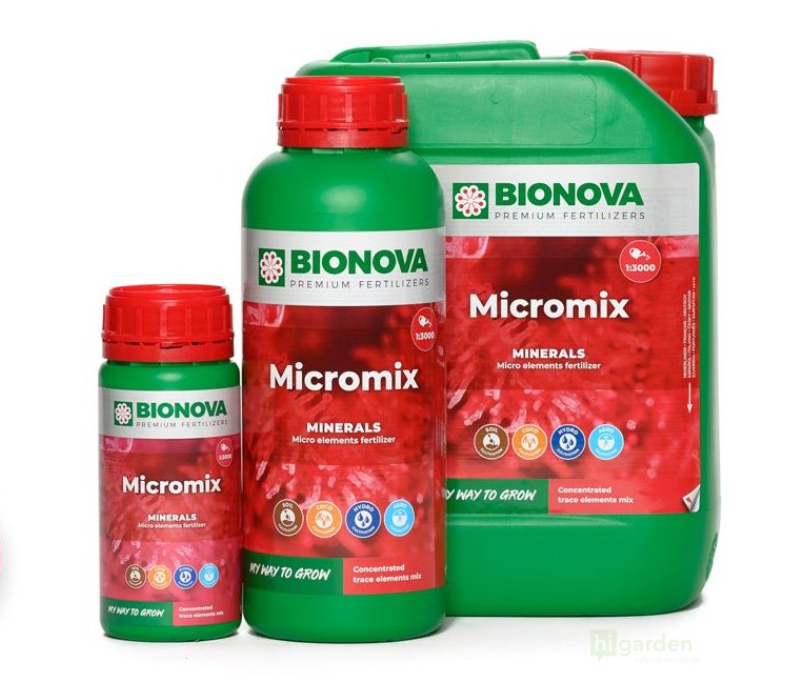
If you need to address a deficiency of any of the microelements listed below (iron, manganese, boron, zinc or molybdenum), use balanced MicroMix for easy replenishment of their levels and also as a prevention against deficiencies.
IRON deficiency (Fe)
- Iron is among the very unstable elements, so it likes to react with other nutrients, which is of course not desirable in plant nutrition, and therefore its deficiency is a fairly common matter.
- A low iron level in plants is manifested by yellowing leaves, or yellow patches on the leaves, while the leaf veins remain green. Leaf glassiness appears.
- Iron deficiency is often confused in cultivation practice with magnesium deficiency (see below). The difference is that iron deficiency affects only young leaves.

MANGANESE deficiency (Mn)
- Manganese deficiency in plants is most evident in hydroponics.
- The most common symptoms include dead yellowish tissue between the leaf veins, while the veins themselves remain green.
BORON deficiency (Bo)
- Abnormally slow growth? Your plants may be missing precisely this trace element, which supports the accumulation of phosphorus in the leaves and whose deficiency is in fact the most widespread nutrient uptake disorder in the world.
- You can recognise boron deficiency by small stems or curled leaves. It is also indicated by the dying off of older leaves and growth tips.
ZINC deficiency (Zn)
- Zinc deficiency, whose level is very low in plants of all kinds, is most often recognised by a yellowish area between the veins starting at the tips and edges of the leaves. The leaves may be striped.
- Sometimes vertical growth stops.
MOLYBDENUM deficiency (Mo)
- Molybdenum is part of important enzymatic processes related to nitrogen assimilation. The initial symptoms of its deficiency may also resemble nitrogen deficiency.
- Molybdenum deficiency later manifests as yellow spots between the leaf veins, followed by a browning area along the edges. Simply put, the leaves may be blotchy and mottled.
- A typical symptom of Mo deficiency is also inhibited flowering.
COPPER deficiency (Cu)
- Copper deficiency is most often indicated by the dying off of leaf edges and tips.
- The cause is usually stress and poor pH of the soil.
- In the case of hydroponics changing the water usually helps as well.
SULPHUR deficiency (S)
- The deficiency of this trace element also resembles nitrogen deficiency in the external appearance of the plants. We see signs of chlorosis (yellowing of the leaves) and usually also notice a significant stalling of growth.
- Crops with higher demands for copper will appreciate the use of blue vitriol
CARBON deficiency (C)
- We have left carbon for the end - the basic building block of the living world and an absolutely essential element for photosynthesis.
- Plants grown outdoors receive enough of it from the air, but if you are engaged in indoor cultivation of plants in a grow box, we recommend supplementing it with carbon dioxide. For example, No Mercy tablets are very popular, as they support your plants in development even if they do not show the signs of carbon deficiency listed below.
- Symptoms of carbon deficiency: White deposits appear on the underside of the leaves and the plant stops growing overall.
If you need advice on supplementing your plants’ nutrition, please do not hesitate to contact us and we will be happy to help. We look forward to your questions at the well-known address info@higarden.eu.
We recommend these products:
- Canna Calmag Agent (from 369 Kč)
- Canna PK 13/14 (from 149 Kč)
- BioNova MicroMix (mikroprvky) (from 279 Kč)
What to read next?
Growing in Coco Coir
Are you thinking of trying cultivation in coco? Today we will discuss a popular growing medium that stands out for its unusual versatility and has quickly become synonymous with healthy, strong plant roots. We will look at the properties and types of coco substrates. We will also add tips for their correct use in cultivation practice. Coco substrates are being preferred by more and more growers around the world. So what is their appeal?
An inert coco substrate has truly ideal properties for growing herbs, crops and flowers of almost every kind, and it is used most often in hydroponics. Coco fibres are able to retain a great deal of water while maintaining a high level of airiness. This creates perfect conditions for the development of the plant root system, as the fibre structure holds water with nutrients (nutrient solution), which the roots absorb efficiently and naturally work with...

The birth of a universal medium
The production of coco substrates consists of repeated cleaning of crushed and sieved coco fibres from the fruits of palms grown, for example, in Sri Lanka. In addition to sterilising the fibres, the process of buffering is also common.
Parameters of coco substrates and their positive impact on the harvest
Coconuts contain lignins. These compounds are able to stimulate the development of beneficial bacteria, which results in increased resistance to various diseases and pests. The resistance of root systems to attack by pathogenic bacteria and moulds, as well as plant yields, is supported by the presence of the fungus Trichoderma, which is part of most substrates. Symbiotic fungi colonise the surface of the roots, thereby increasing the volume and capacity of the root system, as well as the ability to process absorbed nutrients. Coco substrates are also often supplemented with perlite for even greater aeration of the root zone. Coco mixes with expanded clay are also available on the market. If you are satisfied only with a 100% coco substrate of the highest quality, try our tip from the brand BioNova.
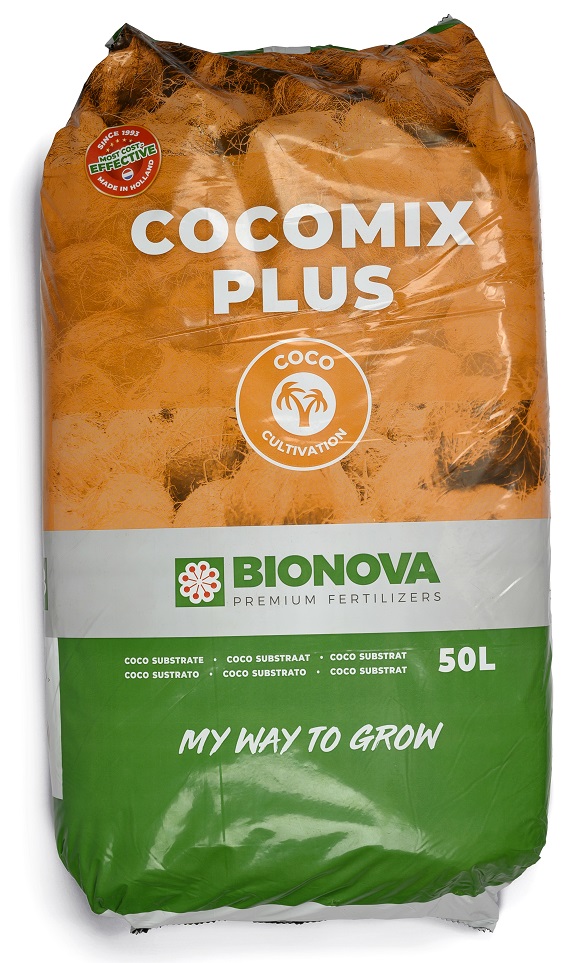 100% coco substrate of the highest quality
Once a plant has a rich root system, it can reliably make use of the nutrients it receives. This is easy to recognise in its above-ground parts, which are vital and have a visibly strong structure. The plant thrives, grows faster and produces beautiful flowers and juicy fruits.
The reasons why coco is an excellent growing medium for both beginners and experienced growers are probably already becoming clear to you. It is time for a brief summary of the main advantages:
- Coco supports the development of the root system for strong and healthy plants.
- Coco fibre is as environmentally friendly as possible; it breaks down easily in nature or compost.
- Coco opens up space for beneficial microorganisms, while relentlessly driving pathogenic ones away.
- Coco substrate is exceptionally airy and ensures enough oxygen in the root zone.
- Coco offers plants an ideal acidity level: pH 6.0 – 6.8.
- Coco fibres contain a significant proportion of natural cellulose, phosphorus and potassium.
- Coco offers a cleaner gardening experience, for example compared with ordinary soil.
- Coco fibre absorbs water easily, so it is suitable for manual watering, but it does not retain it as much as soil, which means it is also suitable for hydroponics. And because coco is inert, it is made for hydroponics.
Recycling
In addition to the generous list above, coco has one more practical advantage, namely the possibility of repeated use. You only need to make sure that before each further growing cycle it is cleared of visible remains of dead vegetation, such as roots or leaves. You can use this medium without any problem for up to three growing cycles!
Two packaging types
Coco substrate is sold in bags as standard (most often 50 l) or in the form of compressed coco. Dehydrated compressed coco bricks allow easy handling and are also suitable for long-term storage. The coco bricks are soaked before use. They then expand to the required size.
Practical tips for growing in coco
At the beginning, we recommend avoiding transplanting. First raise the seedlings using Jiffy and only plant them into coco once roots are visible. Then, especially if you are only just starting to grow in coco, it will definitely be easier for you to begin with manual watering. As with all processes that a beginner grower gradually comes into contact with, working with coco will also need to be learned calmly, and manual watering will give you the necessary peace of mind that you will not overwater the plants unnecessarily and that they will receive, in their growth, the amount of water they are able to use. Once the young plants have developed a sufficiently branched root system, you no longer need to worry, because cultivation in coco can, thanks to the properties described above, withstand more frequent and more intensive watering. After the first two weeks, the watering intensity can be gradually increased until the second week of the flowering phase. If the leaves start to turn yellow or even wilt, you are overdoing it with water. The sign of the correct watering intensity is strong, green leaves. Therefore, always increase water doses gradually and carefully observe the plants' reactions. During the 14 days before harvest, gradually reduce the water doses and, in the final stage, 2-3 days before harvest, let the plants send the remaining strength into the fruit or flowers. Coco should be flushed regularly.

Final advice
Some coco substrates, such as Atami Coco, contain enough nutrients for the first week of the growing cycle. In the opposite case, and from the second week onwards, when growing in coco, always remember to use appropriate nutrition in the form of special fertilisers designed specifically for coco substrate. We will be happy to help you choose a suitable fertiliser, as well as the substrate itself; just call or write to us (info@higarden.eu).
- Compressed coco
- Fertilisers for coco
- BioNova Cocomix Plus (recommended)
Fertilisers A+B, or Why Is It Not in One Bottle?
Beginning growers often ask how these two-part fertilisers work and why they must be kept separate. Today’s article summarises the answers, focusing on basic plant nutrition, which is always produced in two bottles.
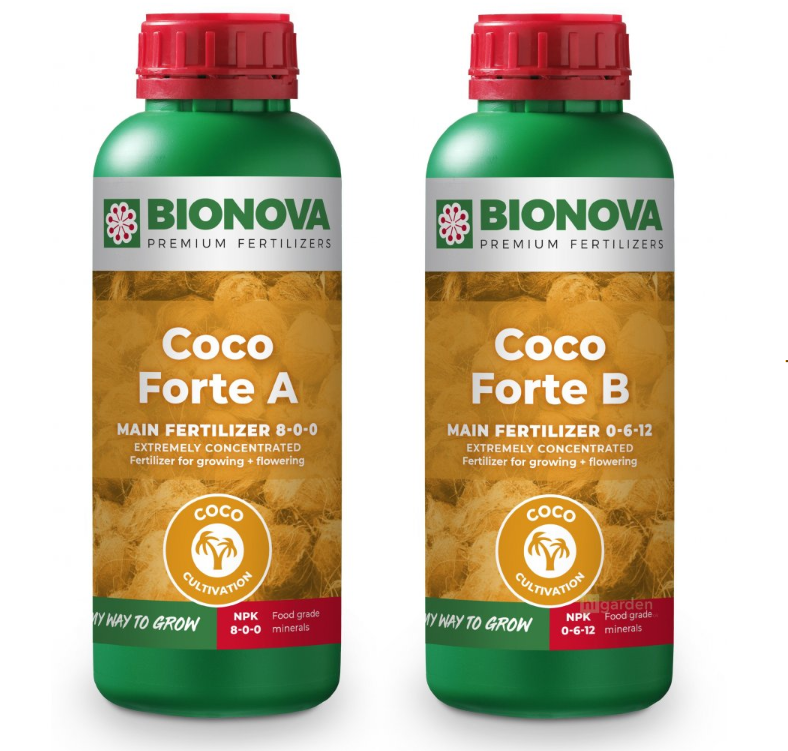
Quality two-part fertilisers represent a truly nutritious cocktail of essential nutrients, minerals and other substances that help plants develop quickly and healthily. They are available for use in soil, coco and also for hydroponics.
The high concentration of beneficial substances is reflected not only in the matter of dosing, where it is necessary to follow certain limits and procedures, but also in the fact that some substances would create undesirable reactions together in a concentrated bottle, after which some essential substances for the plant, present in smaller proportions, would literally be absorbed by other dominant substances.
Another reason why two-part fertilisers are most often sold in two bottles is soil life. A healthy and beautifully branched root system of the plant, as a basic prerequisite for a rich harvest, represents a complex ecosystem in which various microorganisms play a key role. Their representation should also be as balanced as possible. Small predators have their irreplaceable place here, just as peaceful strains do. In the micro-world, that is, in soil or a similar growing medium (soil mixes), where your plants grow, exactly the same rules apply in this respect as in nature as a whole.

If we were to place these elements, which the plant needs for its development, into one bottle, the results of even the best fertilising would not be worth mentioning, because after some time a significant part of the beneficial substances in one bottle would simply disappear in favour of some dominant substance. Such is the law of nature, and fertiliser manufacturers must respect it. An ideal example from “big nature” is the African savannah, where giraffes, elephants, lions, goats, zebras and monkeys live side by side. Such an ecosystem has been stable and functional since time immemorial. We can map a certain food chain, but it is part of the ecosystem, and the individual species exist in it naturally and permanently side by side. But what happens if you leave a pride of lions together in one large cage with other species? The answer is obvious to everyone. Soon only the lions will remain. And that is, of course, an undesirable reaction.
That is why it is necessary already during production to sufficiently separate dominant substances and microorganisms in plant nutrition products from the others, and that is therefore also the reason why we have basic fertilisers for growth, referred to as GROW, available in one bottle, and fertilisers for flowering, referred to as BLOOM, in the second bottle, even though they are applied at the same time and many growers therefore quite logically ask, especially at the beginning: “Why not just put it all into one?”.
If the different elements are supplied to the growing medium separately in the form of A + B bottles, they can live side by side and support the plant in its growth through their action.

The same applies to various additives, whether they are flower boosters, growth and root stimulators, enzymatic preparations or, for example, soil improvers:
- They are not always dosed in the same way.
- They cannot always be mixed with the base fertiliser.
- The content of certain substances contained in quality additives would disproportionately increase the price of the base product.
- The proportions of individual bottles differ with regard to the plant’s developmental stage, so they can be adjusted accordingly.
A safe bet when applying individual plant nutrition products are the procedures and dosing tables recommended directly by the manufacturer.
Our TIP: Get a practical Starter Kit / Starter pack - complete fertiliser sets contain everything you need during the growing cycle, from seed to a rich harvest! For example, try the bestseller in the fertiliser set range from the brand Advanced Hydroponics, the Dutch fertiliser set BioNova AutoFlower Supermix for autoflowering varieties, and very popular among our customers is also the basic set of Czech-made fertilisers.
We also recommend these products:
- Atami B´cuzz Soil A+B (from CZK 239) professional mineral fertiliser for growing in soil.
- Plagron Cocos A+B (from CZK 329) biomineral fertiliser for growing in coco.
- BioNova Coco Forte A+B (from CZK 549) top-quality Dutch organic nutrition for growing in coco.
- Plagron hydro A+B (from CZK 339) biomineral fertiliser for hydroponics.
What to read next?
- How can soil properties be improved?
- What are the best fertilisers for hydroponics and how should they be used correctly?
- Growing under artificial lighting: HPS vs. LED
If you have any questions about A+B two-part fertilisers, whether about their application or if you need advice on choosing a specific product, please do not hesitate to contact us at the well-known address info@higarden.eu.
Enzymes and Your Garden
The word enzyme is being mentioned more and more often in the world of indoor and outdoor growing. In today’s article, we will take a closer look at what they actually are, whether and how they help with cultivation, and how to use them effectively in the garden bed and in the growbox.
What are enzymes?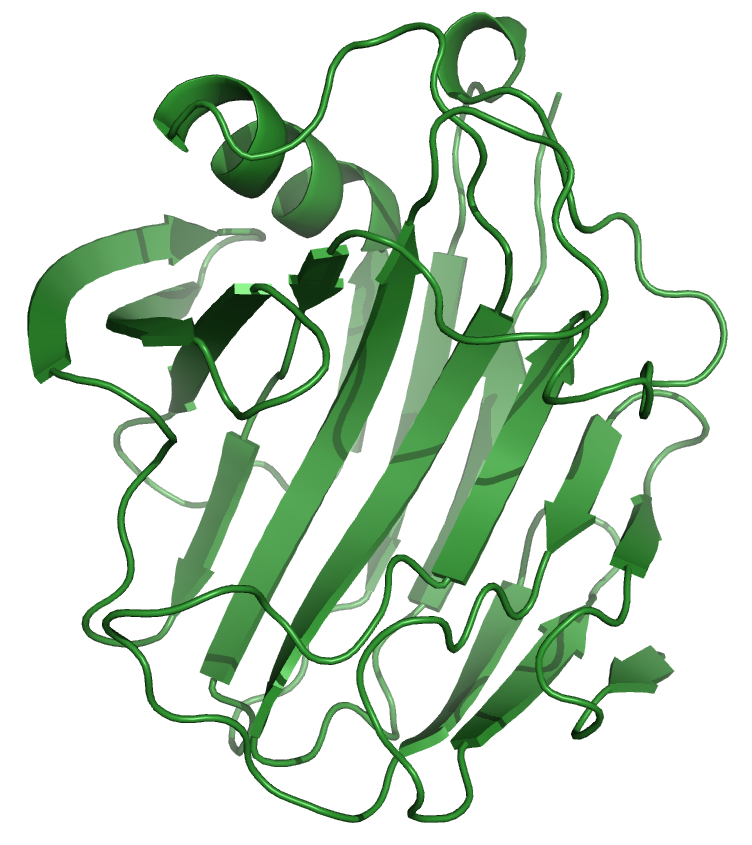
Enzymes are chemical substances that act as catalysts - they speed up chemical reactions between other substances. They therefore help break down complex substances or, conversely, form them. Life as we know it would not be possible without enzymes.
Where do we find enzymes?
There is a huge number of enzymes around us, and they are an inseparable part of our everyday lives. The best-known example of how enzymes help us is digestion, as enzymes are found in human saliva, and they are in the stomach and intestines. We add them to cleaning products, use them when cooking food and beer, as well as in the production of cheese and wine.
One enzyme always helps with one specific reaction and reacts only to one substance. If, for example, a person lacks the enzyme called lactase in the intestine, milk sugars (lactose) are not broken down, which leads to unpleasant problems that can only be avoided by limiting the diet - the enzyme cannot be replaced.
What are enzymes good for for growers?
- More nutrients for plants

Enzymes speed up the breakdown of complex sugars, chitin, organic phosphates and, for example, animal fats. And what is all this for? By breaking down complex molecules, a lot of goodness is released - there is suddenly more nitrogen, potassium, phosphorus, zinc, iron and sugar in the soil in a form that plants can absorb and use.
- Better soil properties
As dead organic matter in the soil breaks down more quickly, not only are many nutrients released, but also a lot of space. The soil itself becomes better aerated and retains water more effectively, so nothing prevents the plant roots from growing and developing.
- Protection against harmful microorganisms
At the same time, there are far fewer opportunities in the soil for harmful bacteria and fungi that could feed on organic residues - and damage the cultivated plant. Some enzymes even break down the cell walls of pathogens, so the plant benefits both from prevention and from active protection.
- Faster and healthy growth
As if that were not enough, there are enzymes that speed up the production of hormones in the plant. Together with improved conditions in the soil and protection against harmful bacteria and fungi, they support the plant in its natural development.
The result is a healthy plant that lacks nothing and is already preparing to produce the most beautiful fruits and flowers.
TIP: Enzymes can be used to clean the substrate between individual growing cycles. This avoids the use of chemical cleaners.
Where do enzymes come from?
After all, enzymes are the most effective catalysts we know, so they are produced by microorganisms, animals and plants. A popular way to produce enzymes for plant cultivation is through microorganisms - bacteria and fungi (such as bacillus and trichoderma), which create enzymes and at the same time live symbiotically with plants. If you would like to know more about them, we have prepared a separate article for you.
How do you add enzymes to an outdoor garden?
In a conventional garden, microorganisms that produce enzymes are usually already present (warning! they can be destroyed, for example, by high pH or chemical spraying), so adding bottled enzymes is usually not necessary. If you want to give your plants a boost, you can add standard compost to the bed. It is rich in both nutrients and beneficial fungi and bacteria that create enzymes.
Another option is to use your own compost tea, over which you have greater control and which can be made more quickly. For example, Compost Tee from BioTabs is ready in just four hours and has all the advantages of traditional composting.
How do you use enzymes indoors?
Indoor grow rooms or grow boxes are closed systems where beneficial and harmful microorganisms do not simply balance each other out. Adding standard compost is therefore understandably off-putting to many growers (even leaving aside the smell), because they do not want to invite pathogens into a carefully created environment.
However, there are other options: you can add only enzymes - they can simply be bought in a bottle (for example from Shogun, Canny or BioNova). There are also blends containing beneficial microorganisms that create enzymes. In products from Terra Aquatica, Plant Success or Biobizz you will find selected microbes that will only benefit plants.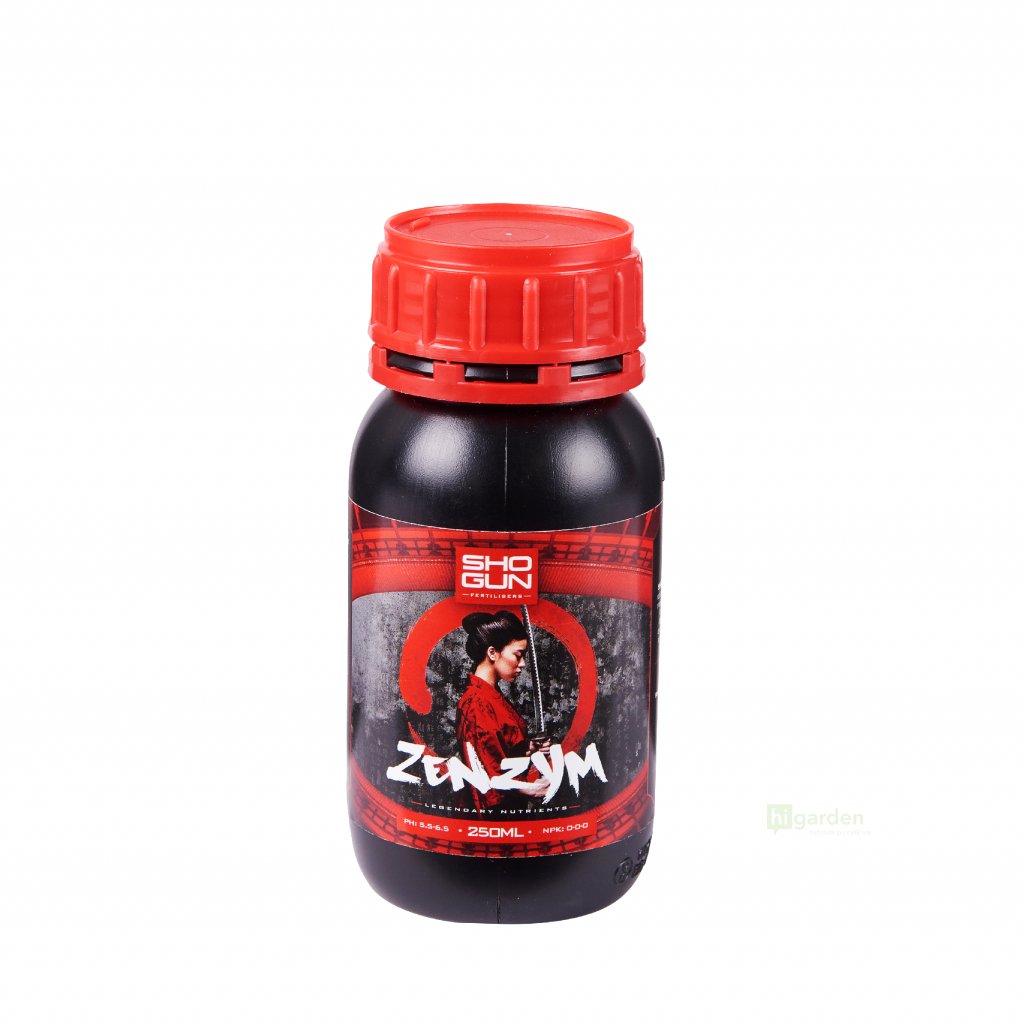
TIP: You can use enzymes in any style of plant cultivation - even in a hydroponic system.
What should you watch out for?
Enzymes work only under certain conditions. Changes in temperature, pressure or pH harm them, just as they harm microorganism colonies and, ultimately, plants. If possible, try to keep any fluctuations to a minimum.
If you want to add enzymes or microorganisms from a bottle, pay the closest attention to the storage temperature. Higher and lower temperatures can deactivate enzymes and kill microbes.
You should also pay attention to the labels. Manufacturers sometimes use terms such as enzyme and microorganism interchangeably, but the result is actually the same - you either add the catalyst directly or something that produces it. The bottle usually says only “enzymes” in general, without specific names, but that does not affect effectiveness - you will not find a sign on compost saying “contains cellulase, amylase and lipase” either.
And if we were to sum it up?
Enzymes are substances that speed up chemical reactions. When we talk about plant cultivation, their greatest benefit lies in improving the quality of the substrate. They improve its oxygenation, water retention capacity and increase the content of nutrients available to the plant. Adding enzymes certainly will not do any harm - quite the opposite. It may turn out that they are exactly what your plants have been missing for years, whether you grow outdoors or indoors.
If, while reading the article, you thought of any questions about enzymes and their use in plant cultivation, please do not hesitate to contact us at info@higarden.eu - we are here for you.
We recommend these products:
Other articles:
BioNova Boost Pack for Luxurious Flowers and Fruits
Discover a synergistic and balanced trio of Dutch stimulators in one compact pack for a bountiful harvest full of aroma and flavour. This extra-value pack improves the overall quality of your indoor cultivation product.
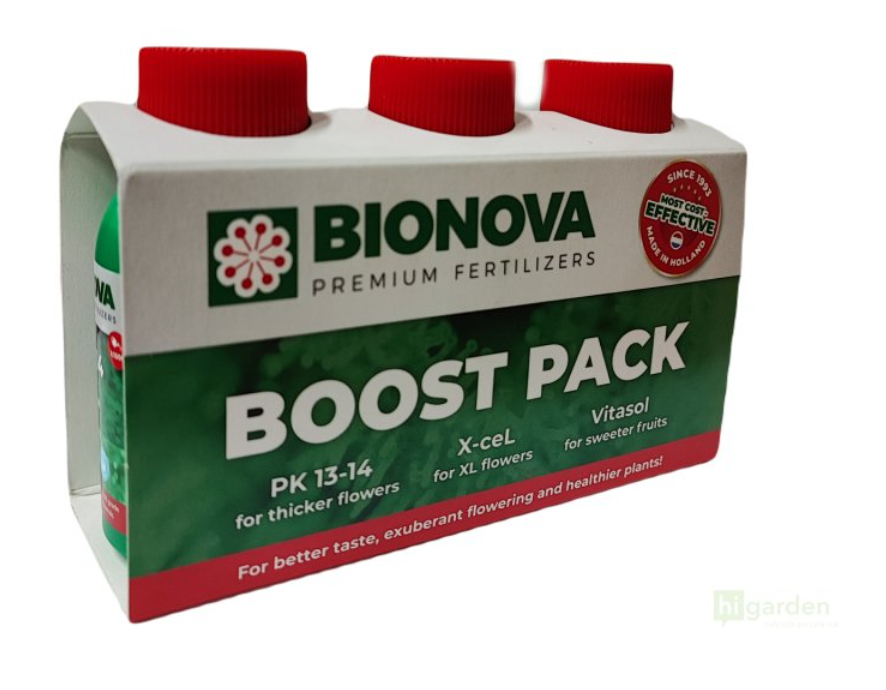
What do growers gain from the combined effect of proven stimulators that together make up BioNova Boost Pack?
- Faster onset of flowering
- Higher-quality and more fragrant flowers
- More compact, firmer and sweeter fruits
- Better plant resistance to the effects of pesticides
An undeniable advantage of this pack, apart from the resulting effect on flowering plants or fruits, is its universal use in their cultivation in any substrate and in hydroponics.
Now let us introduce the 3 components of the BioNova Boost Pack one by one for clarity, so it is immediately clear why this pack has enjoyed such popularity among growers since its launch:
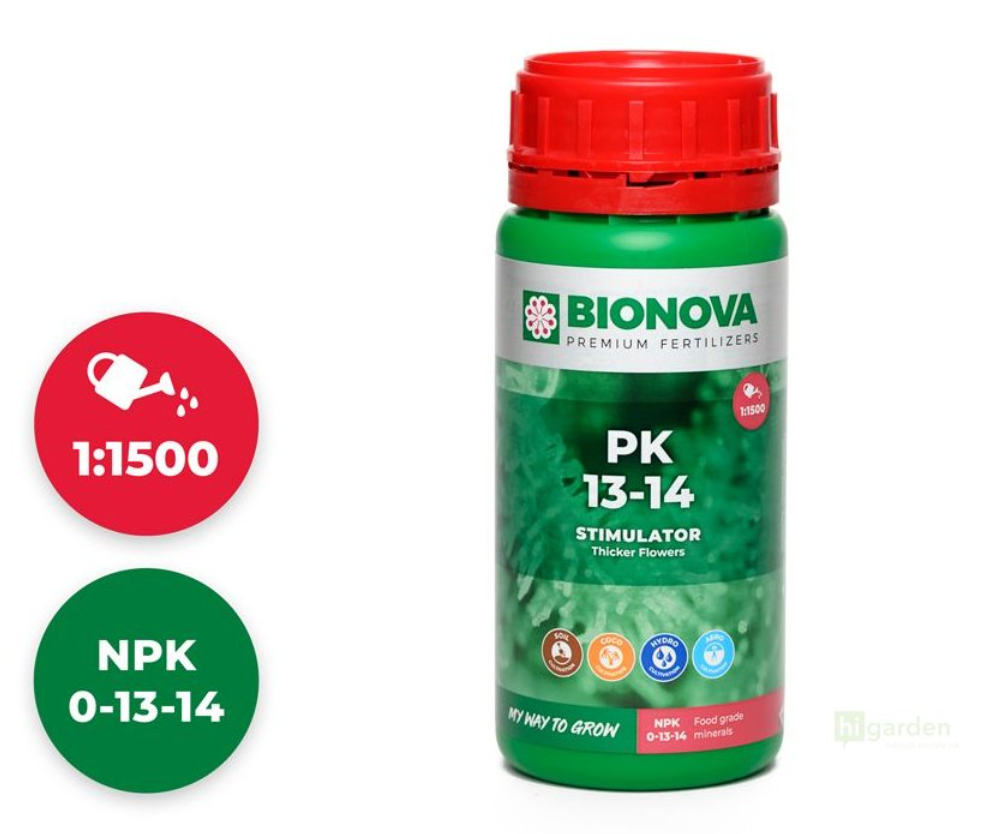
- BioNova PK 13–14
- The effective formula and optimal ratio of phosphorus and potassium, first introduced by this Dutch manufacturer, place this liquid supplementary fertiliser in the role of the main flowering stimulator.
- It contains one of the purest forms of minerals (so-called food-grade minerals) in a high concentration (1:1500).
- By contrast, you would look in vain for ballast salts or heavy metals in the composition of Bionova PK 13–14.
- As a result, the plant root system can easily absorb the liquid preparation, helping you achieve the highest quality and purity of the final product.
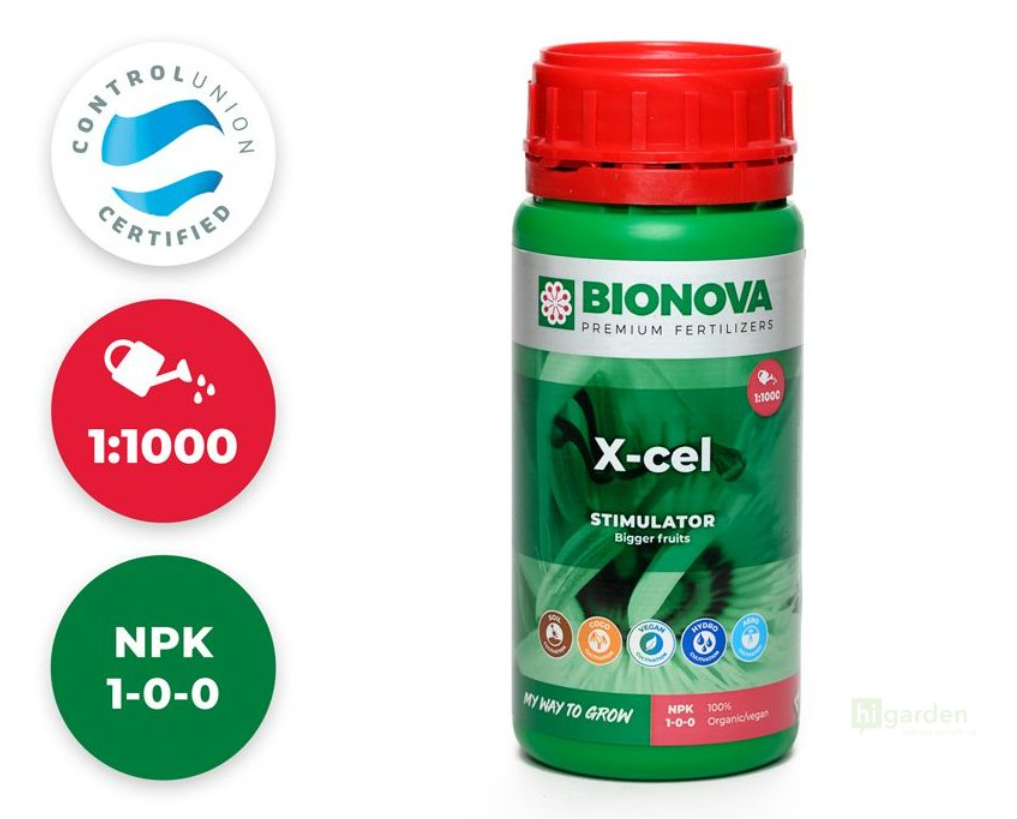
- BioNova X-cel Booster
- 100% organic (vegan) development stimulator for all kinds of plants, from fruit, vegetables and agricultural crops through ornamental flowers to medicinal herbs.
- It actively contributes to the development of any plant from the first day of planting! In terms of the results of using this preparation, it starts with beautifully branched and strong root systems and ends with abundant inflorescences or juicy fruits full of natural flavour.
- This liquid additive demonstrably increases both the quantity and quality of yields of all crops.
- It is no surprise that the composition includes:
- A broad spectrum of vitamins
- Natural growth and flowering stimulators
- Amino acids
- Beneficial bacteria
- Trace elements
- Enzymes and algae
- Humic acids
- It is clear that the sophisticated combination of all the above-mentioned ingredients is a guarantee of genuine support for biochemical processes in plants at every level!
- Organic extracts stimulate plant metabolism, especially photosynthesis and subsequently the formation of carbohydrates, or sugars, whose sufficient concentration in the plant is again essential for the formation of lush flowers.
- The amino acid complex takes care of the hormonal balance of plants.
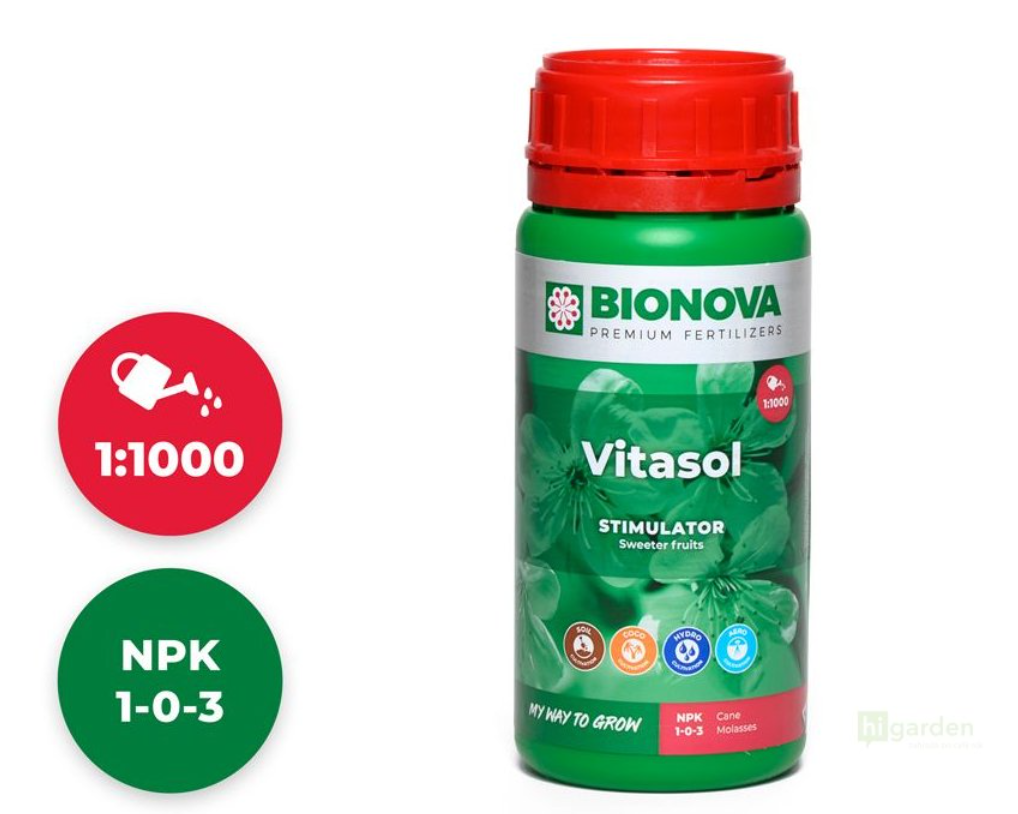
- BioNova Vitasol
- An indispensable helper during periods of rapid growth and high production in indoor cultivation under artificial lighting.
- Vitasol is also successfully used for its properties and its ability to provide plants with the necessary energy during growth stagnation.
- This 100% organic liquid additive stands out thanks to its high concentration of cane molasses (1:1000), which remarkably develops the naturally sweet flavour of fruits from various plant species.
- Other important ingredients give this product the character of a soil improver. These are beneficial bacteria and mycorrhizal fungi, which enable plants to absorb sugars much better, important for the formation of stunning flowers and fruits.
- VITASOL also contains plenty of important and easily absorbed vegan trace elements, vitamins and minerals for the plant (calcium, magnesium, copper, potassium). Last but not least, lime.
Whether you are an enthusiastic beginner or an experienced grower, BioNova Boost Pack will be appreciated by every grower who cares about high quality and the largest possible quantity of harvested produce. If you would like to ask us anything, we are here for you at the well-known e-mail address info@higarden.eu. We look forward to your questions!
We also recommend these products:
- BioNova Autoflower Supermix for autoflowering varieties (from 249 CZK)
- BioNova Bio Soilmix 50L (from 279 CZK)
- HERCULES aerated pots (from 49 CZK)
What to read next?