
Nutrition, Growing Media and Water, Page 4
List of articles
Organic vs Mineral Fertilisers: Which Is Better for Your Plants?
Every beginning grower faces the choice of how to fertilise their plants. While organic fertilisers are gentle on the environment and require less work, mineral fertilisers act quickly and give the grower complete control over plant nutrition. We will guide you through the basic differences between organic and synthetic fertilisers and help you choose.
While organic fertilisers are made from materials of organic origin, such as compost, manure, bone meal and the like, synthetic ones are obtained through human-controlled chemical reactions, for example from ammonia, phosphate minerals or air. Synthetic fertilisers contain an exact amount and ratio of nutrients in a form that is quickly available to plants, mainly as mineral salts. On the other hand, organic fertilisers contain nutrients that must first be broken down in the soil by microbes, and only then can plants absorb them through their roots. This process is slower, but it has the advantage of keeping the soil healthy in the long term. The use of mineral fertilisers leads to the death of important microorganisms, and in the long term the soil loses its ability to regenerate. Before we move on to choosing the right fertiliser for your garden, let us summarise the basic advantages and disadvantages of organic and synthetic fertilisers.
Organic fertilisers PROS and CONS
- Gentle on the environment: Organic fertilisers improve soil structure, support beneficial microbes and pollute water sources less.
- Sustainability: They come from renewable sources and are in line with ecological growing practices.
- They strengthen soil health: Long-term use of organic fertilisers enriches the soil, which becomes more fertile and more resistant to external influences.
- Slow action: When organic fertilisers are applied, nutrients are not available to plants immediately.
- Volume and storage: Organic fertilisers are used in larger quantities and may be bulkier than synthetic ones.
- Odour: Some organic products, such as livestock manure, guano or fish meal, can smell strongly and unpleasantly.
Synthetic fertilisers PROS and CONS
- Fast action: Synthetic fertilisers act immediately, which is ideal for addressing nutrient deficiencies or intensive growing methods.
- Precise fertilisation: Mineral fertilisers are easy to dose, and you can easily adapt nutrition to the specific requirements of plants.
- Use in hydroponics: Mineral salts are suitable for preparing nutrient solutions and ideal for hydroponic and soilless growing.
- Risks to the environment: Careless and excessive use of mineral fertilisers degrades the soil, and salt residues can leach into the surroundings.
- Soil degradation: Repeated application can disrupt the soil microflora and thus reduce soil health in the long term.
- Non-ecological production: The extraction of raw materials and the production of synthetic fertilisers have a harmful impact on the environment.
Organic fertilisers: The ideal helper for outdoor growing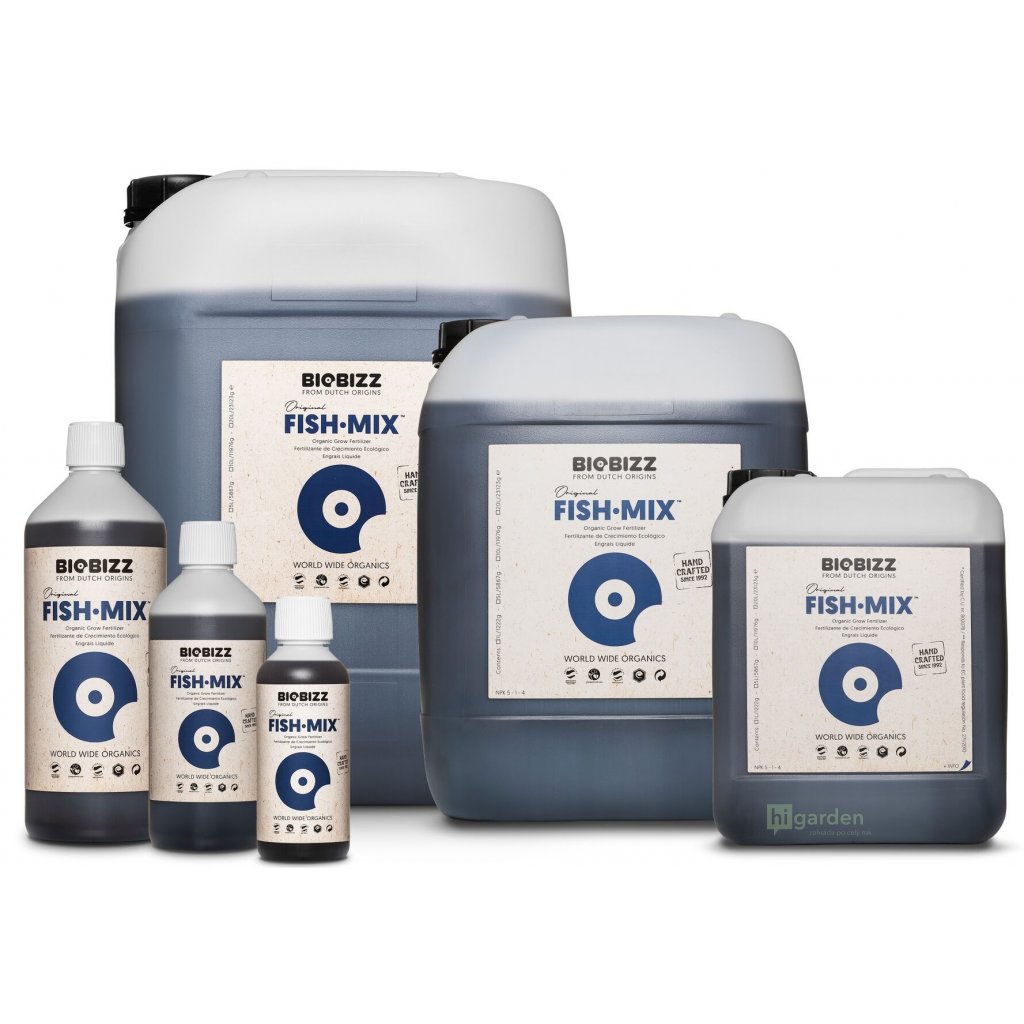
Organic fertilisers are best used for outdoor growing, for example in beds, but also in greenhouses. Some types of organic fertilisers, especially liquid formulations, can also be used when growing in pots, but keep in mind that they act more slowly than mineral salts. For the best effect of these fertilisers, the soil should contain a high proportion of organic matter and microorganisms that speed up the breakdown of nutrients. The most commonly used organic fertilisers include compost, guano and vermicompost. You can also use compost teas and liquid fertilisers of organic origin, such as Biobizz. When choosing and applying fertilisers, always take into account the type of plants you want to grow and the season. Add compost or manure to the bed in autumn so that the organic matter has enough time to break down. If you encounter nutrient deficiencies during the growing cycle, you can quickly solve the problem by applying mineral fertilisers, but remember that in the long term you must enrich the soil with organic matter.
Synthetic fertilisers: Precise plant nutrition
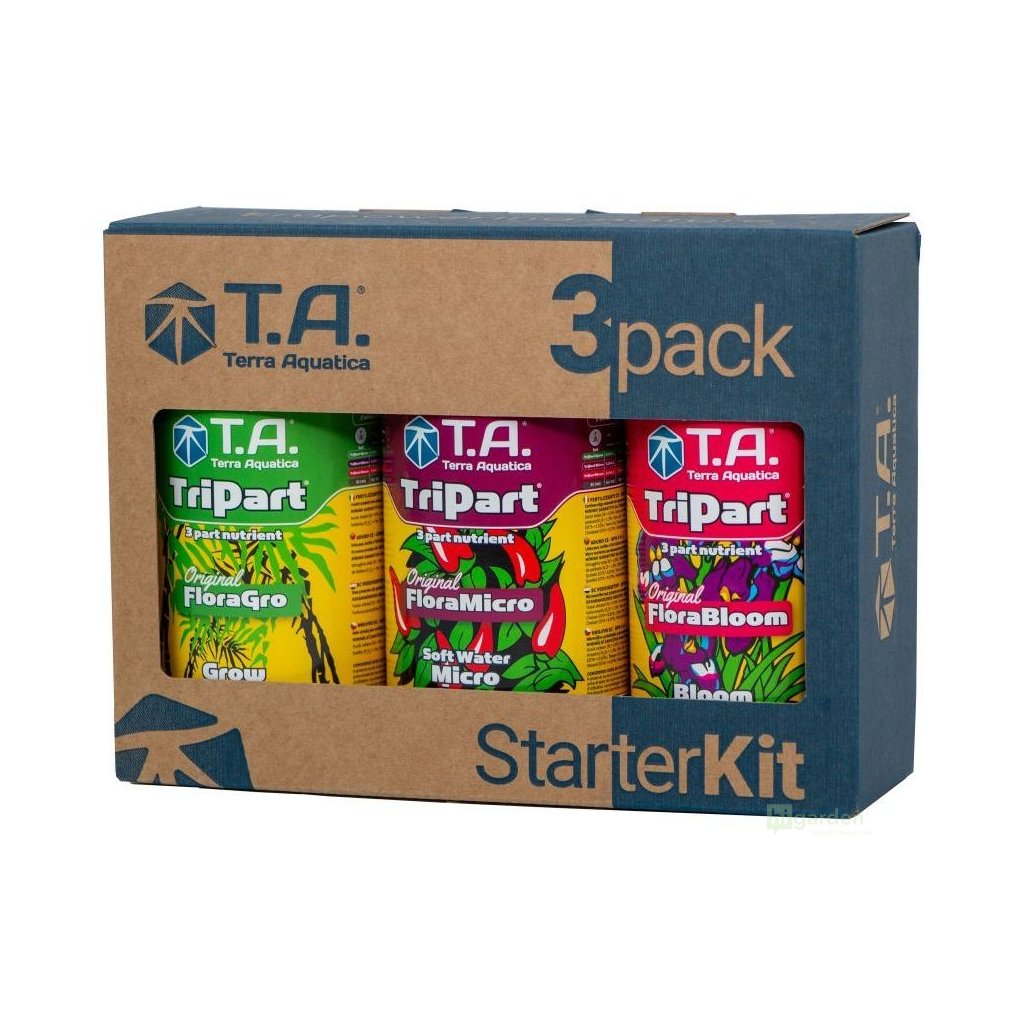 Synthetic fertilisers are an excellent tool for indoor growing and everywhere plants cannot be grown in a natural way. They are ideal for growing in pots, but with careful use they can also be applied to open ground. You can use them in combination with soil mixes or various types of soilless substrates, such as coco, perlite or expanded clay. Mineral fertilisers are also used to prepare nutrient solution for hydroponics. Remember that, unlike organic fertilisers, they deplete nutrients from the soil or substrate very quickly, and you will need to fertilise with every watering. When using synthetic fertilisers, it is important to monitor the pH of the substrate and, if necessary, also the EC of the nutrient solution using a digital EC and pH metre. Choose mineral fertilisers according to the current requirements of the plants. In general, plants need more nitrogen for growth, while during flowering and ripening they use more potassium. Most manufacturers of mineral fertilisers label their products as “grow” and “bloom”. You can also find the amount of nutrients according to the mandatory NPK ratio, which you will find on the label. For hydroponic growing, use special fertilisers for use in hydroponics.
Fertilisation and plant nutrition is a complex topic that every grower should know thoroughly. If you would like to learn more, visit our Higarden blog, where we explain in detail how to fertilise plants correctly and what to do when you encounter problems during growing.
Everything You Ever Wanted to Know About Perlite (A Guide for Hydroponics and Soil Growing)
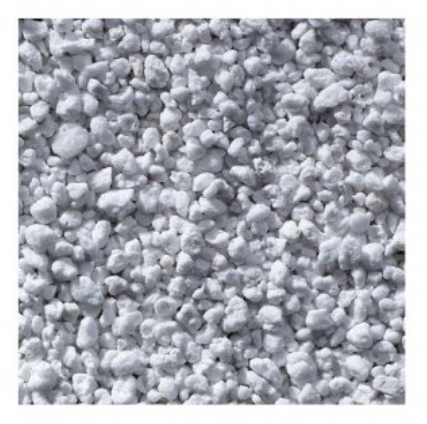 Perlite is a versatile growing medium that can be used both in soil cultivation and in hydroponics. This material stands out for its lightness and porosity and is suitable as an additive to horticultural substrates or as a standalone growing medium in hydroponic systems. In our guide, you will learn how to use perlite in the garden as well as for indoor and hydroponic growing.
Perlite is a naturally occurring volcanic glass that expands to several times its original volume when heated to a temperature of approximately 850-900 °C. The result is a light, porous material resembling crushed popcorn. Perlite is widely used in various fields, especially in plant cultivation, but also in construction, industrial filters and as a carrier for chemicals. Perlite is chemically inert (inactive), sterile, non-toxic and very stable.
Advantages of perlite in soil cultivation
Soil aeration: Perlite is porous and creates air pockets in the soil, allowing roots better access to oxygen. The root system is therefore more abundant, more resilient and healthier, which is reflected in the vitality of the plants.
Better drainage: When mixed into soil, perlite affects its retention properties. The substrate drains better and retains less water, which helps prevent overwatering. This is especially beneficial when growing species prone to root rot.
Preventing soil compaction: When growing in pots or raised beds, the soil becomes compacted over time. Lightened horticultural substrates with perlite retain their retention properties for longer and the soil remains loose for a long time.
How to use perlite in soil cultivation
For aerating soil in outdoor beds: When establishing a new bed or planting, mix perlite with soil, peat or horticultural substrate in a 1:1 ratio.
For growing in pots: Mix horticultural substrate with perlite in a 3:1 ratio. The resulting mixture will have better drainage than the original unlightened substrate.
Germination: Perlite is an excellent medium for seed germination because it retains moisture without becoming waterlogged. You can create a germination and seedling pre-growing mix by combining perlite and peat in a 1:1 ratio. Do not forget that neither perlite nor peat contains available nutrients, and young seedlings will need to be transplanted or fertilised soon.
Perlite in hydroponics
Hydroponics is a method of growing plants without soil, based on nutrient-rich water (nutrient solution) and an inert growing medium. This can be mineral wool, expanded clay, coconut substrate or perlite. Perlite does not retain water and is suitable only for certain types of hydroponic systems, namely drip irrigation, DWC, NFT, wick methods and Dutch bucket or the AutoPot system. As a medium, perlite is not suitable for flood trays or for hand watering or other methods.
Hydroponic systems using perlite as a growing medium
- AutoPot – Unique self-watering systems for indoor and outdoor use that do not require connection to electricity. The ideal substrate for use with an AutoPot pot is a 50% mixture of perlite with soil or coco.
- Atami Wilma – Popular hydroponic systems of various sizes with drip irrigation for indoor growing.
- Terra Aquatica – A top-tier hydroponic system, the spiritual child of hydroponics pioneer Wiliam Texier. The range includes various types of hydroponic systems suitable for indoor and outdoor use, propagation trays and fertilisers.
Perlite has neutral pH and does not react with the nutrient solution in hydroponic systems. Nevertheless, it needs to be replaced regularly, because algae can settle in the pores, which will show as a green colour on the surface. When using perlite in irrigation systems, take care with small particles and dust, which can clog filters and drippers.
Would you like to learn more about hydroponics and indoor growing? Visit our Higarden blog, where we will introduce you to news from the world of growing and useful advice for growers.
Soil or coconut growing substrate? Choose the right one for your garden!
Choosing the right substrate is one of the most important decisions you will make as a grower. Whether you choose soil or coco will affect not only the health of your plants, but also the choice of fertilisers, the method and frequency of watering, and many other aspects of plant care. In the following article, we will introduce you to the advantages of growing in soil-based and coco substrates and advise you on which one to choose.
Soil and coco substrates have much in common, but they also offer unique advantages and challenges. The choice of a suitable growing medium ultimately depends mainly on your needs and those of your plants. It will be easier to decide if you familiarise yourself with the strengths and weaknesses of each growing substrate.
 Soil substrates
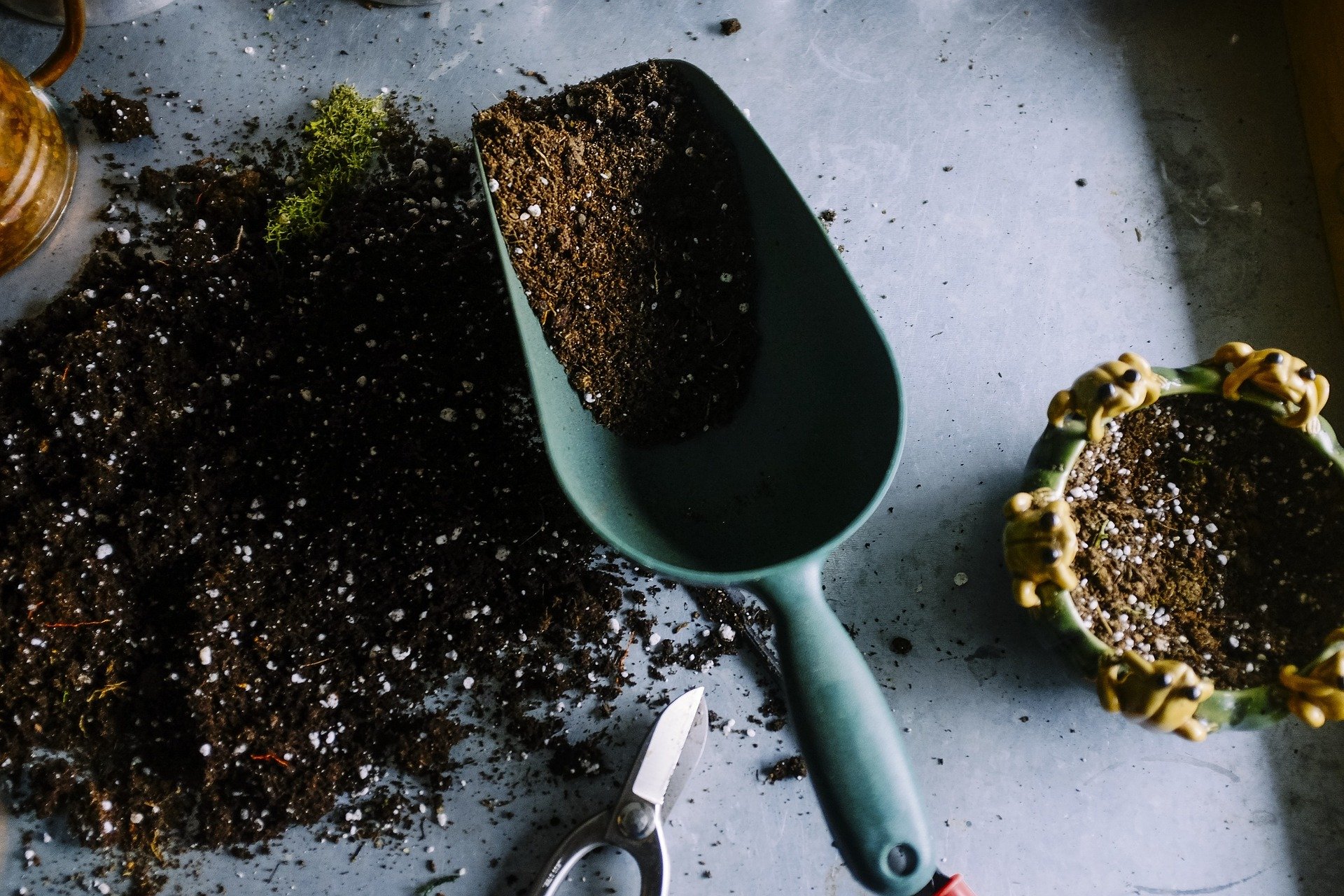
The main component of soil-based (gardening) growing substrates is soil, which may be enriched with other components such as peat, compost, perlite, coconut fibres, fertilisers, and others that further adjust their properties. Different types of soil can suit specific plant needs, and gardening substrates are suitable for a wide range of species, from vegetables and fruit to ornamental flowers and herbs.
Advantages of soil growing substrates
- High nutrient availability
Gardening substrates are rich in the basic NPK nutrient elements (nitrogen, phosphorus, potassium) and trace minerals that occur naturally in soil. The amount and availability of these nutrients are influenced by the composition of the substrate and microbial activity during the growing cycle. In some soil mixes, manufacturers add slow-release fertilisers that increase their fertility.
- Rich microbial life
Soil is a natural environment for a host of beneficial microorganisms, such as bacteria, fungi, protozoa, and others, which play an important role in the decomposition of organic matter, nitrogen fixation, and increasing nutrient availability to plants. Many plants form symbiotic relationships with soil microbes, for example with mycorrhizal fungi, which improve water and nutrient uptake.
- Excellent water retention
Soil retains water very well, which reduces the need for frequent watering. In addition to soil, most gardening substrates also contain other materials that adjust the water-retention properties of the mix according to the gardener’s needs.
- Balanced aeration and structure
Quality soil mixes retain a large amount of water while remaining sufficiently porous to allow oxygen access to the roots. Soil is heavier than other growing media and provides plants with firm support even when grown in pots and in windy locations.
- Naturally stable pH
Soil has natural buffering capacity and helps maintain a stable pH in the substrate, which is essential for nutrient availability and the overall health of plants.
- Price and availability
Soil substrates are widely available and, compared with other growing media, are often cheaper.
You may also be interested in: How to choose a gardening substrate
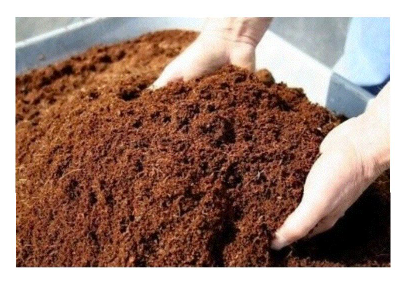 Coco substrates
Coco substrates are modern growing media made from coconut fibres and are an increasingly popular alternative to classic soil mixes. They come in various forms and are suitable for a wide range of gardening techniques, from pot growing to hydroponics and irrigation systems. Coco substrates have versatile uses and are suitable both for cultivating most plant species and for cloning, germination, and raising seedlings.
Advantages of coco growing substrates
- Nutrient- and pH-neutral
Coconut fibres contain a minimal amount of nutrients, so growers can supply plants through fertilisers with exactly the nutrition they need. This precision helps control plant development and achieve maximum yields. The neutral pH of coco substrates also makes it easy to adjust and maintain pH within the optimal range for nutrient uptake.
- Resistance to pests and diseases
In coco substrates, pests and pathogens commonly found in soil are encountered less often. This significantly reduces the risk of infestation, which is especially useful in enclosed grow rooms and grow boxes. At the same time, many coco substrates contain beneficial fungi of the Trichoderma genus, which protect plants against harmful microorganisms.
- Excellent retention properties
Coconut fibres can hold up to ten times their weight in water, while also effectively draining away excess irrigation. This provides the roots with constant moisture and prevents root rot and other problems associated with overwatering. This balance allows growers to water and feed plants more frequently.
- Excellent aeration
Coco substrates have a porous structure that ensures excellent aeration, leading to rapid development of the root system. The combination of good water retention and high aeration supports vigorous growth.
- Buffering capacity
Compared with hydroponic systems and media, coco substrates have good buffering capacity and help stabilise pH fluctuations, which can stress plants and create problems with nutrient uptake. They therefore allow the grower a small margin for error in fertilising and watering.
- Easy storage and handling
Coco substrates are lightweight and can be compressed into compact blocks, which makes transport and storage easier.
You may also be interested in: Guide to coco substrates
 Comparison of coco and soil substrates
When comparing coco and soil substrates, we can notice several differences. While soil naturally contains a wide range of nutrients available to plants, coco substrates are “empty” in this respect. On the other hand, coco substrates offer better retention properties and aeration than soil mixes. Working with soil can be more demanding than with clean and lightweight coconut fibres. When deciding which growing substrate to choose, take three main factors into account: the environment, the growing method, and plant nutrition.
- Growing environment
Soil: Suitable for outdoor and indoor growing under artificial lighting, especially for plants that can benefit from microbial activity and a high nutrient content, such as tomatoes, peppers, and others.
Coco: Suitable for outdoor and indoor growing under artificial lighting, in hydroponic systems, especially for plants that require a well-aerated substrate, such as herbs and ornamental flowers.
- Nutrition
Soil: When cultivating plants in soil mixes, you can use mineral and organic fertilisers with slow or fast release, as well as nutrient supplements. Gardening substrates are also suitable for organic and permaculture growing and the “living soil” method.
Coco: When growing in coco substrates, you can use mineral and organic fertilisers with slow or fast release, as well as nutrient supplements. Fertilisers for coco growing usually contain increased amounts of calcium and magnesium, or these nutrients need to be added to the irrigation water in the form of a CalMag additive.
- Growing method and environment
Soil: Soil mixes are a versatile growing medium that you can use for any growing method and are suitable for both indoor and outdoor use. They are also an excellent choice when cultivating plants in large growing containers and fabric pots.
Coco: Due to faster drying, coco substrates are more suitable for indoor growing and as a medium for hydroponic cultivation. When growing outdoors, it is important to water plants regularly so that the fibres do not dry out completely and lose their retention properties.
Would you like to learn more about the different types of growing media? Read our Guide to growing substrates
What Are the Best Fertilisers for Hydroponics and How Should They Be Used Correctly?
Choosing the ideal plant nutrition is especially important with this popular growing method. That is why we will help you find your way around the market for hydroponic fertilisers, including a wide range from our shop.
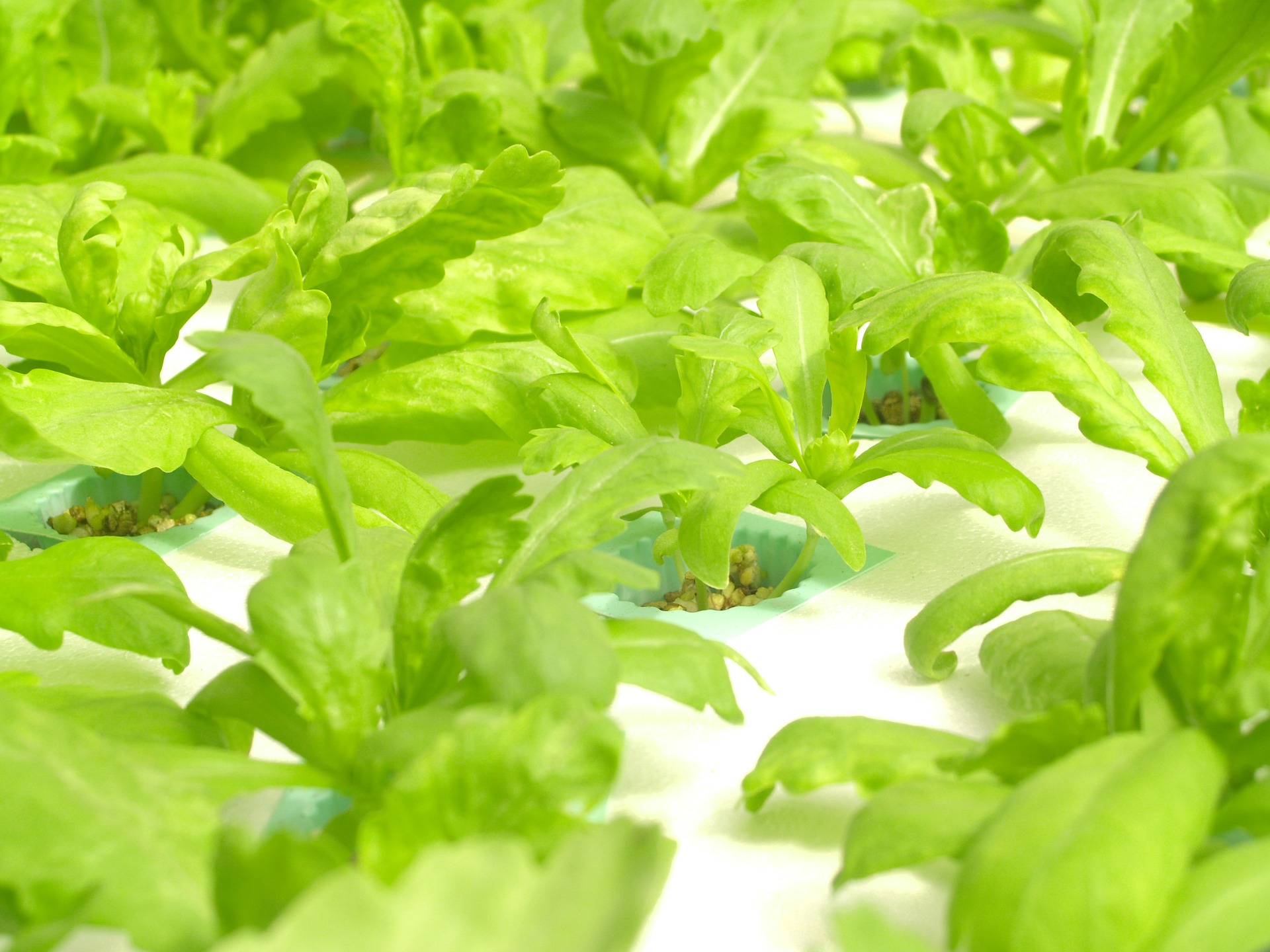
As with other growing methods, if you want to achieve a truly abundant harvest and do not want to wait forever for it, then in hydroponics you also have the option of using a range of interesting additives beyond basic nutrition. We mean, for example, root or flower boosters and other additives, for example in the form of top-quality enzymatic products. These products should form an integral part of comprehensive nutrition for hydroponically grown plants, where high quality and yield are expected.
- Liquid fertilisers are a safe bet. You prepare a nutrient solution from water and fertiliser in the specified ratio and apply watering in smaller amounts but at more frequent intervals. Never use the nutrient solution for longer than one month.
- Tablet fertilisers are a fully fledged alternative to liquid fertilisers. Tablets are characterised by the gradual release of nutrients.
Less is sometimes more, and that also applies to hydroponic fertilisers
We have also prepared detailed fertiliser dosage tables for you, which will make using premium nutrition, including for hydroponics from our shop, as easy as possible in practice. For each manufacturer, you only need to find the table and the instructions valid for hydroponic fertilisers. If you follow them, you will reduce the risk of overfeeding and other beginner mistakes to a minimum, and your little plants will grow like mad. However, hydroponics is an especially clean method that is not as tolerant of nutrition mistakes as, for example, growing in soil or coco. Therefore, you will do no harm if, at the beginning of the growing cycle, you prepare the nutrient solution for hydroponically grown plants at only half strength and only gradually reach the recommended dose over the following weeks.
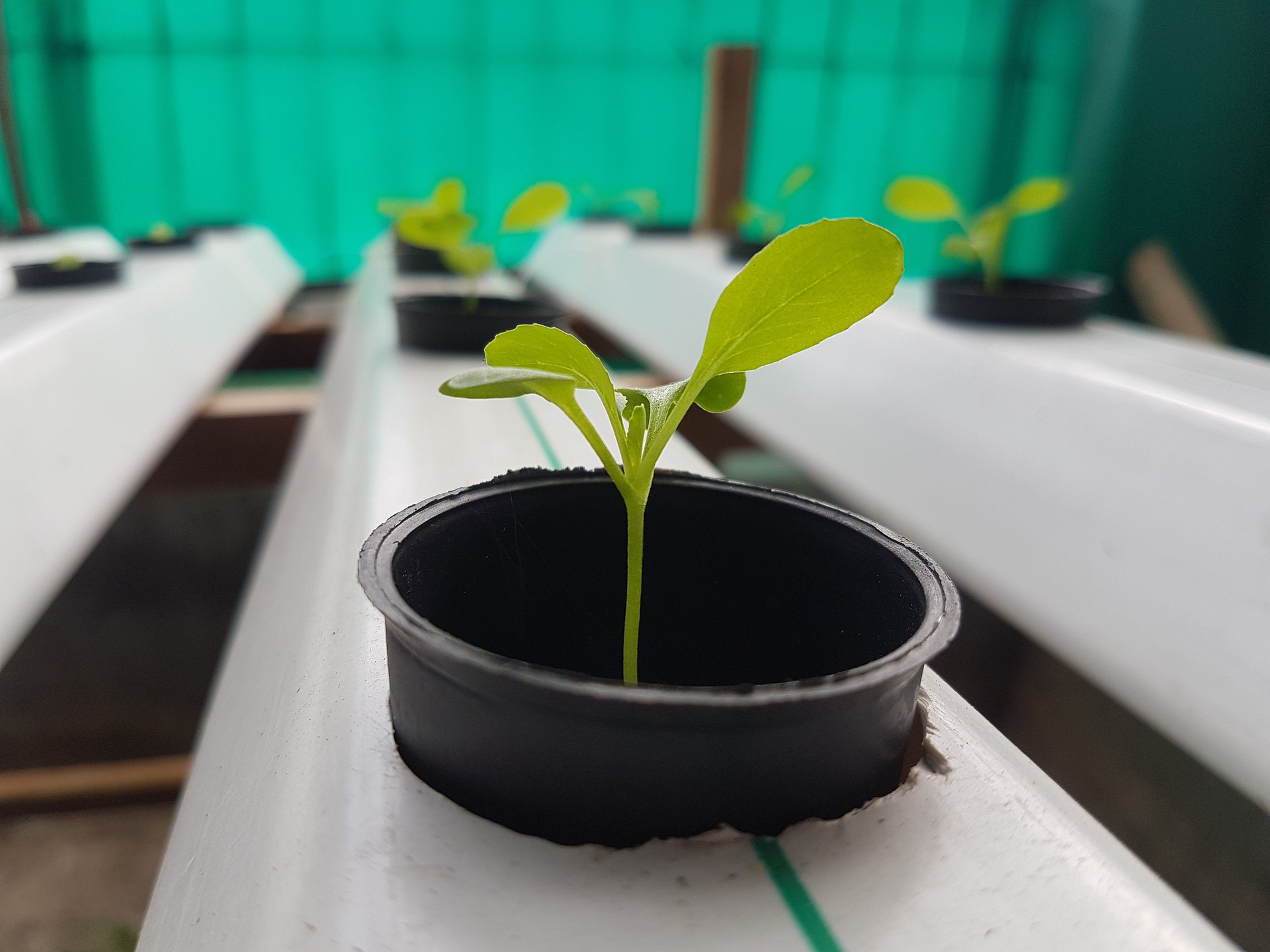
In hydroponics, the rule applies that you should wait to fertilise until the young plants have adapted sufficiently. How can you recognise this moment? White tips on newly formed roots will tell you.
Premium quality and precise application of fertilisers pay off in hydroponics
Using hydroponic fertilisers requires responsible measurement of the key parameters of the nutrient solution. You do not need to measure twice every time, as in the well-known saying, but you should definitely measure first and only then fertilise.
- Make sure that the water with nutrients has room temperature (min. 16 °C and max. 25 °C), with 20–21 °C being ideal.
- Regularly measure pH of the nutrient solution. You will again find the optimum value in the tables and manufacturer’s instructions, as each manufacturer uses slightly different values.
- In hydroponics more than anywhere else, you must keep the electrical conductivity of the nutrient solution under control, known by the abbreviation EC. This tells you how effectively your plants absorb nutrients in the hydroponic system, which prevents both burning and wasting hydroponic fertilisers. That is why you should have an EC metre in your equipment.
- We recommend getting one device for precise EC and pH measurement, or even a practical measuring set straight away.
It is now time to recommend some leading manufacturers of hydroponic fertilisers and their main advantages. You can find a complete range of the best fertilisers for hydroponics from our shop HERE.
Hydroponic fertilisers Advanced Nutrients
- pH Perfect technology helps maintain stable pH, so you can say goodbye to adding acids to the watering solution for regulation purposes.
- Canna offers two fertiliser product lines for use in hydroponics, namely Canna Aqua and Canna Hydro.
- The two-component nutrition from the AQUA range, i.e. Aqua Flores for flowering and Aqua Vega for growth, is specially adapted for use in closed recirculating self-watering systems. You will achieve the best results in combination with the substrate CANNA Aqua Clay Pebbles.
- The nutrition from the HYDRO range, i.e. Hydro Flores for flowering and Hydro Vega for growth, is a better choice for open hydroponic systems where the runoff water is not returned to the system but drained away.
- Hydroponics with the Canna brand means a perfect harvest, sealed by Canna Flush, a product developed specifically for the flushing phase, usually carried out during the last week of the growing cycle with clean water. Great taste and odour, as well as an ultra-healthy composition of the fresh harvest, freed from unwanted salts and everything harmful, will simply impress you.
- Canna also gives growers the option of products for hard and soft water.
Hydroponic fertilisers BioNova
- Hydro Supermix is a one-component bio-mineral fertiliser specially designed for cultivation using capillary irrigation. We especially recommend the handy STARTER PACK to beginners for complete nutrition of a smaller hydroponic garden.
Hydroponic fertilisers Terra Aquatica
- Finally, we have left hydroponic fertilisers from the legendary manufacturer, known until recently as General Hydroponics. The brand’s products, co-founded by the author of the bestseller Hydroponics for Everyone William Texier, have a huge tradition in the market for hydroponic plant nutrition and have now only received a new look, while the unique composition and top quality remain unchanged as the result of many years of research and development. You can learn more in a separate post on this topic so that you have an overview of hydroponic nutrition from T.A. (formerly G.H.). You will find the link at the end of the article.
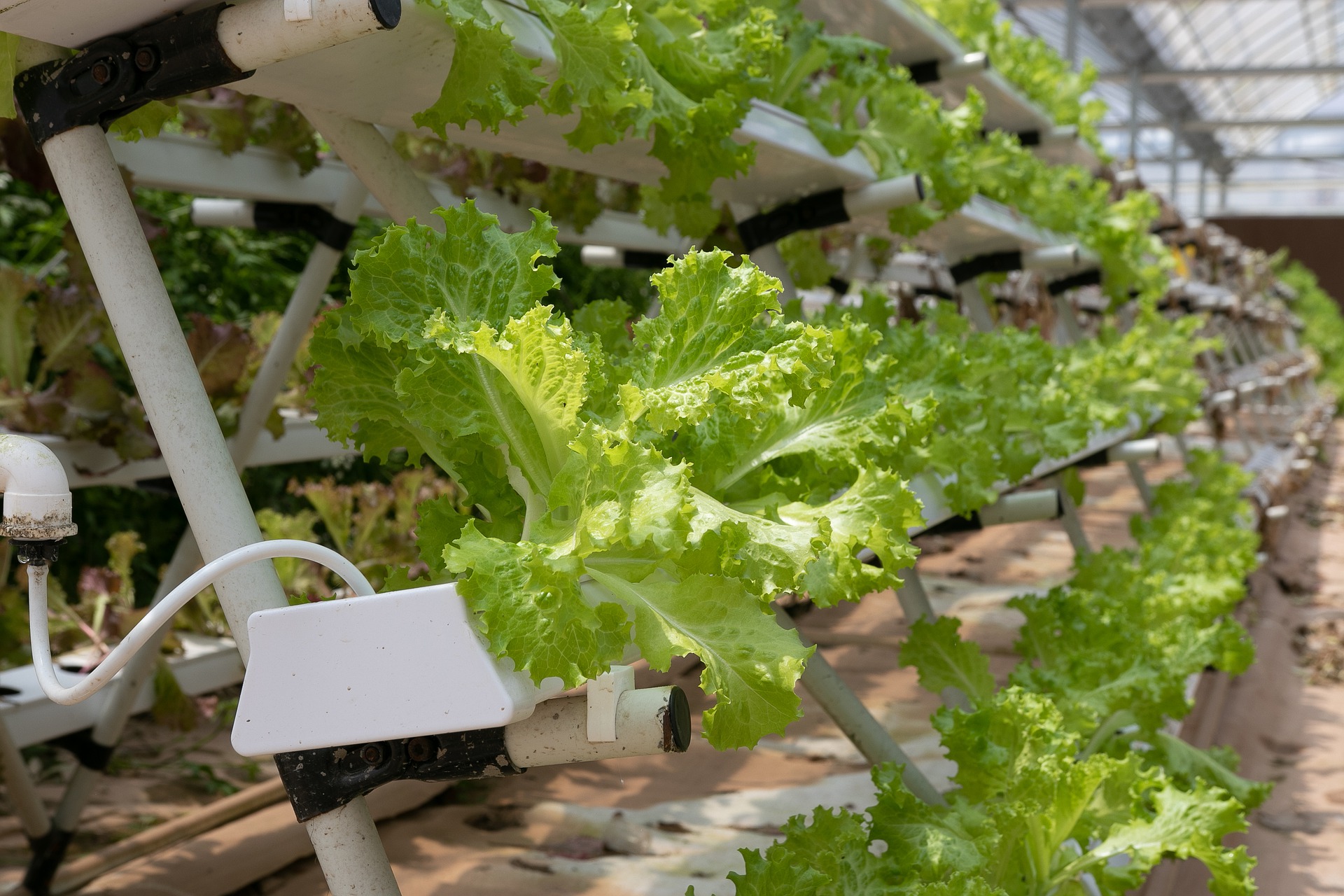
We recommend these products:
- BioNova Starter pack Hydro Supermix (CZK 1,990) contains everything for a smaller hydroponic garden at a discounted price.
- Terra Aquatica hydroponic fertilisers (from CZK 139) - a wide selection of products developed for the needs of plant nutrition in hydroponic systems, which complement each other perfectly.
- MAXQUARIUM reverse osmosis unit (CZK 7,790) for perfect filtration of the water circulating in your hydroponic system.
What to read next?
- Reverse osmosis (RO)
- General Hydroponics - T.A. or what changes to what
- Growing under artificial lighting: HPS vs. LED
If you have any questions about hydroponics and fertilisers specifically intended for this method, or if you need advice on choosing products, do not hesitate to contact us at the well-known address info@higarden.eu.
How can you support the rooting and growth of plant roots?
Root boosters, or root stimulators, allow us to give nature a helping hand exactly where it has the greatest impact on the final harvest. A rich root system is undoubtedly the foundation of every abundant crop. So how do you choose the right “root booster”, and what else is a root booster good for? That is exactly what this article is about!
Roots and rootlets form the entry point for all uptake of water, nutrients and minerals. A developed system of healthy white primary roots and secondary rootlets is therefore the most important aspect visible directly on the plant, and one that you need to keep fully under control from the beginning to the end of the growing cycle! Among other things, this is where quality nutrition, the microclimate inside a grow tent or regular watering play their part...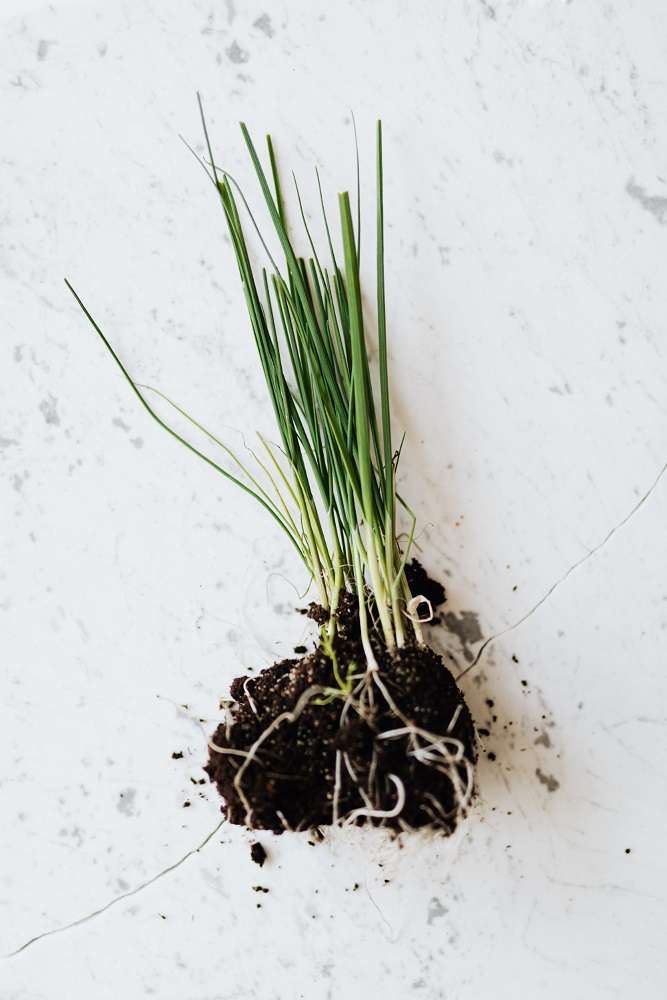
In modern horticulture, however, there are above all proven ways to significantly speed up the growth of plant roots, and, for example, also increase the success rate of rooting cuttings.
Growers and gardeners around the world make extensive use of more or less sophisticated root boosters for this purpose, whether these are organic (bio) root boosters or supplementary fertilisers based on minerals.
A good root stimulator is an irreplaceable helper during the first weeks of development of any plant species when cultivating herbs or agricultural crops, both indoors and outdoors.
In addition, boosters speed up metabolism and biochemical processes taking place inside the plant, thereby stimulating its overall development from the very beginning and allowing every grower to achieve higher yields in even less time.
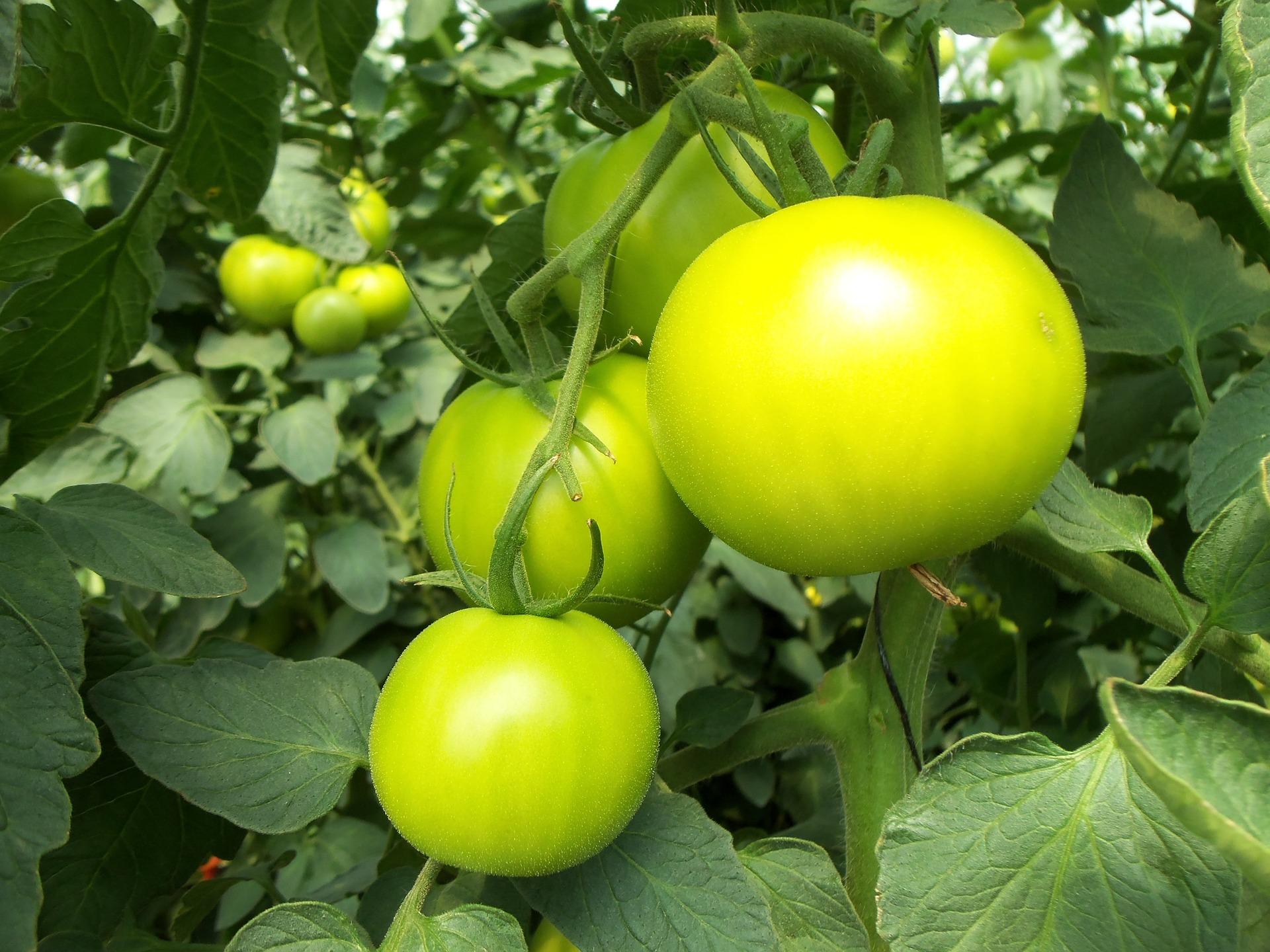
Our customers’ experience, as well as our own, speaks clearly: without using root boosters, it is difficult to achieve massive roots and the juicy fruits or lush flowering associated with them.
Another piece of experience you can draw on when buying a suitable root booster is to use this product, which falls into the category of supplementary fertilisers, ideally together with the base nutrition from the same manufacturer. This will achieve maximum synergy of the active ingredients.
How do plant roots work and how do they respond to root boosters?
The very presence and vitality of lateral roots, which absorb nutrition through their surface, is surprisingly crucial. Root hairs and fine rootlets are responsible for the uptake of oxygen and other microscopic substances. A healthy and branched root ball therefore only goes together with a sufficiently aerated substrate. Most root boosters offer universal use for any of the growing media, whether you grow your plants using hydroponic or aeroponic systems, or you stick to cultivation in soil, or in coconut coir. In all cases, their use will not only achieve explosive growth of roots and rootlets, but will also significantly support the plant’s immune system, making it more resistant to stress, diseases, moulds or pests.
Our TIP: A very popular and practice-tested combination is root booster + enzymes. From the separate article, it will immediately become clear why this is the case.
How do you choose a root booster?
Pay particular attention to the content of the basic nutrients N-P-K. This varies between individual manufacturers and products and also affects the overall level of EC in the watering solution. For example, Atami Rootbastic contains a lot of basic nutrients. By contrast, ATA Rootfast from the same brand contains only very few basic nutrients and is used only during the first two weeks of the growing cycle. Among the very best root boosters is certainly the popular Canna Rhizotonic, whether in mineral or purely organic form.
 Support for the plant root system? CANNA (BIO) Rhizotonic supplementary fertilisers are Dutch top-class products that thousands of growers swear by.
These are among the boosters that contain almost no nitrogen, phosphorus or potassium and are based on a completely different principle. Their advantage is that, in addition to the vegetative phase of the plant, you can also confidently use them during the flowering period. It is also worth mentioning HESI Root Complex, which is available in many volume variants and reliably activates beneficial microorganisms in substrates for better absorption of fertilisers.
If you are interested in supporting root formation and plant growth, please do not hesitate to contact us with any question. We will also be happy to help you choose the ideal root booster. Write to us at info@higarden.eu. We look forward to your questions!
- BioNova X-cell booster - stimulator from the first day of planting!
- Canna Rhizotonic
- Perlite
- Atami Rootbastic
BIONOVA - innovative Dutch fertilisers and substrates appreciated by professionals and home growers
Carbon-neutral BioNova is another manufacturer from the land of tulips that certainly deserves attention. In this article, we will take a detailed look at the range of this popular brand, not least because plant nutrition from Bionova has long been regarded in gardening and cultivation circles as quite possibly the most effective in the world in terms of the ratio between purchase costs and application results. We can therefore say that it makes quality more accessible. Discover premium products for organic agriculture, indoor cultivation in indoor or outdoor in soil, as well as hydroponic plant cultivation.

A distinctive range of products for growing plants at home and outdoors is easier to create when an ecological approach is combined with modern technologies and continuous innovation. When BioNova first introduced its products to the world, its representatives already had extensive experience and also had a wealth of feedback from leading professional large-scale growers at their disposal. Its success may therefore also be due to the fact that nothing ever reached customers unless it had already stood up to the toughest competition among products for commercial or even scientific use. This innovative manufacturer from the Netherlands continuously improves its products and production processes and maintains cooperative relationships with external laboratories, while paying great attention to the environment and the future of our planet within sustainable agriculture. BioNova’s research team also works just as intensively with feedback from customers among home growers.
When should you choose BioNova products?
- If you are looking for sufficiently high-quality fertiliser, stimulator or growing medium offering the best value for money on the market. BioNova also prides itself on always sending out fresh stock.
- Are other customers usually your greatest inspiration? Then you have one more reason to choose Bionova products! For example, the lightly pre-fertilised soil substrate with a purely natural composition has been breaking sales records in the peat substrate category for quite some time. BioNova Cocomix Plus, on the other hand, leads the rankings when it comes to coconut substrates. Do you want to grow autoflowering varieties? The bestseller in the AUTOFLOWERING category is again BioNova fertilisers, specifically AutoFlower Supermix. That would be enough for illustration.
- If you are looking for a discounted set with plant nutrition. No other brand offers growers across different categories so many refined options, so that everyone can truly choose. And as you may already know from some of our previous articles, well-tuned, intelligently assembled nutrition sets are the best way to become familiar during the growing cycle with a brand’s nutrition, in other words its real effects on the development of your plants. Below, you can also see that with BioNova it is possible outdoors in the garden (outdoor), in a greenhouse or comfortably at home in a grow tent (indoor) for any growing method and plant type. Choose everything you need for your first harvest with the BioNova brand:
- Basic sets for hobby growers (hobby pack):
- 100% BIO harvest when growing in soil - BioNova Hobby pack Veganics.
- Basic fertiliser set for growing in soil if you use mineral fertilisers – BioNova Hobby pack Soil.
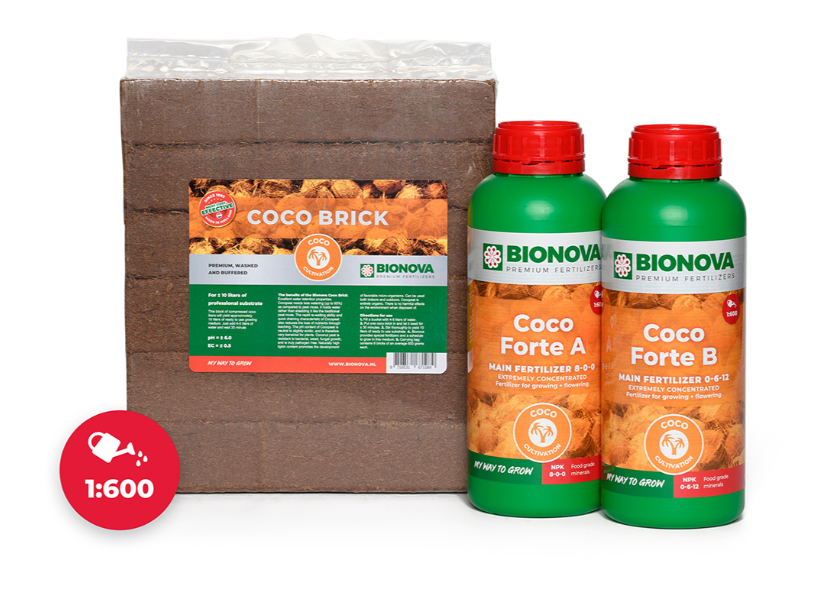
- Plant nutrition for plants grown in coco – BioNova Hobby pack Coco Forte.
- Basic fertiliser set for hydroponics – BioNova Hobby pack Nutri-Forte (Hydro).
- Basic fertiliser set for autoflowering varieties of plants (so-called autoflowering) – BioNova Hobby pack Autoflower.
- Complete fertiliser sets including selected additives for both more and less experienced growers (starter pack):
- Complete nutrition for “autoflowering” plants from the start of the growing cycle to harvest – AutoFlower Supermix.
- All the important products for the first crop in substrate using mineral fertilisers are included in the fertiliser and additive set BioNova Starter pack Soil Supermix.
- Without exaggeration, the complete set of nutrition preparations for growing in coco is also a super mix – BioNova Starter pack Coco Forte.
- You will soon find out to what extent the basic fertilisers and nutrition supplements of the BioNova brand increase your yields in hydroponics thanks to the set BioNova Starter pack Hydro Supermix. An alternative is the nutrition set Nutri forte.
TIP for luxurious flowers and fruits: BioNova Boost Pack
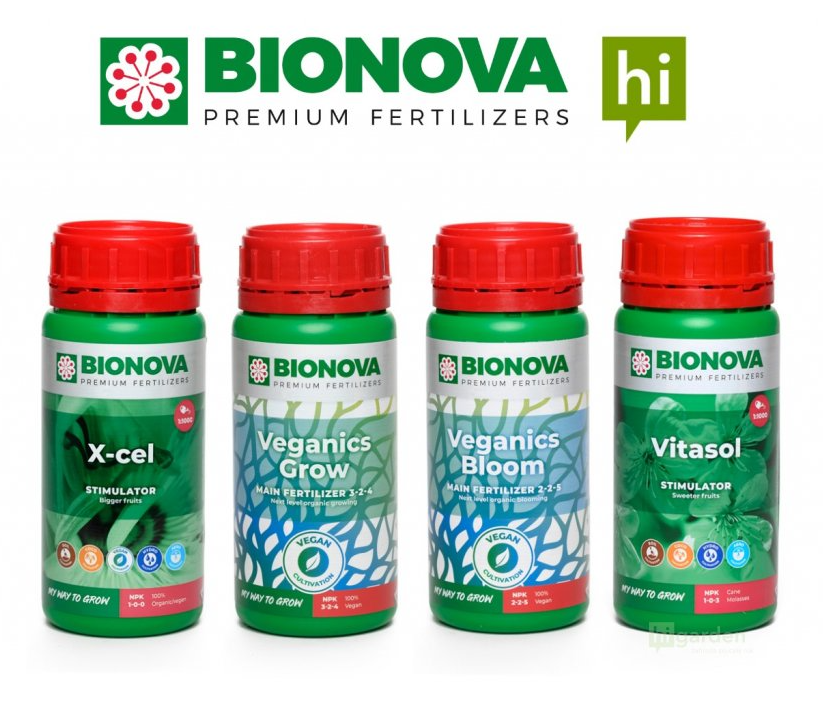
BIONOVA and organic plant cultivation
These words certainly go together! If your number one priority is a bio-quality harvest or if organic agriculture is your field, be sure to read the separate article we dedicated to the increasingly popular, and above all purely organic, range of fertilisers and additives: BioNova Veganics – fertilisers not only for vegans.
In this article, two purely organic products will also be featured, ideal for preparing your own soil mix within bio-quality cultivation and organic agriculture.
BIONOVA and growing plants in soil
Let us start with the soil itself, or rather a completely unique, purely natural mix of white and black peat, crushed and sieved compost, and perlite for perfect aeration. This is the above-mentioned bestseller among substrates - BioNova Soilmix, whose composition is additionally enriched with organic vegan fertiliser in an NPK 7-3-3 + 2 MgO composition (3 kg/1 m3). This naturally follows on from the organic plant cultivation mentioned above. However, this slightly pre-fertilised peat substrate with a perlite admixture can also be used without any problem with the below-mentioned range of single-component mineral fertilisers for soil BioNova Soil Supermix.

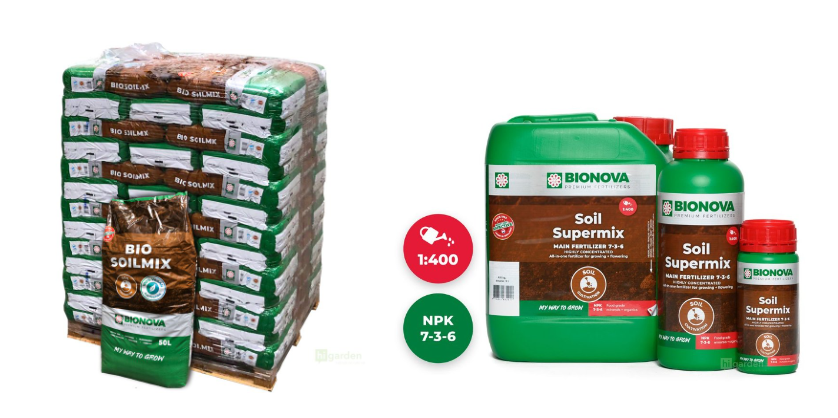
Our TIP: Do you want to make the most of a first-class soil mix? Then put it into HERCULES aerated pots!
BIONOVA and growing plants in coco
As with growing in soil, let us begin this section with a closer introduction to the growing medium. BioNova coconut substrate is sold in two forms:

- BioNova CocoBrick are compressed coconut bricks. These are blocks of compressed coconut fibre in a dehydrated state. This option is very practical in terms of shelf life, storage and handling.
- BioNova Cocomix Plus is a proven classic, made from crushed and sieved coconut fibres from Sri Lanka. Technically speaking, it is a coconut substrate in a 50-litre, recyclable bag. Just like Soilmix, it is therefore ready for immediate use. Unlike Soilmix, however, it contains no nutrients (NPK 0-0-0) or perlite admixture. You will look in vain for any animal or chemical additives in it, so it is 100% compostable. It is carefully washed and buffered to pH 6.5. Thanks to the absence of nutrients combined with above-standard absorption properties, it offers growers similar characteristics to inert media, and so you can confidently use it for hydroponics.
BIONOVA and hydroponic plant cultivation
In hydroponic plant cultivation, the plant root system develops in an inert medium, which is usually expanded clay (Hydroton), rockwool (mineral wool) or perlite. If you decide to use hydroponic systems, you will probably also achieve a more interesting harvest and higher yields. This is because you have all growing processes, led by plant nutrition from the first day of the growing cycle, fully in your own hands, and also because classic inert media, but to a large extent also high-quality coconut substrates, retain water and nutrients extremely well. Unlike growing plants in soil, however, there is not much room for error here. We mean, for example, overwatered plants, incorrect or unstable nutrient solution temperature or obvious signs of important nutrient deficiencies as typical problems that especially beginners often face. If hydroponics appeals to you, but you do not yet have enough experience, be sure to take this into account, and before choosing a specific hydroponic method, learn more at the start, for example in a separate article: Hydroponics – what does it involve and how do you start?
Hydroponic fertilisers, especially BioNova Hydro Supermix, must be dosed correctly. Manufacturer’s dosing charts make nutrient application easier not only in the case of hydroponics, but also when growing plants in soil or coco using the relevant fertiliser range (Soil, Coco,…).
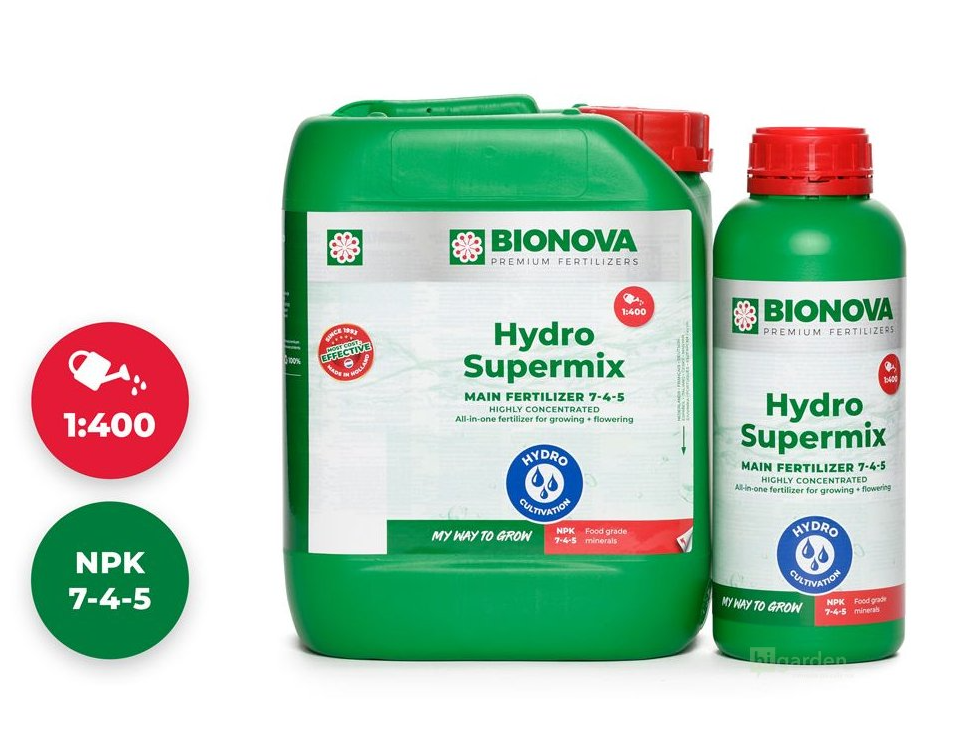
- Hydro Supermix has long been the best-selling and most user-friendly plant nutrition in the category of fertilisers for hydroponics. The nutrients contained in this single-component bio-mineral fertiliser are characterised by excellent absorbability. At the same time, they are present in such a ratio that the resulting all-in-one composition supports plants both during the growth phase and later during the flower or fruit formation phase. In addition to the basic hydroponic fertiliser Bionova Hydro Supermix, do not forget to add phosphorus and potassium in the form of the product Bionova PK 13-14.
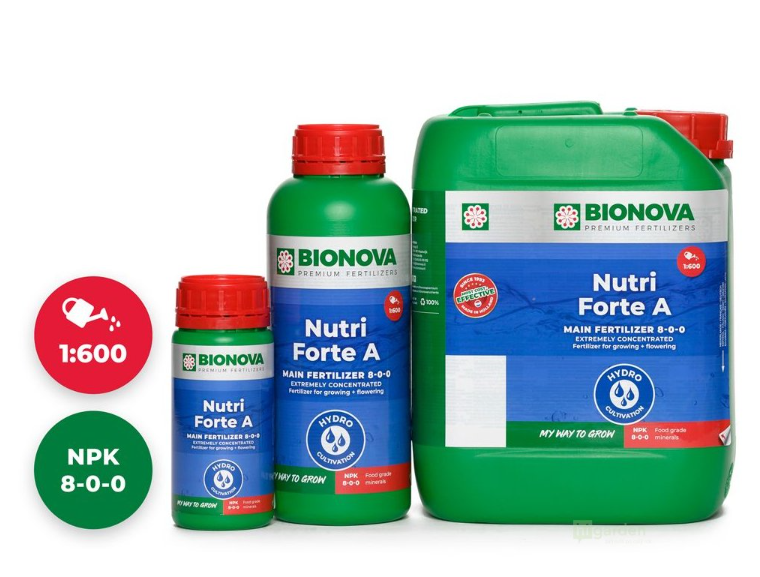
- Nutri Forte A+B is a two-component organo-mineral plant nutrition containing directly absorbable minerals in “food-grade” quality. Trace elements in chelated form mean better usability of Nutri Forte A+B fertiliser across a wider pH range. If you use hydroponic systems, this nutrition will again take care of you both during the vegetative phase and during the flowering phase. Although Nutri Forte is among two-component fertilisers, it is very easy to apply. Simply measure the same amount each time and mix first one component, then the second, into the water. If your plants show a deficiency of important nutrients, specifically nitrogen (N), calcium (Ca), magnesium (Mg), iron (Fe) or some other micronutrients, apply only component A to the roots and leaves. Rapid absorption of nutrients will soon compensate for these deficiencies. If crops show a deficiency of phosphorus (P), potassium (K) or sulphur (S), apply component B as a foliar spray.
BioNova hydroponic fertilisers are compatible not only with hydroponic systems, but also with aeroponic systems, in which growers have the opportunity to make even greater use of their potential. However, for these purposes we will introduce below the specialised fertiliser range Aero Superimix, which in practice is also suitable for the hydroponic method NFT (Nutrient Film Technique), about which you can read more in a separate article from the series Hydroponics made easy.
Our TIP: Discover vertical hydroponic systems NFT!
BIONOVA and aeroponic plant cultivation
The aeroponic fertiliser BioNova Aero Supermix is pH stable and also has several characteristic features identical to the Hydro version:
- All-in-one composition for the entire growing cycle
- Food-grade nutrients
- The need to apply Bionova PK 13-14 as a flowering booster throughout the flowering phase except for the last week of the growing cycle, when the plants must be flushed.
Let us pause for a moment on flushing in the last week before harvest. Flushing or flushing is very important, whether you are drawn to aeroponics or hydroponics. When the growing cycle is nearing its end, certainly do not underestimate its importance for the final quality of plants or agricultural crops. On this topic, we recommend a separate article: How do you flush?
This premium plant nutrition was developed so that growers of different experience levels can more easily deal with the most common pitfalls (so-called plant burn or, for example, dehydration) associated in practice with cultivation in an aeroponic system.
Aero Supermix is also very suitable for vertical cultivation, for example in green walls.
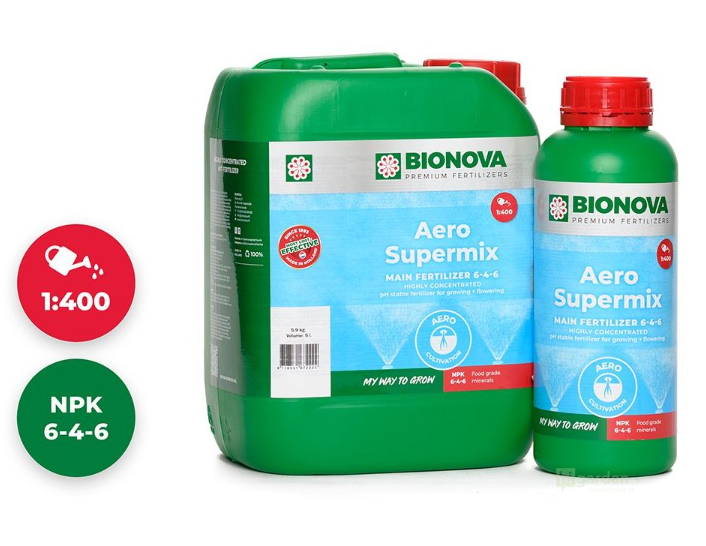
This fertiliser is fully compatible with all stimulators and additives from the Bionova brand.
BIONOVA and effective support for plant development
Enjoy record yields thanks to stimulators and other additives from the BioNova brand for effective support of healthy development and the resulting higher yields. However, all additives from this brand are so exceptional that we have decided to dedicate adequate space to them in another separate article.
Universal products for cultivation with the BIONOVA brand (Bionova Universals)
Plant protection
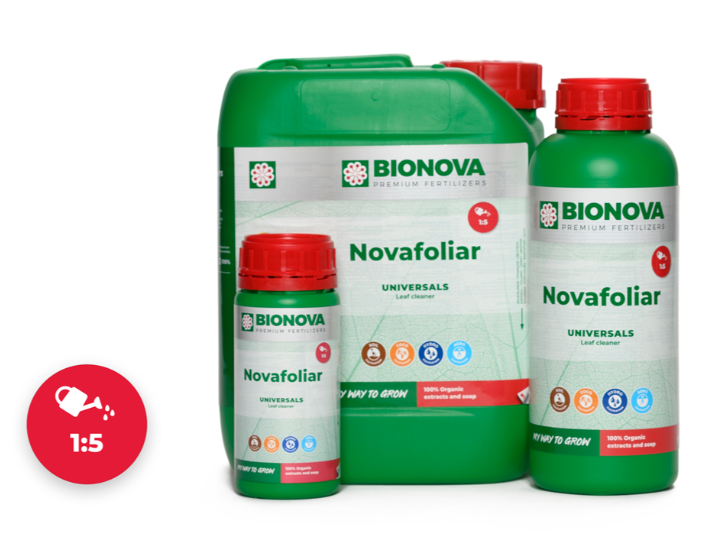
- Bionova Novafoliar - natural pesticide for clean and healthy plants
- A strong and highly effective biological preparation (biopesticide) based on garlic, which protects plants against pests while also cleaning the leaf surface.
- The composition of the product prevents the pores (stomata) from becoming clogged by organic dirt from beetles and pests, so your plants can breathe freely.
- Perfectly clean leaves also stop being attractive to further pests, whether they are various types of insects or fungi.
- You will achieve the best results in combination with Bionova Freeflow wetting agent.
- When growing in an environment with a high risk of contamination by insects and fungi, use Novafoliar as a preventive treatment every 10-15 days from the start of cultivation until the first week of the flowering phase.
- If you have pre-grown seedlings in a propagator and are about to transplant them into a larger growing space, treat the young plants by completely immersing them for a few seconds in a solution prepared from 2 litres of water and 1 litre of Novafoliar.
- Novafoliar is used exclusively as a foliar spray. During flowering and fruit formation, do not spray it directly on flowers or fruits.
Non-liquid fertilisation of plants grown in soil:
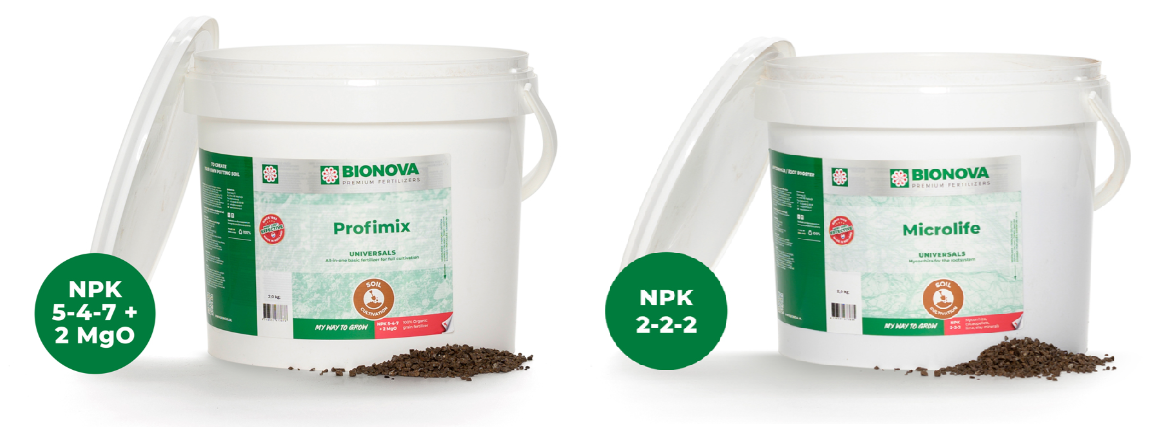
- Bionova Profimix is a 100% organic grain fertiliser, developed primarily for creating your own nutrient-rich soil mix, which you will use especially for outdoor plant cultivation and for the purposes of organic agriculture. (You can also read a separate article: How to grow outdoor?) Simply mix 100-150 grams of Profimix into a 15-20-litre pot and then just add water. You do not need to measure the at all, because the microorganisms inside the product naturally balance it in the substrate. The organic matter containing beneficial microorganisms that makes up Profimix contains not a trace of animal waste, so it is a 100% VEGAN product with the following effects:
- Supports intensive growth and flowering.
- Stimulates microbial activity - the soil ecosystem.
- Improves and speeds up the rooting process.
- Stimulates the natural resistance of plants to pests and epidemics.
- Bionova Microlife is a comprehensive non-liquid fertiliser full of beneficial soil microorganisms, used from the first week of the growing cycle until harvest. All the nutrients contained are very readily available to plants, and the results certainly will not take long to appear. After all, it is enough to examine the composition in more detail.
pH adjustment:
- Bionova pH + is a potassium hydroxide solution with a concentration of 24.5%. It is used to increase the pH level.
- Bionova pH - is a phosphoric acid solution (24.5%) for lowering the pH value of the nutrient solution.
When it comes to adjusting the pH of the nutrient solution, you may also find the following separate articles useful:
In conclusion, we can only refer to the all-explanatory slogan of our favourite Dutch manufacturer: “YOUR PATH TO GROWTH”. If you have any questions about the BioNova range, you can ask us via the well-known e-mail address info@higarden.eu. We look forward to your questions!
We also recommend these products:
- BioNova PK 13-14 (phosphorus + potassium)
- BioNova BN Roots
- BioNova Longflower Supermix
What to read next:
- Fulvic and humic acids: importance and use in plant nutrition
- Discover modern grow tents Garden Highpro
- UGro produces ecological coconut substrates and protects peat ecosystems
How and Why to Revitalise Substrate?
With the harvest season comes a number of questions about what to do with spent substrate after harvesting. The topic of today’s article is therefore the revitalisation, or regeneration, of growing substrates.
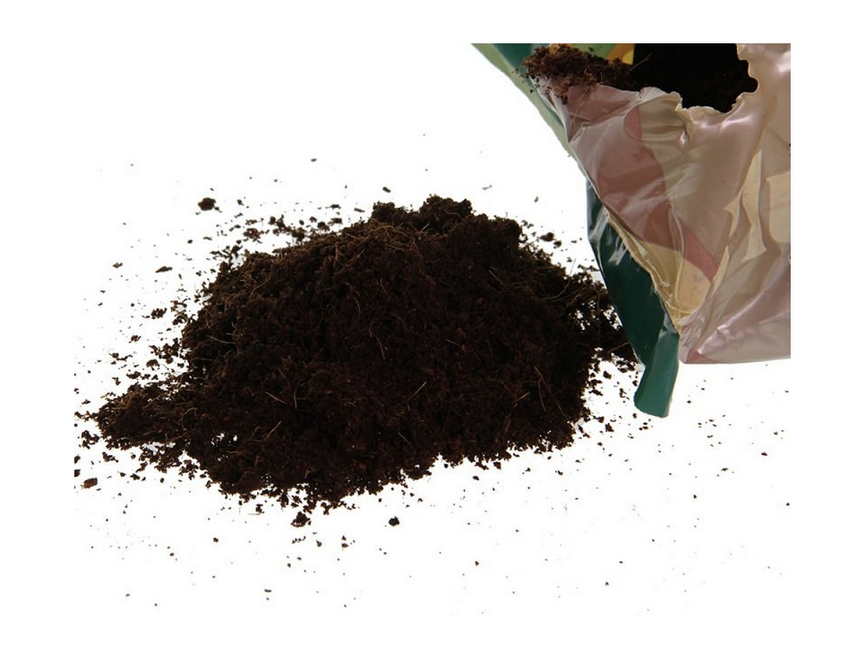
- Of course, you can throw spent substrate into the bin, but there are more environmentally friendly solutions that will also save you money, as you will not have to keep buying brand-new medium for growing containers. On the contrary, quality growing substrates, which we recommend a little further below, can then be used repeatedly.
- The revitalisation process itself depends on whether you use soil or coco as the growing medium.
- In a pot, the plant ideally forms a rich and branched root system, which gradually fills the relevant growing container.
- At the same time, it absorbs nutrients that were supplied to the soil through watering made up of water and fertilisers.
- The chemical composition and properties of the soil are therefore significantly different after harvesting compared with the original state or the state during the growing cycle.
- Spent soil no longer contains a sufficient amount of nutrients and, if mineral-based fertilisers were applied to it, it also contains excess salts and other residual substances, which are highly undesirable for any further use.
- Soil mix naturally loses its ability to retain water after harvesting. It is, or at least should be in the case of successful previous cultivation, practically completely penetrated by the root ball.
- If we planted a new small plant into such spent soil without first revitalising it, the result in the vast majority of cases would be only infection by pathogens from decaying roots and subsequent death.
- Soil in the wild is revitalised naturally without human intervention. However, if we are cultivating plants in growing containers, you must carry out the revitalisation of spent substrate yourself. Here is the procedure:
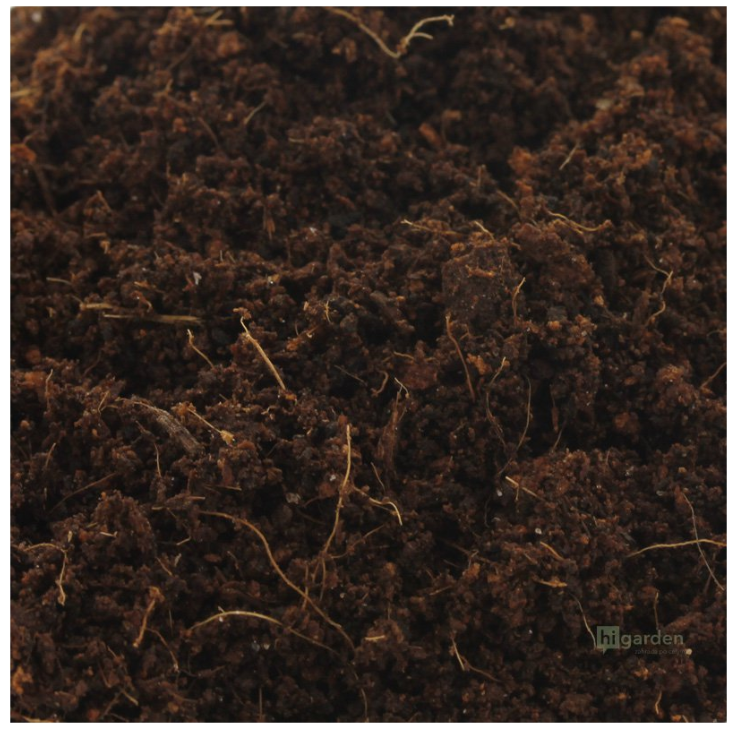
- Remove all above-ground parts of the plants and any other plant material.
- Rinse the soil with water (ideally water from reverse osmosis, see the separate article) to wash away fertiliser residues and other undesirable substances, with 2 to 3 litres of water per 10 litres of soil being considered an ideal volume. We recommend repeating this process at least three times so that all substances we want to remove from the substrate are truly washed out.
- Sterilise the substrate, especially if the plants were affected by pests or diseases during the previous growing cycle. The simplest method of substrate sterilisation is to rinse it with boiling water. It is advisable to support the sterilisation of the substrate with hand hygiene; alternatively, you can use disposable latex or clean garden gloves.
- The result of these steps is clean soil without nutrients. Before it is used again, these need to be replenished by mixing in a strongly pre-fertilised substrate, or quality compost. Here it is necessary to emphasise the rule that old, revitalised substrate is mixed with a new soil mix or compost only after we spread it out in a dry and sufficiently airy place, where we use a sieve to remove all remnants of the root ball from the previous growing cycle.
- The process of revitalising spent coco substrates largely corresponds to the above steps relating to soil revitalisation.
- Plant and root residues must again be removed.
- Small roots that we are unable to remove manually are helped to break down by enzymatic products, which you can add to the watering during the first weeks of the upcoming growing cycle.
- Sterilisation is carried out with boiling water or a solution of hydrogen peroxide.
- If you use a peroxide solution, do not forget that it is a chemical that must be washed away with a further rinse!
- While revitalised soil is left to dry completely before being mixed with compost or a soil mix with nutrients, revitalised coco substrates can be mixed with fresh coco while still wet.
- By mixing revitalised coco substrate with soil sufficiently rich in nutrients, we obtain a mixture suitable for planting.

If you have any questions related to the possibilities offered to growers by the substrate revitalisation method, do not hesitate to contact us at the well-known address info@higarden.eu.
We also recommend these products:
- Canna Terra Professional Plus 50 l (from 479 CZK)
- Canna Coco Professional Plus 50 l (from 389 CZK)
- Canna Cannazym (from 179 CZK)
What to read next?
How to Save an Overwatered Plant?
In this article, we advise you on what to do so that your plants recover quickly from any overwatering.
When it comes to overwatering, prevention is of course the best approach, which is why experienced growers regularly check whether their pots contain excess water. It is also never a bad idea to study basic information about the given plant or its variety in advance, so that we know its individual water requirements. Simply put, there is a clear difference between a cactus or plants with fleshy leaves, which contain their own water reserves, and, for example, evergreen plants. However, even individual types of evergreen plants may differ in nuances when it comes to the preferred frequency and amount of watering. Therefore, do not grow “blindly”. Compared with hand watering, if we know the needs of a particular plant in advance, self-watering systems make proper irrigation easier.
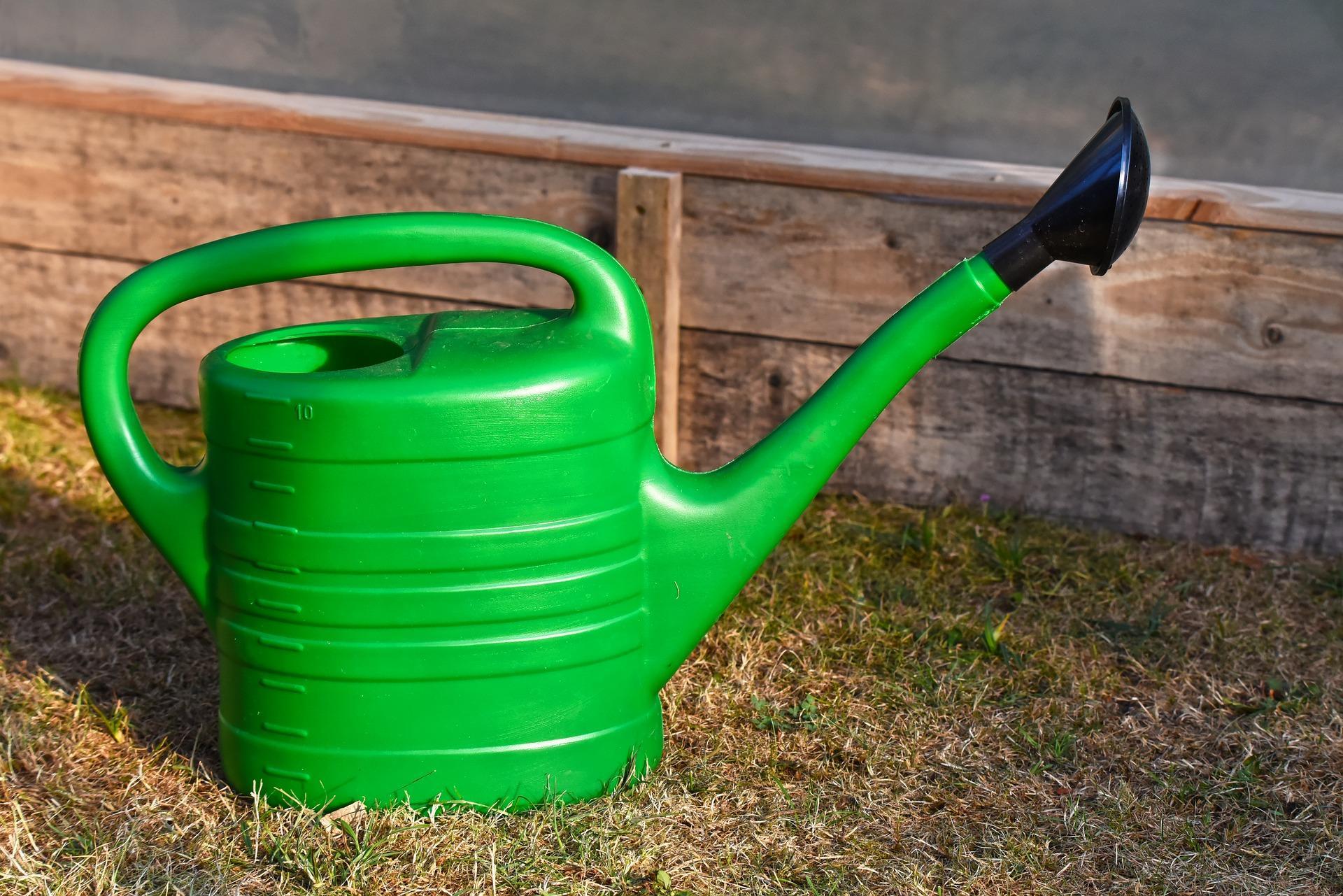
Sometimes we overdo frequent watering and overwater the crop. However, overwatered plants are weaker and tend to fall victim to diseases and pests much more easily. It is still a much smaller mistake than, for example, burning plants through overfertilisation. These two mistakes, which belong more to the beginnings of gardening, are closely related, because if we overwater plants with irrigation containing a mineral nutrient component, we can easily also so-called burn them. When growing outdoors, rainfall can also help bring about this negative effect. But, as they say, even a master gardener...
How can you tell if a plant has been overwatered?
To find out how a plant grown in a pot is doing in terms of moisture, you can lift the plant pot in your hand. You then water the plant only if the pot feels light to you. If the substrate is dry on the surface, but the pot with the plant is surprisingly heavy, wait until the next day before watering.
The most visible indicator of overwatering is, of course, the appearance, which does not match the idea of a healthy and thriving plant. Yellowish leaves reveal a lot. However, leaves of plants that desperately need watering also show the same symptoms. Some growers then, in an effort to save the situation, water the plant heavily without realising that they have heavily watered a plant showing signs of overwatering. Therefore, one cannot rely solely on “yellow leaves”, not to mention that both variants are already wrong.
After overwatering plants, it is essential to repair the damage in time!
So let us really save the situation. After overwatering, move the plant first of all to a warmer environment, ideally to a sunlit spot where there is plenty of fresh, flowing air. The reason is simple. In such an environment, excess water is absorbed more easily. Then water the plant much less and observe what happens. Alternatively, you can only mist the area around it, which will increase humidity without causing overwatering again.
If the leaves of your plant are already visibly dying, follow the procedure below. Remove it from the pot or other growing container and remove as much of the substrate as possible without damaging the root system. Before replanting it, leave it overnight in a warm place without draughts. In the meantime, disinfect the pot and dry it thoroughly. Moisten the new substrate only very lightly and, in the lower part of the pot, be precise when preparing drainage using pieces of wood or twigs, stones or leaves. And above all, do not forget to check the condition of the roots before replanting.
Fortunately, in these cases the ability to self-regenerate and the powerful force of nature fully come into play, so there is always a high probability that with timely “plant resuscitation”, which we have just described, you will save the overwatered crop and the plants will soon recover so that they can bring you joy with beautiful leaves and flowers.
When growing using autonomous irrigation systems, you can quite literally water the crop much more efficiently, without losing any plants, but also time and energy. A sophisticated self-watering system manages water excellently, the plants will not be overwatered, and not a drop of water will go to waste.
So these are our tips on how to prevent overwatered plants and how to deal with this complication during growing processes with the greatest possible success. If you have any questions, do not hesitate to write to us at the well-known address info@higarden.eu.
The effect of silicon on plant health
Are you thinking about what else you can change or improve so that, by the end of the growing cycle, you can look forward to larger and more beautiful flowers and fruits on your plants? Would you like your plants to be even more resilient? Then be sure to focus on silicon as well!

An experienced grower does not settle for basic nutrition such as N-P-K. On the contrary, they know very well that this is only the beginning of comprehensive plant nutrition and the associated support of metabolic processes, which ultimately leads to fantastic yields.
- Silicon has the chemical symbol Si and is a metalloid, widely present in the Earth’s crust. And just as it is important for humans, in whose bodies it is an essential part of many enzymes involved in key biochemical processes, plants also need it in sufficient amounts.
- Nevertheless, it is often overlooked in both indoor and outdoor plant cultivation. Let us therefore summarise the benefits of including suitable products with a high content of quality, easily absorbed silicon, such as Atami B'cuzz Silic Boost, in regular plant nutrition, whether for medicinal herbs, ornamental flowers, fruit or vegetables.
- The product Mills Vitalise offers unparalleled silicon absorption.
Our TIP: Are you growing to BIO quality? Try 100% organic fertiliser Biotabs Silicum Flash with a high dose of silicon for increased resistance of your plants to adverse climatic conditions, as well as pests and pathogens.
Benefits of enriching irrigation water and the substrate with silicon:
- Let us start with the basics. And what is the foundation of healthy plant development? A strong, firm, resilient and, last but not least, richly branched root system. The presence of silicon in plants supports the formation of exactly such roots.
- While we are on the subject of strength, we must not forget the significant strengthening of plant cell walls, into which it is directly deposited, resulting in stronger stems as well. Stems are then similar to roots: the stronger they are, the more vigorous the flowers and the better the overall harvest.
- Easily absorbed silicon also helps with more efficient absorption of all the other life-giving nutrients that we supply to plants through carefully prepared irrigation water for their healthy growth and flowering.
- Mould and fungal diseases. The nightmare of every grower. Silicon increases plant resistance to mould and fungal diseases. Your plants will be strong and will cope with any infection more easily.
- Silicon also increases chlorophyll production in the green parts of plants.
- And because chlorophyll production is closely linked to the photosynthetic activity of plants, without which we would have nothing to breathe on Earth, it is also worth highlighting silicon’s effect on increased carbon dioxide absorption. You can read how and why to use CO2 when growing plants in a separate article HERE.
- From a practical point of view, you will certainly also be interested in the fact that the presence of silicon in plants leads to the formation of heavier fruits.
As we have already outlined, silicon occurs naturally in the Earth’s crust, and therefore a certain amount can also be found in soil or soil substrates. This does not mean that adding silicon-containing products to irrigation water is pointless when growing in soil. However, supplementation with silicon brings even greater benefits when feeding plants grown using hydroponics and in inert growing media, such as coconut substrates, expanded clay or Hydroton or rockwool.
We will be happy to advise you on choosing suitable products to support plant metabolism. Please do not hesitate to ask us anything. We look forward to your questions at the well-known e-mail address info@higarden.eu.
We also recommend these products:
- Advanced Hydroponics Silica (from 359 Kč)
- Grotek Pro-Silicate (from 259 Kč)
- Mills Vitabrix (649 Kč)
What to read next?
- Jungle Indabox maximises the benefits of chelation
- SHOGUN: The best British fertilisers with an emphasis on research
- What are the best fertilisers for hydroponics and how should they be used correctly?
BIONOVA - stimulants and supplementary fertilisers for comprehensive plant support
Every Sunday we bring you an article focused in detail on the most interesting products that are, whether newly added or long-established, an integral part of our store’s range. Therefore, right at the start we recommend the first standalone article about the BIONOVA brand, where across different cultivation methods we cover all the other products (base fertilisers, substrates, plant protection against pests etc.) except for the stimulators, which are now covered in the following lines.

Let us introduce the unique additives, which, in combination with Bionova base nutrition and proper plant care, can truly simplify and shorten the path to an exceptionally abundant, fragrant and tasty harvest, whether you are growing herbs, fruit or vegetables.
Our TIP: In the mentioned first part you will also find advantageous sets for the entire cultivation cycle, which contain both base fertilisers and stimulators. One example is the starter pack for growing in soil.
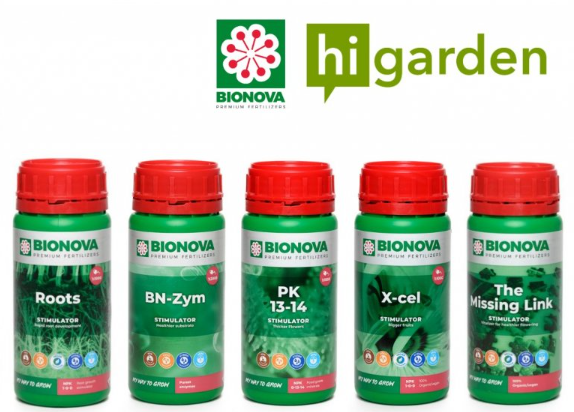
Root stimulator - more roots means more flowers
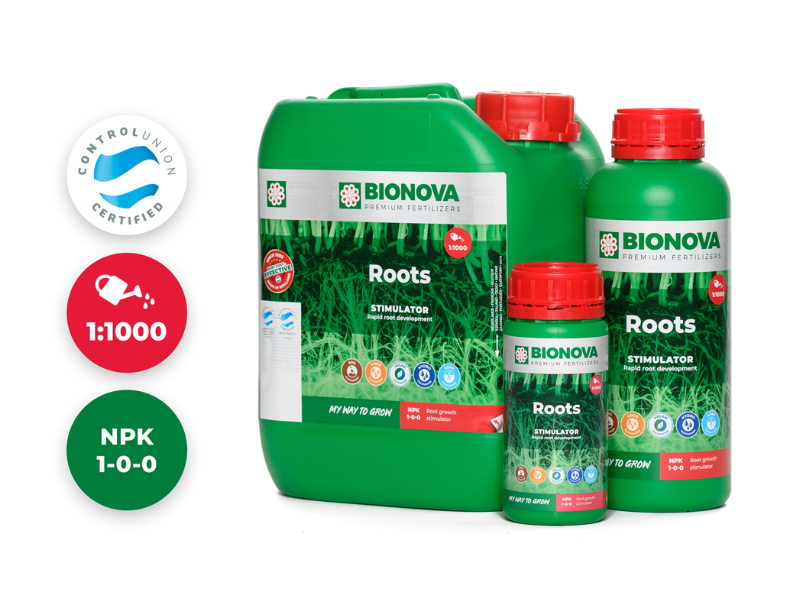
- Bionova Roots is historically one of the first products Bionova brought to market. For many years it was researched and produced in cooperation with several European horticultural companies and universities around the world.
- Intensive support for the plant root system is based on a rich composition, dominated by the following ingredients:
- Humic acids, which improve oxygen uptake, accelerate root and cell development, and speed up ion transport (Under the article you will find a link to a separate article on humic acids and fulvic acids).
- Kelp. These seaweeds stand out for their abilities such as wound healing or chlorosis treatment, and further increase chlorophyll production as well as the intensity of root hairs.
- Ascorbic acid (vitamin C).
- Thiamin (vitamin B1).
- Myo-inositol is a vitamin B7-like compound for better cell wall formation.
- L-glycine is an amino acid with a beneficial effect on plant resilience and growth.
- The natural root stimulator (root booster) will accelerate and generally improve the development of your plants’ root system. This means:
- More fine root hairs.
- A higher level of absorption and more efficient use of nutrients by the plant.
- Increased plant resistance to various types of stress
- Significantly higher yields in all tested crops!
- Growers use Bionova Roots more often during periods of high stress and extra specific nutritional needs. For example, when producing mother plants and clones just before cutting and just after cutting.
- This root stimulator can also help significantly in the following situations:
- Slowed or blocked growth.
- Problems with the root system caused by insects.
- The occurrence of fungal diseases in plants.
- Overwatering. In this case, some growers recommend drying the substrate thoroughly and then applying Bionova Roots at a rate of 2.5 ml / litre as a foliar spray.
- Bionova Roots root stimulator can be applied in two forms:
- As a feed in the first 3 weeks of the cultivation cycle at a rate of 8-5 ml per 10 litres of water.
- As a foliar spray for better rooting of cuttings (0.5 – 0.75 per litre of water).
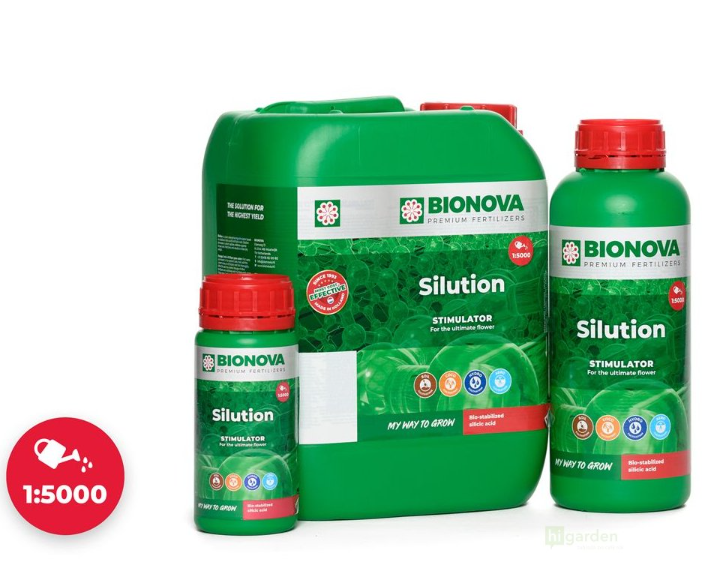
Bionova Silution - a reliable organic solution for maximum yield
- Bionova Silution is a plant-strengthening liquid stimulator with a composition based on stabilised silicic acid in combination with fulvic acid. Applying Silution brings growers the following benefits:
- Better nutrient uptake.
- Stronger cell walls, branches and stems.
- Plants form more internodes, which allows them to carry more weight (larger flowers and fruit).
- Increased plant defence against viruses and infections.
- The cultivated crops are also much more resistant to the negative effects of stress, for example during transplanting or due to temperature fluctuations. If you would like to learn more about the stressors affecting your crop, read the separate article: Stress also harms plants, or abiotic plant stress.
- Higher dry matter content in the final product.
- Young seedlings and clones need relatively high air humidity for their development. However, higher air humidity encourages the occurrence of various diseases, especially fungal ones. Therefore, Silution is the perfect prevention and tool for strengthening plant tissues precisely for plants in the early stages of development, for which propagators are used for cultivation. (TIP for an article: How to choose a propagator and what to equip it with?) Growers recommend applying Silution every 10 days to seedlings and clones as a foliar spray.
- Bio Nova Silution is also a suitable product for strengthening mother plants. In this case, it is appropriate to apply Bionova Silution to the leaves of the “mother” just before taking clones (cuttings), in order to strengthen the plant cells and tissues. At the same time, subsequent rooting of the cuttings is accelerated.
- The supplementary liquid fertiliser Bionova Silution can be used from the first week of growth until the last week of flowering and is fully compatible with all other fertilisers and preparations from the same manufacturer as well as with all cultivation methods.
- In addition to foliar spraying, Silution is also commonly applied as a feed, mixed into the water before all other fertilisers.
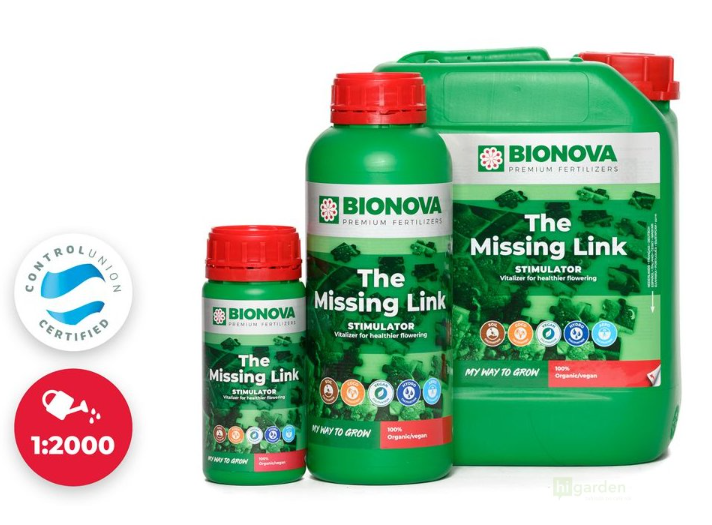
Bionova The Missing Link (TML) - the missing link that gives your plants everything they need to fulfil their genetic potential!
- This exclusive product from Bionova, with a purely natural composition (100% VEGAN), is designed to naturally stimulate the plant immune system and prevent common deficiencies in their nutrition, paradoxically caused by an overly cultivated environment.
- The Missing Link (TML) is a certified blend of organic materials, including the world’s highest-quality fulvic acid. Add to that precious metals.
- The result of application is exceptional plant defence, which among other things reduces the need for various fungicides or pesticides.
- It is known that as a result of a lack of basic nutrients, organisms can no longer develop fully. This is related to a separate article: Symptoms of deficiencies in important nutrients. Absorption of these indispensable nutrients leads to an unprecedentedly positive effect on the quality and yield of crops treated with TML. And because this product literally fills a previously unknown gap in the food chain, the Dutch manufacturer quite rightly decided to name it in Czech as The Missing Link.
- Also TML has enormous potential for growers during cloning (cuttings). Simply spray it on mother plants just before taking and just after taking cuttings.
- In the case of seedlings or young plants in a very humid environment, TML helps prevent many infections in young plants caused by high humidity.
- During the vegetative phase, it is recommended to use TML as a foliar spray once a week until the start of flowering.
- Bionova The Missing Link is used as part of the feed (throughout the cultivation cycle at a rate of 6 ml per 10 l of water) or as a foliar spray (during the vegetative phase and the first week of flowering at a rate of 0.25-0.50 ml per litre of water), and at most three times.
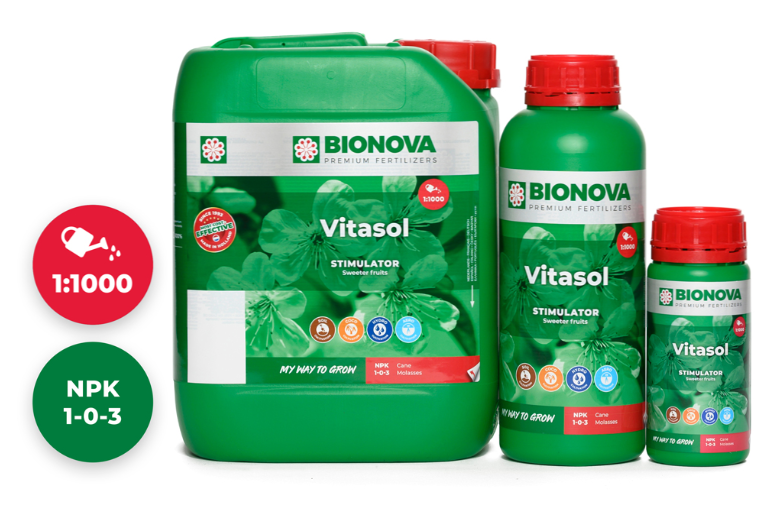
Bionova Vitasol - natural composition for natural and above all more pronounced flavour of cultivated crops
- Vitasol also belongs among 100% organic stimulators. Its task is to develop a sweeter flavour in every treated plant.
- The composition, rich in natural sugars, also includes beneficial bacteria and mycorrhizal fungi, which ensure high efficiency in the absorption of these sugars by plants. Vitasol further contains calcium, magnesium, copper, lime, potassium, vitamins and a large amount of vegan trace elements.
- Growers use this product as a converter of available nutrients. Plants then especially appreciate more energy during periods of high production and rapid growth when grown under artificial lighting or in the event of growth stagnation caused by a lack of nutrients.
- Vitasol is used as a feed (5-15 ml per 10 litres of water), in the last weeks of the cultivation cycle during the flowering phase.
- Vitasol is, like the previous stimulators, compatible with all other products from the Bionova brand, but it does not suit all irrigation systems. This is mainly due to its natural composition, which is not ideal for cultivating plants in hydroponic systems in terms of system clogging or other complications. We will be happy to advise you whether Vitasol is useful for your cultivation method, or your equipment (see below).
- Especially when growing in soil, however, Vitasol is not used exclusively during the ripening of flowers and fruit. Growers’ experience speaks clearly. During the vegetative phase you can use it at a rate of 0.5 ml/l–1 ml/l to enrich the life of beneficial microorganisms and increase their activity in the substrate.
- Once the flowering phase begins, Vitasol can be applied up to three times a week (from 0.5 ml/l up to 1.5 ml/l) to feed beneficial bacteria and mycorrhizal fungi, which return more available nutrients to plants for subsequent absorption. This applies especially to phosphorus (P), potassium (K) and iron (Fe).
- Are you involved in, or planning to get involved in, growing plants outdoors? Then, in addition to the separate article we have prepared for you, “How to grow outdoor?”, you will certainly appreciate the fact that this preparation is also an irresistible attraction for important pollinators. To increase the percentage of insect pollination of fruit and vegetables, spray Bionova Vitasol on the plants at a rate of 2.5 – 5 ml per 10 litres of water.
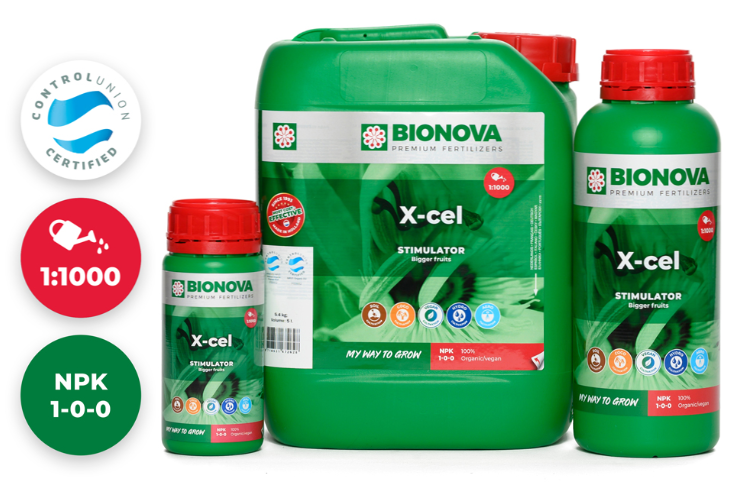
Bionova X-cel - up to a quarter higher yield!
- Bionova X-cel Booster can safely be applied to all types of flowers. Why should you do this? The reasons are related to the certified and 100% organic composition of this stimulator, dominated by a sophisticated combination of biological components that stimulate biochemical processes in plants at all levels.
- The main ingredients are:
- All important vitamins and amino acids, trace elements and other natural substances supporting growth and flowering.
- Beneficial bacteria.
- Enzymes.
- Seaweed and humic acids.
- And what effect can you expect thanks to these valuable organic extracts?
- Better metabolism - support for plant metabolism and photosynthesis.
- As a result of higher photosynthetic activity, carbohydrate production also increases.
- Hormonal balance in plants (thanks to active stimulation with a suitable combination of amino acids).
- Young plants thanks to BioNova X-cel Booster root more quickly and this trend is reflected further during growth and flowering. You can therefore look forward to unusually vital plants with an extensive root system.
- It has been proven that Bionova X-ceL significantly increases the quantity and quality of yields of all tested crops!
- You can use the X-cel flowering booster either as a standard feed, continuously from the first day until harvest at a rate of 5–10 ml per 10 litres of water, or as a foliar spray at a rate of 0.25 – 0.5 ml per litre of water, but at most three times.
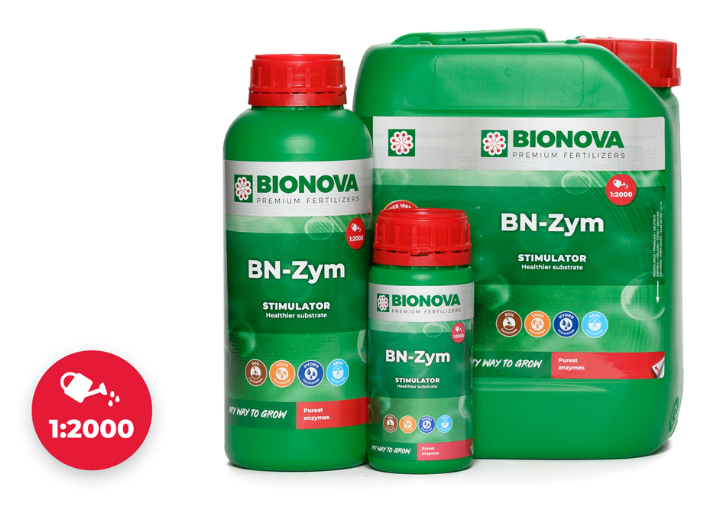
Bionova BN Zym – for a healthier substrate
- Bionova BN-Zym is among natural biocatalysts (catalyst = process accelerator). This preparation based on specific enzymes can also be described as a soil improver or substrate energiser.
- Enzymes, as specialised protein molecules, stimulate the growing medium’s ability to retain water, which allows faster and better penetration of the feed into the medium, and while Bionova Zym penetrates the substrate, it creates more oxygen in the root zone!
- If we wanted to illustrate the powerful effect of specialised enzymes with a simple example, the conversion of sugar into alcohol would serve us well: using chemicals it usually takes several weeks or even months, whereas with enzymes it takes only a few seconds!
- What can BN Zym do?
- Increase the activity of beneficial bacteria that convert nutrients and minerals in the substrate into directly absorbable organic compounds.
- Speed up, or catalyse, the conversion of waste substances and return them to crops in the form of absorbable nutrients.
- Another advantage is that the growing medium remains clean, i.e. free of all kinds of excess components. This is useful, for example, when reusing soil and especially coconut substrate.
- This preparation is never used as a foliar spray, only as part of the feed, continuously throughout the entire cycle and at the recommended rate of 5 ml per 10 litres of water.
- Growers using the natural power of BN-Zym agree that it helps speed up and make the flushing process more efficient during the last week of the flowering phase. (Flushing or flushing is discussed in a separate article: How to flush?) This is because the composition of this preparation helps break down nutrients that remain in the substrate.
- In hydroponic systems, let water enriched with Bionova Zym flow for 24 hours at least 2-3 times, up to harvest, at a rate of 0.5 – 1 ml per litre of water.
- BN-zym is compatible with all other Bionova products.
Phosphorus + potassium - PK-type supplementary fertilisers
Bionova produces these phosphorus- and potassium-based preparations, generally widely used as flowering stimulators, in two variants:
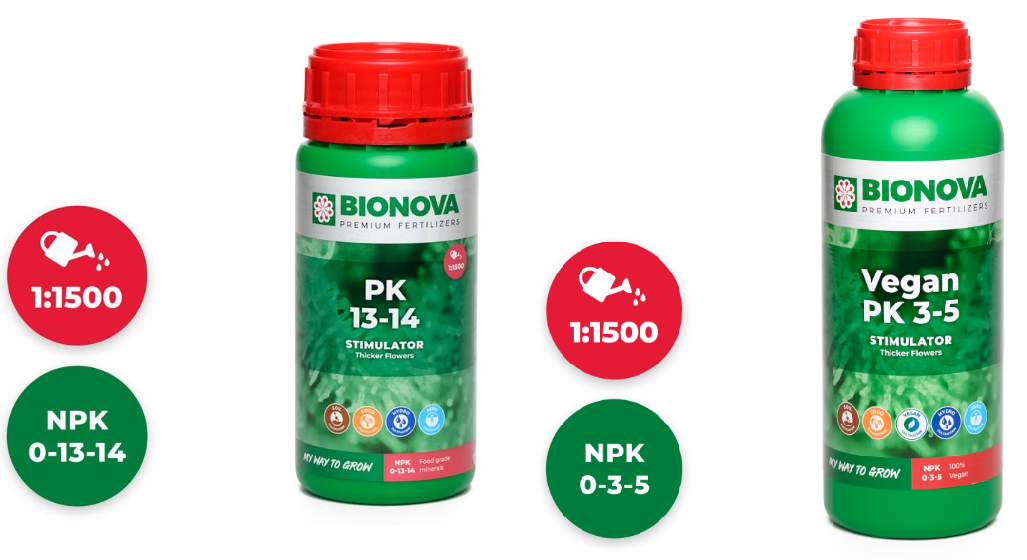
- Bionova PK 13-14 is the classic variant, containing minerals of food-grade quality that are highly available to plants. In short, a perfectly balanced combination of phosphorus and potassium (NPK 0-13-14).
- Thanks to one of the purest forms of minerals, the final product contains practically no ballast salts or heavy metals.
- In this way, PK 13-14 from Bionova is also directly absorbable by the root system and no heavy metals remain in the final product, i.e. in the cultivated crops.
- PK 13-14 should always be used in combination with one of the main fertilisers (Soil Supermix, Hydro Supermix, Aero Supermix, Autoflower Supermix, Longflower Supermix).
- This product is used during the flowering phase except for the last week before harvest, which is already devoted to flushing.
- As a feed, the recommended amount is 2-6 ml per 10 litres of water. Foliar application is also possible at a rate of 2.5-5 ml per litre of water.
- To support faster root development, growers have found in practice that this mineral additive can also be used in the 2nd week of the vegetative phase, at a rate of 1–2 ml per 10 litres of water.
- Bionova Veganics PK 3-5 is then the vegan alternative (NPK 0-3-5) to the above supplementary fertiliser for larger and stronger flowers.
- The 100% organic composition without
- The 100% organic composition without animal ingredients is useful for BIO quality of the final harvest, without having to give up an impressive yield. On the contrary, for organic plant cultivation it is a perfect main flowering booster.
- The vegan version of PK 3-5 should always be used in combination with the main fertilisers Veganics Grow and Veganics Bloom.
- As a feed, it is applied from the first to the last week of flowering at a rate of 4-12 ml per 10 litres of water.
- PK 3-5 can also be applied as a spray, with the plants treated a total of three times:
- The first treatment should be carried out one week before the start of flowering (0.25 ml / litre of water).
- The second treatment is carried out one day after the photoperiod changes (0.35 ml / litre of water).
- The third treatment is carried out the following week, at a rate of 0.5 ml / litre of water.
- Similarly to Bionova PK 13-14, the vegan version PK 3-5 can also be used, in addition to the flowering phase, for faster root system development in the 2nd week of the growth phase at a dose of 0.15 to 0.25 ml per litre of water.
Concentrated trace elements for solving and preventing plant nutritional deficiencies
Bionova also offers growers a varied range of so-called mono nutrients, which are of course also part of our range. Simply choose according to which deficiencies you need to address. With these products, the Dutch manufacturer also meets the needs of experienced growers who want to create their own blend made up of selected nutrients. It should be added that all these minerals produced by Bionova are food-grade quality and contain a negligible amount of ballast salts or heavy metals for truly clean mineral nutrition.
Trace element deficiency (so-called nutritional deficit) is immediately reflected in a disruption of the plant’s vital functions and can be observed especially on young leaves, because trace elements cannot be transported within the plant. Reused soil as part of the substrate revitalisation process also lacks many trace elements. When reusing soil, it is therefore crucial to improve the overall proportions of trace elements. So what are the options?
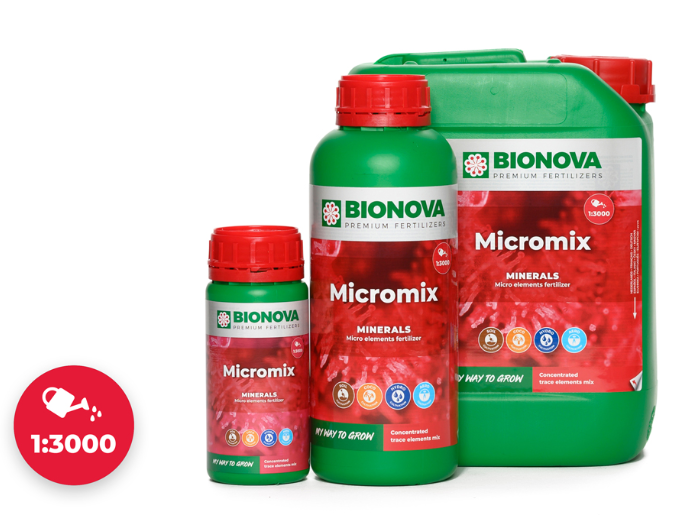
- Bionova Micromix is a high-quality blend of chelated microelements, characterised by excellent bioavailability. This unique product makes it easy and quick to restore balance in terms of the content of important elements for healthy plant development.
The products listed below, intended for supplementing specific nutrients, are also united by immediate absorption and rapid effect. You will find all the important details in the description of each product.
- Bionova K 20 (potassium)
- Bionova N 27 (nitrogen)
- Bionova P 20 (phosphorus)
- Bionova MgO 10 (magnesium)
- Bionova Ca 15 (calcium)
The comprehensive answer to the question of how to dose stimulators correctly, as well as the base fertilisers from the Bio Nova brand, is provided by clear and detailed dosing tables.
And if you would like to ask us anything else in connection with the popular products of the Dutch manufacturer, please contact our specialists, for example at the well-known e-mail address info@higarden.eu.
We also recommend these products:
- BioNova AutoFlower SuperMix
- LUMii Black Digital Kit 600W
- LED Set 100W Viparspectra
What to read next:
- Fulvic and humic acids: importance and use in plant nutrition
- Discover modern Garden Highpro grow boxes
- UGro produces ecological coconut substrates and protects peat ecosystems